Traditionally, large assets were hard to access. For example, investing in real property, buying commercial property, or even investing in commodities often requires a large capital base, a lot of paperwork, and a long settlement period. Today, a new paradigm is emerging that is catching the attention of all financial markets. Assets are being tokenized on the blockchain, which means they are being given a digital identity to prove ownership. Today, the Real World Asset tokenization market has surpassed the multi-trillion-dollar mark. It is estimated to grow to a $10-$18 trillion valuation.
As the adoption of tokens continues, the question that keeps coming up for businesses is how the tokenization of real world assets is possible. There has been a process for every asset, whether it be real estate, a treasury product, or a commodity, which has been tokenized. This helps businesses understand the new funding options that are available, while also allowing investors to understand the basis upon which the asset has been tokenized.
What Is Real World Asset Tokenization (RWA)?
Asset tokenization, as it applies to the real world, only means that the ownership of the real asset is converted into digital tokens that can be easily managed online through the use of blockchain technology. This means that, instead of having to buy or sell a real estate asset, gold investment, or financial investment through the traditional processes, the ownership can be easily split into smaller digital tokens that can be easily managed. This has ensured that the ownership of previously exclusive assets can be easily managed, while records are maintained with regard to who owns what at any particular time. This is the first step towards understanding why more businesses are interested in asset tokenization today.
Asset Categories Used in Tokenization Projects
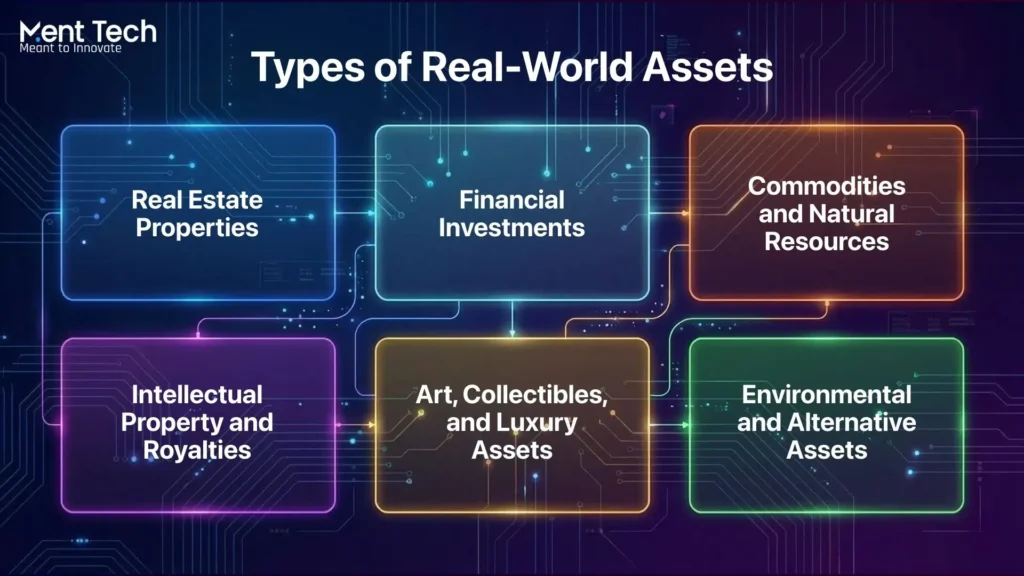
Not all assets have to remain tied to traditional concepts of ownership. This is because many real-world assets are now tokenized into digital shares. Below are some of the most common asset classes being tokenized by businesses and investors:
Real Estate Properties
Residential houses, commercial buildings, rental properties, and even land are some of the most tokenized real estate properties. This is done to help different investors own shares of high-value properties without having to purchase the entire asset.
Financial Investments
Assets like bonds, private funds, shares of companies, and lending portfolios are being tokenized to make the tracking of these assets easier and the entry of investors simpler.
Commodities and Natural Resources
Assets such as gold, silver, agriculture, and energy schemes can be included on the blockchain, providing investors with an opportunity to invest in the respective fields.
Intellectual Property and Royalties
Assets such as patents, music rights, licensing fees, and content revenue can be shared with investors, providing creators with an opportunity to participate in the future earnings.
Art, Collectibles, and Luxury Assets
Assets like artwork, collectibles, vintage cars, watches, and wine can be made divisible, giving investors an opportunity to own these high-end assets.
Environmental and Alternative Assets
Carbon credits, infrastructure projects, and other revenue-generating assets are being tokenized to enable new forms of investments that focus on sustainability and long-term returns.
Benefits of Tokenizing Real-World Assets
Tokenization is receiving more and more attention because it has the potential to resolve a number of common problems that people face when it comes to owning, managing, and investing in valuable assets. Some of the major benefits that have prompted businesses and investors to tokenize real-world assets include:
- Better Liquidity
Assets like property, investments, or collectibles often require a significant amount of time for sale. Tokenization provides better liquidity for assets since ownership is divided into smaller parts, making it easier for people to buy and sell them compared to traditional processes. - Fractional Ownership
Instead of investing a large sum of money in an asset, people have the opportunity for fractional ownership. This allows them to invest in assets that were previously only accessible to a few. - Cost-Efficient Transactions
Digital transfer of ownership eliminates paperwork, approval processes, and the involvement of multiple middle parties. This ensures the completion of the transaction in a shorter time while reducing costs. - Clear Ownership
Each transaction is recorded securely, ensuring the creation of an audit trail. This can be viewed at any time, which helps build trust among the asset owners and investors. - Access to Global Investors
Tokenized assets can reach investors across different regions without complex entry barriers, helping asset owners attract wider participation and unlock new funding opportunities.
Key Prerequisites for Successful RWA Tokenization
Before any real-world asset is converted into a digital ownership form, there are certain foundational elements to be put in place. Projects that are successful are those that focus on preparation, not technology. Below are the most significant elements to be in place before the tokenization journey begins:
Robust Legal and Regulatory Compliance : It is vital to ensure that the asset has a proper legal structure in place, establishing a clear link between the digital token and real ownership rights. Investor Verification, Regulatory Compliance: Investor verification, regulatory compliance, and checks are essential factors that must be taken care of so that there are no risks in the future.
Asset Verification and Due Diligence: It is essential to ensure that the asset has a clear ownership position, valuation, and documentation. This is a critical factor as it is essential to instill confidence in the asset so that the tokenization process is smooth from the very beginning.
Technology and Infrastructure: A digital infrastructure is necessary so that the tokens can be securely issued. The platform needs to be secure so that technical risks are avoided.
Operational and Market Requirements: A robust digital infrastructure must be in place to ensure the safe creation of tokens. The technology must be capable of supporting secure transactions, ownership, and protection of the tokens from any technological risks.
Institutional-Grade Standards: It is essential for a well-thought-out project to consider how investors can join the platform, invest their money, make returns on their investment, and exit the platform if necessary.
Step-by-Step Process to Tokenize a Real-World Asset in 2026
Making an asset, physical or financial, digital and owned is a straightforward process. Each step is designed to link the real asset to a digital system to ensure investors can trust the system and participate. The following is an example of the tokenization of real assets as it is today:
Step 1: Asset Selection, Valuation, and Onboarding
The procedure begins with the selection of an asset, which could be real estate, debt, commodities, and even funds. The ownership of the assets is examined, and the value of the assets is professionally determined to determine how they will be apportioned to the investors.
Step 2: Legal Structuring and Compliance
A legal entity is established to link the asset to digital ownership. This procedure ensures that each token is issued to represent actual rights to the asset, which is tied to the laws of the country.
Step 3: Technical Framework Design
In this stage, the determination of ownership is considered. This is where the number of tokens, income distribution, and participation are considered before anything is put online.
Step 4: Smart Contract Development and Audit
Here, digital contracts are created to facilitate the transfer of ownership of the asset, the participation of investors, as well as the payment of returns. The digital contracts are audited to ensure that all transactions are carried out correctly.
Step 5: Compliance and Investor Onboarding
Investors who want to invest in this project are checked for their eligibility to invest. This is essential to maintain a compliant investment environment.
Step 6: Asset Custody and Token Issuance
Here, the asset is placed under custody, and digital tokens are created and associated with the asset. Once this is done, the digital token represents the ownership of the asset.
Step 7: Launch, Marketing, and Secondary Market
Investors are able to purchase the issued digital token through this platform. Depending on the laws of the countries involved, the digital token is able to trade on various approved stock exchanges, giving investors the freedom to trade as the asset is being managed.
Tokenization Models Used by Institutions
Large financial institutions use specific models to tokenize real-world assets in the digital space. These models are essential in ensuring that ownership of the assets is valid, in addition to making investments more manageable and easier to distribute. Below are the most commonly used models in tokenization:
- Tokenized SPV Model
In this model, a separate legal entity is created to hold the asset, and the investors buy tokens associated with the entity, thus giving them ownership of the asset indirectly. This model is widely applied in real estate and private investments because of the legal protection it offers. - Tokenized Fund Model
In this model, a number of investors invest in a fund, and the tokens are a representation of the share of each investor in the fund. This model allows many small investors to invest in opportunities previously available to a few large investment funds. - Tokenized Debt Model
Loans, bonds, or revenue-generating agreements can be tokenized. Investors earn interest based on agreed terms and conditions. The process can be streamlined by the platform for ease of management. - Direct Asset Tokenization Model
In some cases, the token may represent an entitlement to an underlying physical asset such as gold, infrastructure assets, and revenue-generating projects. This provides a direct link between the investor and the physical asset.
Common Challenges in RWA Tokenization
| Challenge | Simple Explanation | Project Impact |
| Regulatory Differences | Rules vary across countries. | Legal planning becomes complex. |
| Ownership Validation | Token must match real ownership. | Trust and compliance depend on it. |
| Security & Asset Safety | Assets and access need protection. | Risks increase if security fails. |
| Asset Data Management | Asset records must stay updated. | Errors can affect operations. |
| Market Liquidity | Buyers and sellers may be limited. | Selling assets may take time. |
| System Integration | Platforms may not connect smoothly. | Scaling becomes difficult. |
Real-World Use Cases of Real-World Asset (RWA) Tokenization
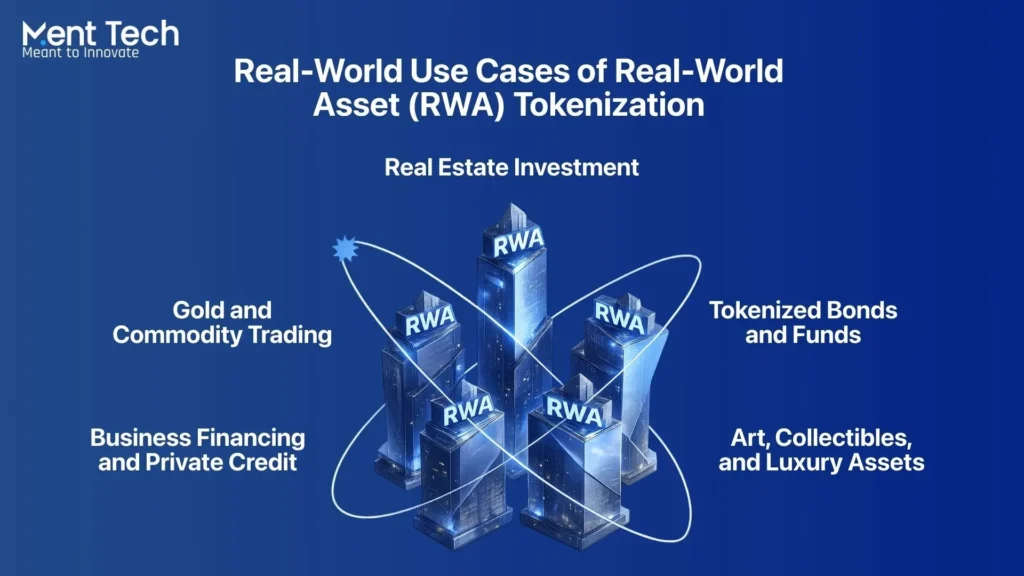
The use cases provided show the tokenization process is not just theoretical but has already been put into practice in different industries, creating room for flexibility.
Real Estate Investment
Tokens can be created for real estate investments, and many people can invest in real estate without having to purchase the entire asset.
Gold and Commodity Trading
Tokens can be issued for commodities such as gold or crops, allowing for the digital ownership and trading of the assets without the need for physical storage, making it easier for people to buy and sell.
Tokenized Bonds and Funds
Tokens can be issued for financial products such as bonds and investment funds, making it easier for investors to invest and exit.
Business Financing and Private Credit
Tokens can be issued for invoices and loans, enabling businesses to raise funds more efficiently while providing investors with new investment opportunities.
Art, Collectibles, and Luxury Assets
Tokens can be issued for collectibles such as art, collectibles, and luxury goods, enabling many people to share the ownership of the assets while ensuring that ownership is clearly established.
How Businesses Can Get Started with RWA Tokenization
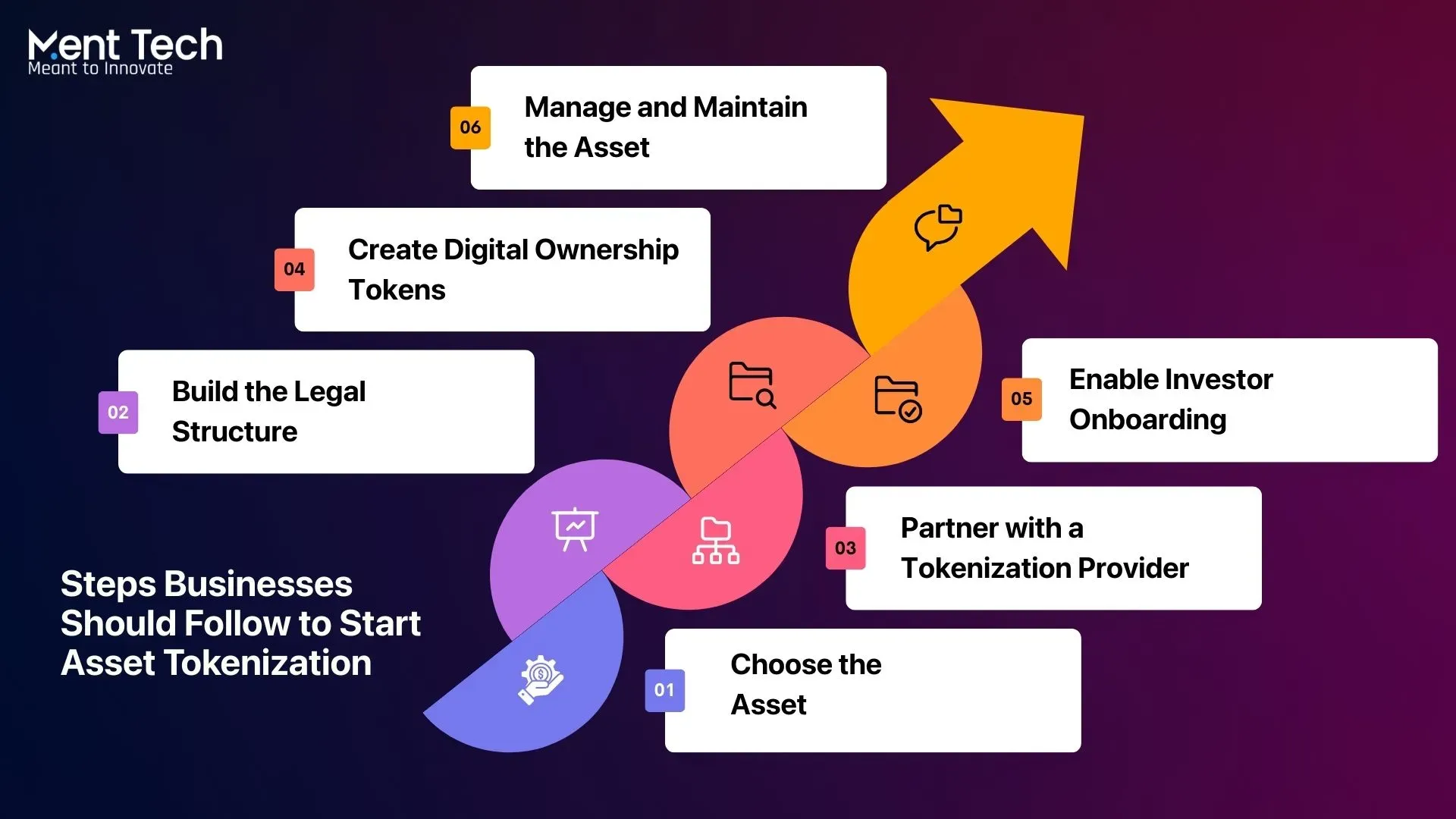
Businesses can start tokenizing their assets by following a process that includes the right asset selection, legal preparation, and digital setup. By following a process, businesses can ensure a successful tokenization process, investor trust, and asset management.
Step 1: Choose the Asset
Businesses are encouraged to choose an asset that has an identifiable ownership structure and real-world value. This can include real estate, commodities, and financial investments.
Step 2: Build the Legal Structure
Businesses should develop a legal structure that links the real asset with its digital ownership, which provides a clear definition of investor rights.
Step 3: Partner with a Tokenization Provider
Businesses are encouraged to partner with an experienced technology provider who can assist them in the development of the platform, tokenization, and security.
Step 4: Create Digital Ownership Tokens
Create digital tokens representing the asset, which can then be distributed to the investors.
Step 5: Enable Investor Onboarding
Develop an environment through which investors can register and participate in the process.
Step 6: Manage and Maintain the Asset
After the launch, the asset can be managed through the platform for continued operations.
The Road Ahead for Institutional RWA Adoption
Large financial institutions are now moving beyond testing tokenization and are starting to use it in real investment environments. Banks, asset managers, and investment funds are starting to explore tokenized bonds, credit, real estate, and treasury-based investments because of the benefits of digital ownership, including reducing paperwork, increasing transparency, and simplifying asset management. As the rules are clarified and the platforms are proved to be reliable, financial institutions are gaining confidence to bring larger volumes of assets online. The next stage will be to connect traditional financial systems to the digital world, enabling assets to flow more freely between markets, as well as creating new investment opportunities for businesses and investors worldwide.
Final Thoughts
The tokenization of real-world assets is an emerging viable solution for businesses seeking to create liquidity, increase investors’ access, and efficiently manage assets within a digital ecosystem. As markets progress further, companies that grasp the concept of tokenization and establish the right foundation will be able to reap the opportunities that come with new investors and sources of capital.
At Ment Tech, we assist businesses in transforming physical assets into digital investment products that are scalable and secure. From developing platforms for RWA tokenization to asset tokenization strategies, our team is committed to supporting businesses through the entire process. With our assistance, whether it is real estate, private credit, commodities, and alternative assets, businesses can develop tokenization platforms that are scalable and ready for the future.