Real-world asset tokenization turns rights to assets such as real estate, funds, private credit, and treasuries into blockchain-based tokens.
But bringing assets on-chain takes more than creating tokens. RWA tokenization connects legal ownership, custody, compliance, smart contracts, and investor access within one system.
This blog covers how RWA tokenization works, how platforms bring assets on-chain, key use cases, compliance requirements, and what businesses should consider when choosing a platform.
What Is Real-World Asset Tokenization?
Real‑world asset tokenization means turning ownership of a financial asset into digital tokens that live on a blockchain. Those tokenized assets can show you own all or part of things, like houses, bonds, funds, commodities, private loans, and more.
A token is a digital representation of the real rights it stands for. Smart contracts can then handle how those tokens move and follow set rules. Legal rules still matter, because when you own a token, you must be linked to real‑world rights.
What Types of Real-World Assets Can Be Tokenized?
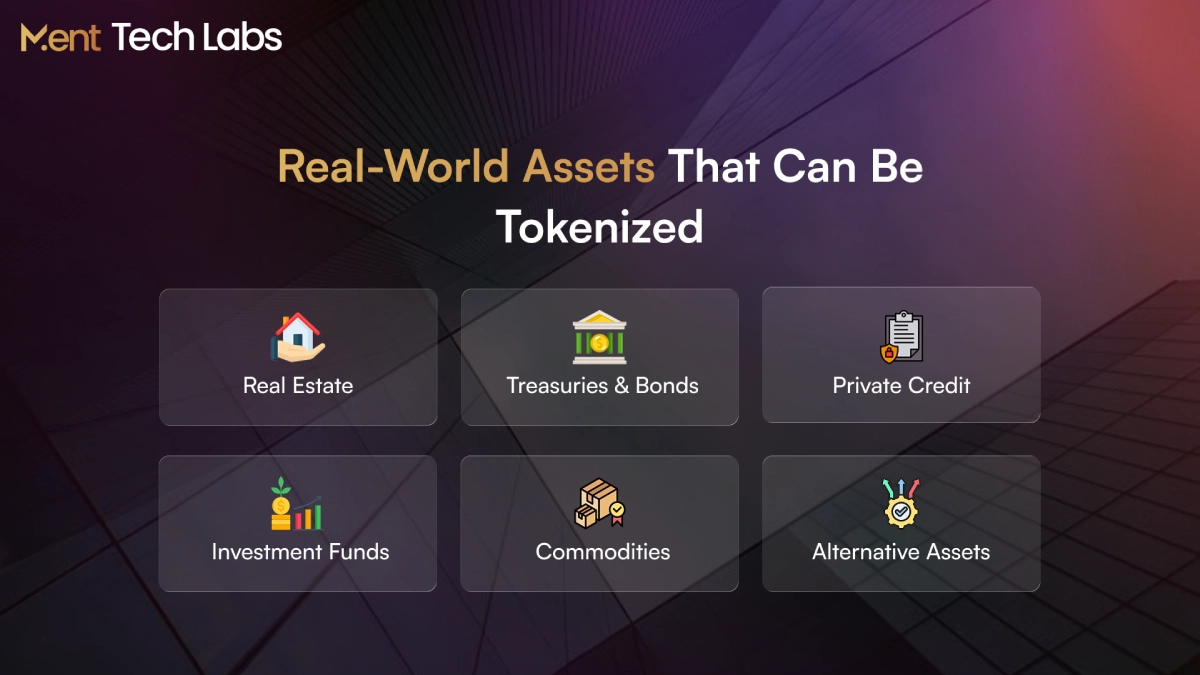
Any asset that has clear ownership or financial rights can be tokenized. Today, the real-world tokenization of assets is being explored across property, credit, funds, commodities, and many other asset classes.
1. Real Estate
Homes, commercial properties, and real estate funds can be divided into assets. This gives investors a way to hold a share of an asset rather than buying the whole property.
2. Treasuries and Bonds
Treasuries and corporate bonds can be represented on-chain, making it easier to manage ownership, transfers, and settlement digitally.
3. Private Credit
Private loans and debt can be tokenized so repayments, interest, and investor ownership are easier to track throughout the life of the loan.
4. Investment Funds
Fund interests can be managed through an asset tokenization platform and connected with AI solutions for banking and finance to support broader financial workflows.
5. Commodities
Gold, precious metals, and other commodities can be represented by tokens, provided the physical assets are securely held, and each token is properly backed.
6. Alternative Assets
Art, intellectual property, carbon credits, collectibles, and infrastructure projects can also be tokenized when the rights behind the asset are clearly defined.
How Does Real-World Asset Tokenization Work?
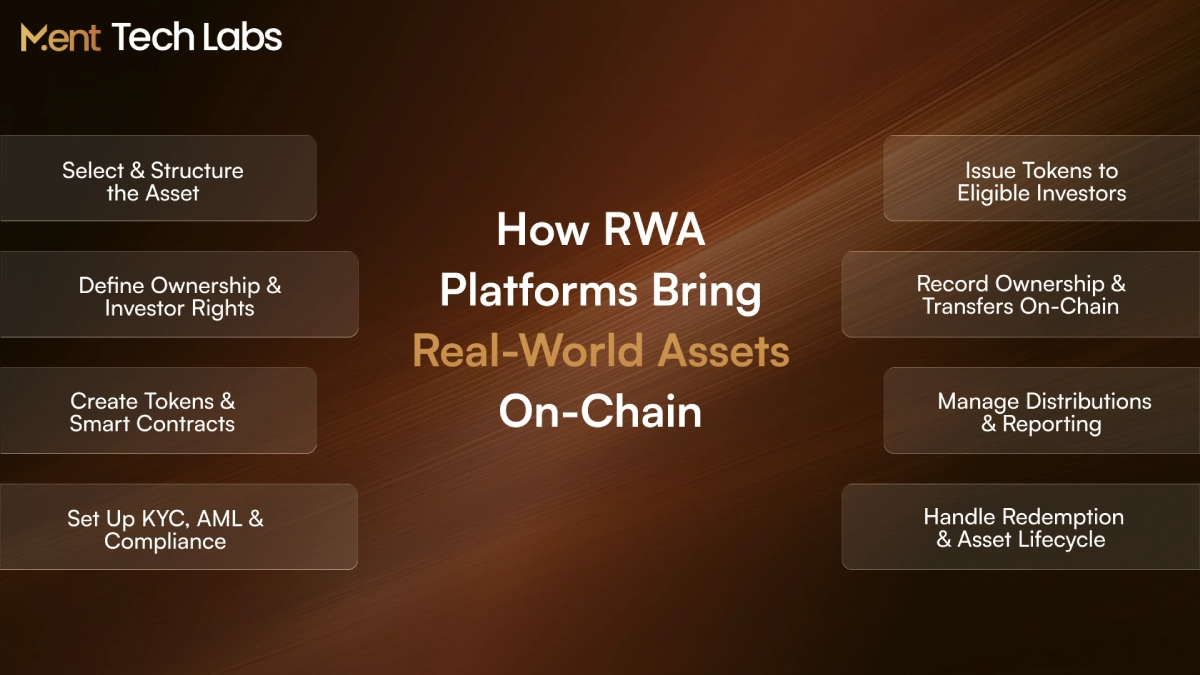
Real-world asset tokenization starts with a real asset and ends with a digital token that represents defined rights to that asset. A proper RWA tokenization process connects the legal, compliance, and technical sides so the token remains tied to what it represents.
1. Select and Structure the Asset
The first step is deciding what will be tokenized and what rights the token will give its holder. The legal structure is then set up around those rights.
- Identify the asset and its value.
- Define ownership and investor rights.
- Set up the required legal structure.
2. Create the Digital Token
The asset rights are represented as tokens on a suitable blockchain. Smart contracts define how those tokens can be issued, held, transferred, or redeemed.
- Choose the blockchain and token standard.
- Build and test the smart contracts.
- Define transfer and ownership rules.
3. Set Up Compliance and Investor Access
Before investors can participate, the platform needs rules for identity, eligibility, and permitted transactions. These workflows can also connect to broader enterprise AI integration services where businesses integrate automated systems across operations.
- Complete KYC and AML checks.
- Verify investor eligibility.
- Apply transfer and jurisdiction rules.
4. Issue and Distribute the Tokens
Once the structure is ready, an asset tokenization platform can issue tokens to eligible investors.
- Mint the required tokens.
- Allocate them to approved investors.
- Record ownership on-chain.
5. Manage the Asset After Issuance
Tokenization does not end when tokens are issued. The platform must continue managing transfers, payments, reporting, and other events throughout the asset lifecycle.
- Process income or distributions.
- Track ownership and transfers.
- Support redemption and reporting.
How an RWA Tokenization Platform Works
An RWA tokenization platform brings the different parts of tokenization into one system. It connects the real asset with its digital token while managing investors, transactions, compliance, and ongoing asset activity.
1. Asset Onboarding
The platform stores key asset details, ownership records, valuations, and supporting documents before the asset moves into the tokenization process.
2. Token Issuance
Smart contracts create the digital tokens and define how they can be issued, transferred, or redeemed. This is where asset tokenization moves from the underlying asset structure to an on-chain representation.
3. Investor Onboarding
Investors complete identity and eligibility checks before they can participate. KYC, AML, wallet verification, and jurisdiction rules help control who can hold or transfer the tokens.
4. Compliance Controls
Compliance rules can be built into the platform so restricted transactions are checked before they happen. Businesses can also connect these workflows with AI governance consulting services when broader AI-driven compliance systems are part of their operations.
5. Custody and Settlement
The platform connects wallets, custodians, payment rails, and blockchain settlement so both the tokenized assets and the underlying assets remain properly accounted for.
6. Asset Lifecycle Management
After the asset is issued, the platform keeps working on changes, in charge of who owns it, sending out money, taking back money, making reports, and handling things that happen during the time the asset exists. The platform keeps doing all these things from the moment the asset is created until it is finished.
Compliance and Legal Requirements for RWA Tokenization
Bringing an asset on-chain does not remove the rules that apply to it. RWA tokenization needs a legal and compliance framework that connects the digital token with the asset, investor, and jurisdiction behind it.
Legal ownership: The structure should clearly state what the token represents, whether that is ownership, a financial interest, debt, or another contractual right.
Investor verification: KYC and AML checks help verify who can participate, while eligibility rules can restrict access based on investor type or location.
Transfer controls: Some tokenized assets cannot move freely between wallets. Smart contracts can help enforce approved-wallet lists, holding limits, and transfer restrictions.
Custody and backing: The underlying asset needs appropriate custody and records that show how issued tokens remain backed by or linked to that asset.
Governance and reporting: An asset tokenization platform should maintain audit trails, approvals, transaction records, and ongoing reporting. Businesses using AI within these wider control systems can also incorporate AI product engineering into their technology stack.
Key Challenges and Risks of Tokenized Assets
Real-World Asset Tokenization can simplify parts of asset ownership and settlement, but moving an asset on-chain also creates challenges that need to be addressed from the start.
- Regulatory Differences
Rules for tokenized assets vary across jurisdictions and asset types. A structure that works in one market may require different investor, transfer, or reporting rules in another.
- Liquidity Is Not Guaranteed
Tokenization can make an asset easier to transfer, but it does not automatically create buyers. Actual liquidity still depends on market demand, eligible investors, and access to secondary markets.
- Smart Contract and Security Risk
Smart contracts may control transfers, distributions, and other important functions. Bugs, poor access controls, or security failures can therefore affect the entire tokenized asset lifecycle.
- Custody and Asset Backing
An RWA tokenization platform must keep the digital token properly connected to the underlying asset. Reliable custody, asset verification, and clear ownership records are essential for maintaining that link.
- On-Chain and Off-Chain Data
Tokenized assets often rely on external data for prices, valuations, or asset status. If that information is inaccurate or delayed, the on-chain record may no longer reflect what is happening with the real asset.
Final Thoughts
Real-world asset tokenization is moving beyond simply putting assets on a blockchain. Successful projects need a clear link between the token, the underlying asset, legal rights, custody, and investor access.
A well-built RWA tokenization platform brings these pieces together, from asset onboarding and token issuance to compliance, transfers, distributions, and reporting.
For businesses exploring tokenization, the focus should be on building infrastructure that works beyond launch. Ment Tech Labs helps companies develop tokenization platforms around their asset model, regulatory needs, and long-term operations.