Businesses are starting to use stablecoins for a simple reason: moving money across borders is still slower and more expensive than it should be. With assets like USDC, payments can move over blockchain networks without passing through as many intermediaries.
That makes payments useful for businesses when it comes to paying suppliers, doing business-to-business transactions, sending payments around the world, and getting payments settled faster. The real benefit depends on how well the payment process, converting money, following rules, and matching records are set up.
This blog explains how stablecoin payments function, where they can be used in business payment processes, and what companies should understand about the systems they need to manage money, follow rules, and put them into use on a scale.
What Are Stablecoin Payments?
Stablecoin payments are transactions that use tokens. These tokens are designed to have a stable value. They are usually tied to a currency like the US dollar. Instead of going through card networks or banks that work with other banks, the money moves along blockchain networks. It can go directly from one wallet to another.
For companies, this offers a way to send money. It works well for paying suppliers, sending money to people, and handling business-to-business stablecoin payments, especially when sending money across borders. The recipient can keep it and use it for another payment. Change it back into their own money. This makes stablecoins a way to send money and a way to complete the payment.
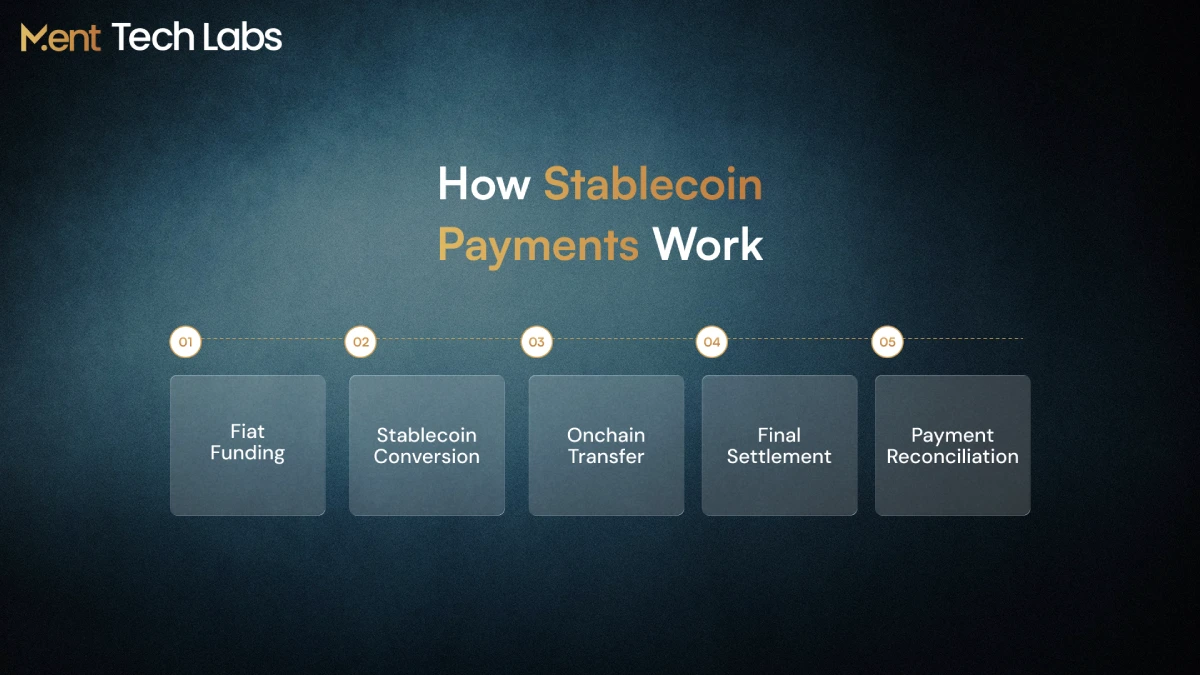
How Stablecoin Payments Work: From Fiat Funding to Final Settlement
Stablecoin payment processing can begin with fiat money moving value using stablecoins and end in the recipient’s currency. This makes fiat-to-stablecoin payments practical for businesses that want movement of funds without holding digital assets for long periods.
1. Fiat Funding
The company begins by moving money from its bank account to a payment service or a way to bring money into the crypto system. This is where regular bank systems link up with the stablecoin payment process.
2. Stablecoin Conversion
The fiat amount is changed into a stablecoin like USDC. After the conversion, the money can be sent across blockchain networks. This avoids the need to depend on traditional banking systems for transfers.
3. Onchain Transfer
The stablecoin is transferred over the selected blockchain network to the recipient, wallet, or payment provider. The network used can affect speed, transaction fees, and settlement availability.
4. Final Settlement
The recipient can keep the stablecoin, use it for another transaction, or convert it into local currency. Reliable crypto on- and off-ramp integration helps connect blockchain-based payments with local fiat rails.
5. Payment Reconciliation
Once the payment is complete, transaction status, fees, conversion details, and stablecoin settlement records are synced with finance or accounting systems. This helps teams track payments and keep records aligned with internal reporting.
Where Businesses Use Stablecoin Payments
Businesses use stablecoin payments when normal payment rails cause delays, higher foreign‑exchange costs, or limited access to settlement. You might notice that stablecoin payments shine most in cross‑border flows where companies must pay, collect, or move money faster and cheaper.
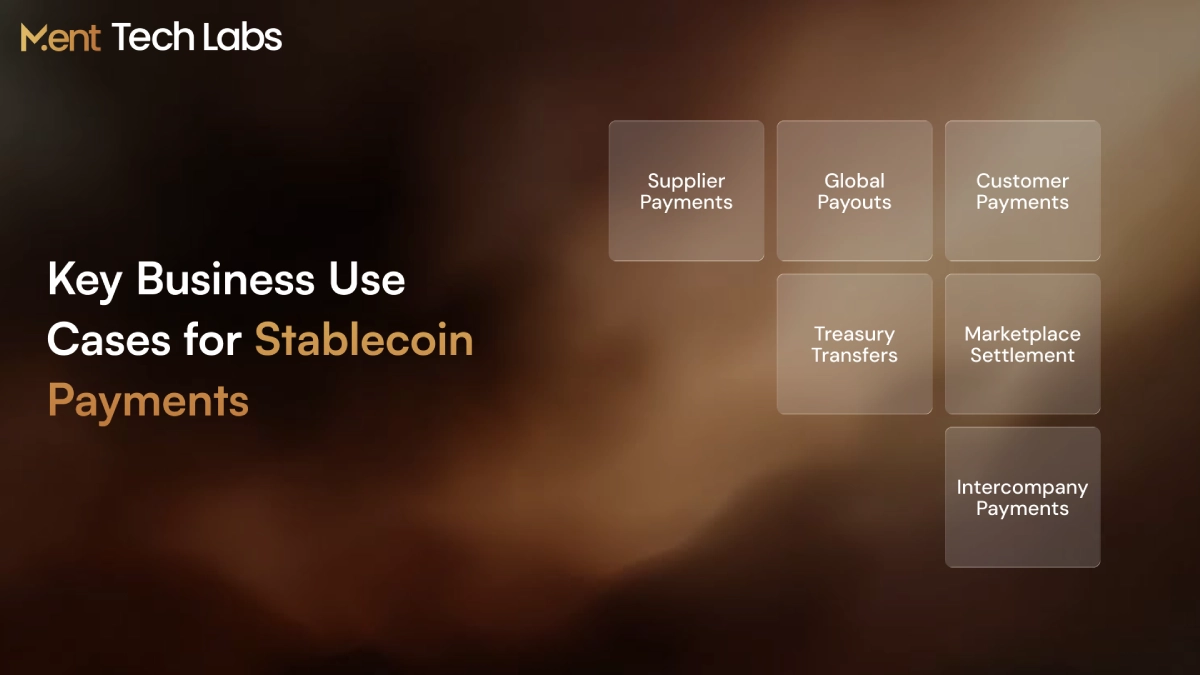
- Supplier Payments
B2B stablecoin payments can help companies pay suppliers and vendors without sending every transaction through many banks. B2B stablecoin payments let suppliers receive stablecoins directly or convert them into currency.
- Global Payouts
Businesses that work with contractors or freelancers or have teams spread out across different locations can use stablecoins to send money faster to different markets. This includes areas where it’s hard to use regular bank services.
- Customer Payments
Businesses can accept stablecoins from international customers and settle the funds in stablecoins or fiat. A stablecoin payments platform can connect payment acceptance, conversion, settlement, and reconciliation in one flow.
- Treasury Transfers
Finance teams can shift working capital between subsidiaries, regional units, or operating accounts. They do not have to rely on bank cut-off times to make these moves. This gives them control and flexibility in managing cash flow across different parts of the business.
- Marketplace Settlement
Marketplaces and digital platforms can use cross-border stablecoin payments to collect from buyers and settle with sellers across multiple countries more efficiently.
- Intercompany Payments
Global companies can use stablecoins to move funds between internal entities for expenses, operational funding, or regional liquidity, helping simplify transfers across different markets.
Stablecoin Payments vs Traditional Payment Rails
A stablecoin payment system can reduce friction in global money movement, but traditional rails still make sense for many domestic and card-based transactions.
| Factor | Stablecoin Payments | Traditional Rails |
| Settlement | Often settles in seconds or minutes, 24/7. | Can take hours or business days. |
| Cross-Border | Fewer intermediaries and simpler global transfers. | May rely on correspondent banks and local clearing. |
| FX | Digital-dollar assets can simplify cross-border conversion. | FX is usually handled by banks or payment providers. |
| Finality | Transactions are generally irreversible once confirmed. | Some rails allow reversals or chargebacks. |
| Compliance | Stablecoin payment compliance needs KYB, AML, and wallet monitoring. | Compliance is built into established banking networks. |
| Best Fit | B2B payments, global payouts, treasury, and digital payments. | Domestic transfers, cards, and established banking flows. |
The Infrastructure Behind Stablecoin Payments
A secure way to send money using stablecoins requires more than a connection to a blockchain. Companies need a system that can move money safely, manage currency changes, send transactions to the right place, and let finance teams stay in charge. A good stablecoin payment system combines all these parts into one process.
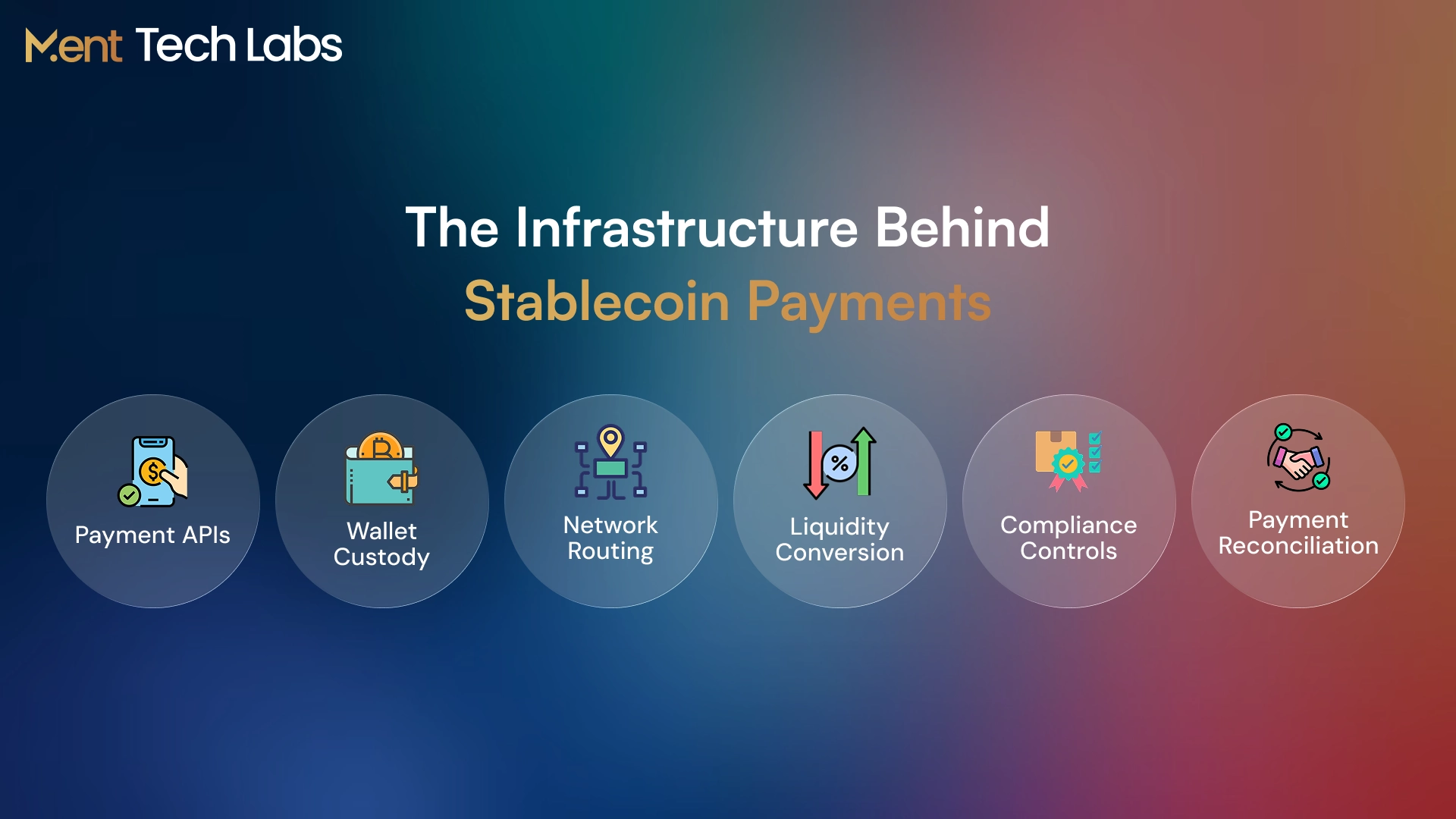
1. Payment APIs
APIs link stablecoin payments with checkout, invoicing, payouts, treasury systems, and other business applications so that teams do not have to handle raw blockchain operations.
2. Wallet Custody
Wallets hold and move stablecoins, while secure digital asset custody services protect private keys and add approval controls for business transactions.
3. Network Routing
Payments can move across Ethereum, Solana, Polygon, or other supported networks. The routing logic helps pick the chain by looking at fees, speed, and which assets are supported.
4. Liquidity Conversion
Liquidity providers help with converting stablecoins to money and fiat money to stablecoins. This lets businesses pay out funds and settle transactions in the currency they actually want. It makes it easier for companies to manage their payments and stay flexible with types of money.
5. Compliance Controls
Identity checks, sanctions screening, wallet monitoring, and transaction analysis help businesses manage risk before and during each payment.
6. Payment Reconciliation
Transaction data, fees, conversions, and settlement records need to flow back into accounting and finance systems so teams can track each payment clearly.
How Businesses Manage Stablecoin Settlement and Treasury
Stablecoins are very helpful for finance teams when they make it faster to move and use cash. Stablecoin transactions can happen all day and all night. This helps companies move money between parts of their business. It also helps them pay companies. It lets them deal with money needs quickly without waiting for banks to be open.
Settlement: Businesses can settle in stablecoins or convert funds into local fiat, depending on what the recipient needs.
Liquidity: Treasury teams can keep smaller working balances and move funds when needed instead of prefunding every corridor days in advance.
Treasury Control: Good stablecoin treasury management still needs approval rules, balance visibility, transaction limits, and clear reconciliation across wallets and accounts.
System Integration: Enterprise blockchain solutions can connect stablecoin rails with treasury, payment, and accounting systems so finance teams can manage them as part of normal operations.

Stablecoin Payment Compliance, Security, and Risk Management
Moving money on-chain does not remove the controls businesses already need around payments. A reliable stablecoin payment platform should build compliance, security, and transaction monitoring directly into the payment flow rather than treat them as separate checks.
1. Customer Verification: KYC and KYB checks help verify the people and businesses sending or receiving funds.
2. Wallet Screening: Wallet addresses should be screened for sanctions exposure, suspicious activity, and other risk signals before transactions are approved.
3. Transaction Monitoring: Payment activity needs ongoing monitoring so unusual transaction patterns can be reviewed or blocked when necessary.
4. Custody Controls: Businesses holding stablecoins need secure key management, approval policies, access controls, and clear responsibility for moving funds.
5. Payment Records: Transaction details, counterparties, conversion data, and settlement records should stay connected to internal accounting and audit systems.
6. Asset Risk: Even USDC payments for businesses require businesses to review issuer exposure, supported networks, liquidity, redemption options, and regulatory requirements in each market.
How Businesses Implement Stablecoin Payments
Rolling out stablecoin payments for businesses works best when the payment flow is designed around a real operational need. The goal is to build a stablecoin payment system that fits existing finance, compliance, and treasury processes rather than adding another disconnected payment rail.
Step 1: Define Use Case
Start with one clear flow, such as supplier payments, global payouts, customer collections, or intercompany transfers. This helps define the countries, currencies, settlement model, and transaction volumes the system needs to support.
Step 2: Select Assets
Choose stablecoins and blockchain networks based on liquidity, issuer credibility, fees, network reliability, and availability in the markets where the business operates.
Step 3: Choose Architecture
Decide whether to integrate an existing provider or build more customized stablecoin payment infrastructure with greater control over wallets, APIs, routing, and settlement workflows.
Step 4: Set Controls
Build KYB, AML, sanctions screening, wallet policies, transaction limits, and approval workflows into the payment process before going live.
Step 5: Connect Systems
Integrate payment APIs with accounting, ERP, treasury, invoicing, and reconciliation systems so transaction data does not have to be managed manually.
Step 6: Pilot and Scale
Start with one market or payment flow, test settlement and exception handling, then expand once finance and operations teams can manage the process reliably.
Final Thoughts
Stablecoin payments are becoming a practical option for businesses that need faster cross-border movement, flexible settlement, and better control over global payment flows. The real value comes from combining the right infrastructure, compliance, liquidity, and treasury processes.
Whether you are building B2B payment flows, global payouts, or a custom settlement system, working with an experienced stablecoin development company can help turn the idea into a secure, production-ready solution.
Contact Ment Tech Labs today to discuss your stablecoin payment requirements and build an infrastructure that fits your business, markets, and growth plans.