Real money is moving on-chain. Big banks are tokenizing bonds, funds, and real estate. And Ripple real world asset tokenization is at the center of all of it. This guide explains everything, clearly, simply, and in plain English.
What is Ripple real world asset tokenization?
RWA stands for real world assets. These are physical or financial assets that exist in the real world. Think property, gold, government bonds, private equity, or money market funds.
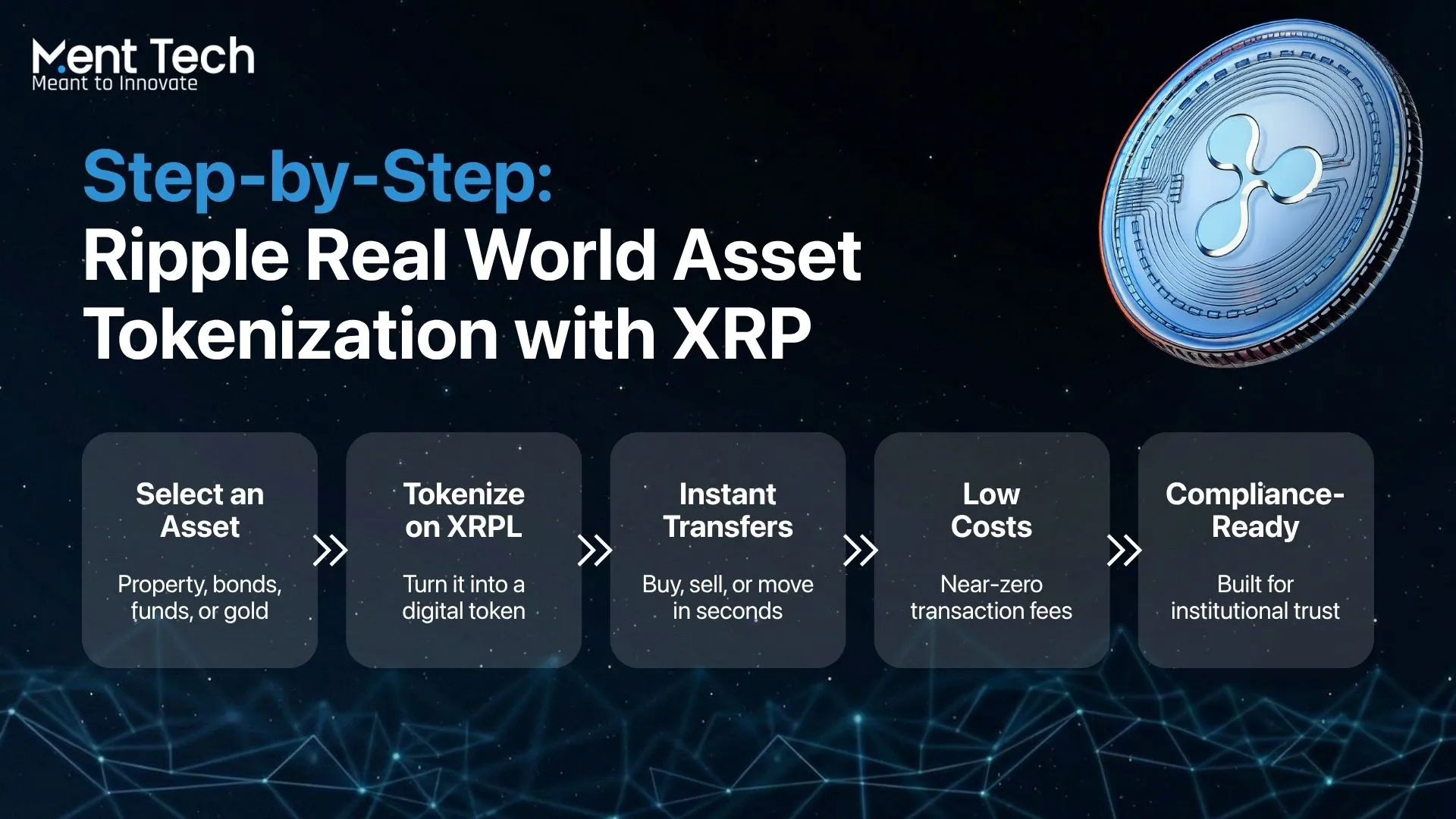
Ripple real world asset tokenization turns these assets into digital tokens that live on a blockchain. Each token represents real ownership. You can buy, sell, or transfer that token instantly. No paperwork. No delays. No middlemen taking a cut.
This is not a new idea. But it is finally becoming real. The technology is ready. The institutions are ready. And the Ripple RWA tokenization infrastructure is ready to handle it at scale.
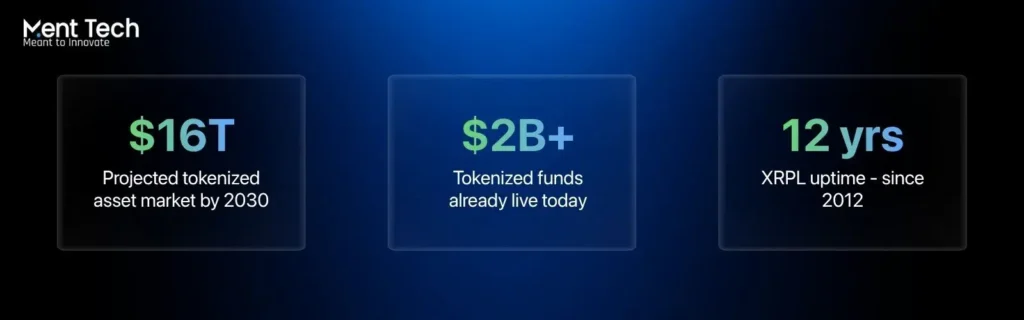
The World Economic Forum describes asset tokenization as the next generation of value exchange in global financial markets, and puts the opportunity at over $16 trillion by 2030
That is a massive opportunity. And Ripple RWA tokenization is one of the leading ways institutions are accessing it today.
Ripple vs XRP Ledger: The most important difference
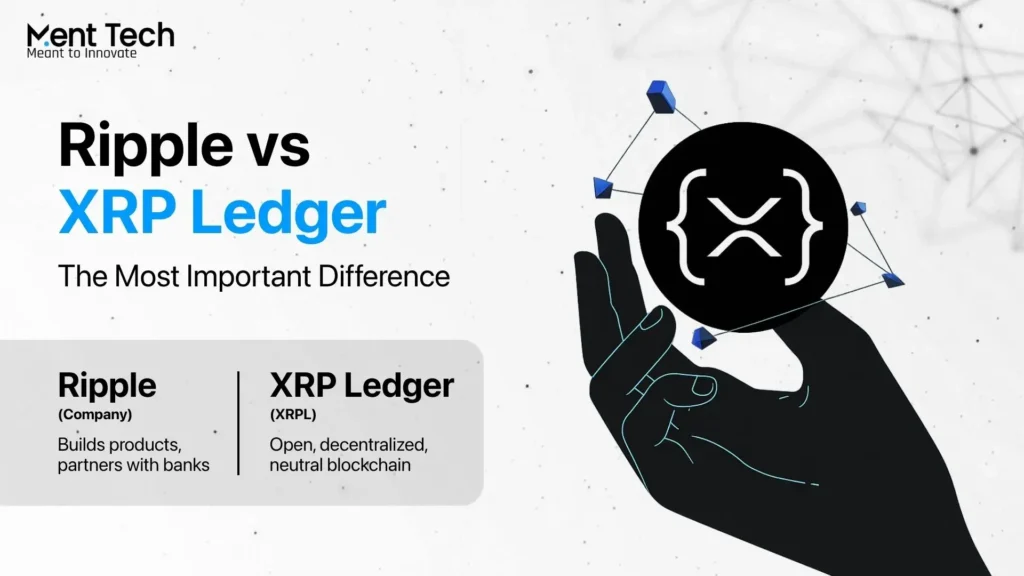
Before anything else, you need to understand this. Most people mix these two things up. They are not the same.
Ripple (the company)
A private company based in San Francisco. Builds products like RippleNet and On-Demand Liquidity (ODL). Partners with banks and payment providers. It is the commercial engine behind Ripple RWA tokenization solutions.
The scope of Ripple RWA tokenization is broader than most people realize,learn why HNIs are moving to tokenization
XRP Ledger (XRPL)
An open, public, decentralized blockchain. No single owner or controller. Anyone can build on it. It is the neutral infrastructure that makes a ripple XRPL tokenized fund possible without depending on one company.
Why does this matter so much? Because big institutions do not want to be locked into one vendor. They want neutral infrastructure they can rely on — even if Ripple the company changes direction tomorrow. XRPL gives them exactly that. It is open. It is permissionless. It has been running since 2012 without a single major failure.
This is why Ripple real world asset tokenization is winning institutional trust. The ledger itself is independent. The company builds on top of it. Institutions can do the same.
Why XRPL is the right blockchain for tokenization
There are many blockchains. Ethereum. Solana. Polygon. So why is XRPL one of the top choices for Ripple RWA tokenization? Here are the real reasons:
3-5 second settlement
A cross-border payment or asset transfer settles in under 5 seconds. Traditional banks take 2-5 business days. That is the difference between old finance and new finance.
Near-zero transaction cost
Each transaction costs a fraction of a cent. This makes it viable to run thousands of small transfers per day, essential for fund distributions and bond settlements.
Built-in decentralized exchange
XRPL has a native DEX. A ripple XRPL tokenized fund can be traded directly on-ledger. No third-party exchange needed.
Compliance-ready features
XRPL supports token freezing, clawback, and identity layers. These are critical for regulated asset tokenization. Regulators and compliance teams approve of this design.
Put it all together and you have a blockchain built for exactly what Ripple RWA tokenization needs: fast, cheap, compliant, and neutral. No other public chain ticks all four boxes as cleanly as XRPL does today.
From pilots to production, the industry has grown up
Two years ago, every major bank was running blockchain experiments. Proof of concepts. Sandbox pilots. “We are exploring tokenization” press releases with no live deployments behind them.
That phase is over. The industry has moved on. Now they are in what the market calls “controlled production environments.” Real assets. Real clients. Real regulatory oversight. Real money.
Ripple real world asset tokenization has been at the center of this shift. XRPL is now one of the most actively used public blockchains for production-grade institutional tokenization flows — especially for funds, collateral management, and cross-border settlement.
Institutions no longer ask “does blockchain work?” They now ask “which blockchain do we build on?” XRPL is increasingly the answer for Ripple RWA tokenization at scale.
The platforms winning today are the ones that started building two years ago. They designed with compliance in mind. They built on solid, proven architecture. And they were ready when the regulatory doors began to open.
Ripple BlackRock tokenized fund partnership
The Ripple BlackRock tokenized fund partnership is one of the most important signals in the entire tokenization space. BlackRock’s BUIDL fund is the largest tokenized money market fund in the world, managing billions in on-chain assets.
Ripple has been building the infrastructure layer that supports exactly this kind of institutional product. The Ripple BlackRock tokenized fund partnership narrative is about more than one deal. It shows that the world’s largest asset manager trusts on-chain infrastructure for real money market products.
What does this mean for the market? It means the Ripple BlackRock tokenized fund partnership is a template. Other fund managers are watching. If BlackRock can tokenize a money market fund at institutional scale, so can everyone else. And they will use the same type of infrastructure, fast settlement, regulated stablecoins, and neutral ledgers like XRPL.
The Ripple BlackRock tokenized fund partnership also validates Ripple’s position. It is not just a payments company anymore. It is a core piece of the institutional tokenization stack.
Swift ripple XRP Ledger — the cross-border connection
SWIFT is the messaging network that connects over 11,000 financial institutions across 200 countries. Every major international bank payment goes through it. And it is slow, expensive, and opaque.
The swift ripple XRP Ledger connection is about solving that. Ripple’s On-Demand Liquidity product uses XRP as a bridge currency for real-time cross-border payments. The swift ripple XRP Ledger integration means that instead of waiting 3-5 days for a cross-border transfer to settle, it can happen in seconds.
For Ripple RWA tokenization, this matters enormously. A tokenized bond in London needs to settle with a buyer in Tokyo. A tokenized real estate fund in Singapore needs to pay distributions to investors in the US. The swift ripple XRP Ledger infrastructure makes all of that seamless — without correspondent banks, without delays, and without excessive fees.
Major global banks are already running swift ripple XRP Ledger tests in live environments. This is not theory. It is the infrastructure layer being built right now, underneath the tokenized financial system of the next decade.
Ripple institutional DeFi XRP Ledger roadmap
Where is XRPL going next? The ripple institutional DeFi XRP Ledger roadmap answers that question. And it is ambitious.
AMM — live now
Automated market maker is already live on XRPL. Any ripple XRPL tokenized fund can access on-chain liquidity without a traditional order book.
Lending protocol
Use tokenized assets as collateral. Borrow against a bond or a fund token without selling it. This is at the core of the ripple institutional DeFi XRP Ledger roadmap.
EVM sidechain
Smart contracts written in Solidity now run on XRPL. This opens the ecosystem to thousands of Ethereum developers and expands Ripple real world asset tokenization use cases dramatically.
RLUSD stablecoin
Ripple’s regulated USD stablecoin is fully audited and designed for institutional use. It is the settlement currency for the entire ripple institutional DeFi XRP Ledger roadmap.
Every feature on the ripple institutional DeFi XRP Ledger roadmap is built for compliance-first institutions. This is not a retail DeFi play. It is regulated, audited, and designed to work inside the existing financial system, not against it.
By 2027, the ripple institutional DeFi XRP Ledger roadmap will make XRPL one of the most complete institutional blockchain ecosystems in the world. AMM, lending, stablecoin, smart contracts, compliance tools — all in one place, all on a ledger with 12 years of proven uptime.
What assets can be tokenized on XRPL today?
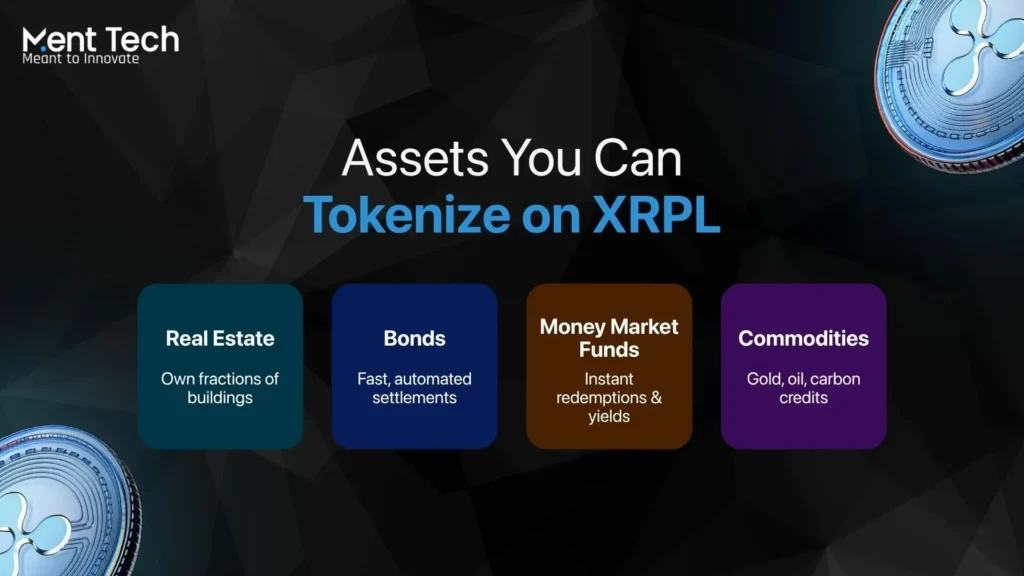
The scope of Ripple RWA tokenization is broader than most people realize. Here is what is already being tokenized, or is ready to be:
Real estate is one of the biggest opportunities. Fractional ownership allows investors to hold a small piece of a building. A $10 million property can be split into 10,000 tokens of $1,000 each. This opens real estate investing to people who could never access it before.
Government and corporate bonds are another major use case for a ripple XRPL tokenized fund. Bonds settle slowly and are expensive to trade. On XRPL, a tokenized bond settles in seconds. Coupon payments can be automated with smart contracts. The back office cost drops dramatically.
Money market funds, like those in the Ripple BlackRock tokenized fund partnership — are already live. Investors hold digital tokens instead of paper certificates. Redemptions happen in real time. Yields are distributed automatically.
Commodities like gold, carbon credits, and oil are also being explored. The swift ripple XRP Ledger connection makes cross-border commodity settlement far more efficient than the existing system.
What makes a great tokenization platform?
Not all blockchain platforms are equal. And not all tokenization solutions are built the same way. Here is what institutions look for when choosing a partner for Ripple real world asset tokenization:
Compliance first. The platform needs to support KYC, AML, and local regulatory requirements from day one. Not bolted on later. Built in from the start.
Proven infrastructure. Nobody wants to run a billion-dollar fund on a blockchain that launched six months ago. XRPL has been running since 2012. That matters to institutions.
Vendor support. Institutions want to know there are real engineers and real support behind the product. This is why the Ripple company relationship with XRPL is actually a strength, even though the two are separate. Ripple provides enterprise support for teams building on XRPL.
Clear roadmap. Institutions plan 3-5 years ahead. They need to know the blockchain they choose today will still be the right choice in 2030. The ripple institutional DeFi XRP Ledger roadmap gives them exactly that confidence.
How Ment Tech Labs helps you build on XRPL
Understanding Ripple real world asset tokenization is one thing. Building it is another. It requires deep technical expertise, token architecture, smart contract development, compliance integration, wallet infrastructure, and regulatory frameworks that vary by country.
That is where Ment Tech Labs comes in. We are an AI-powered Web3 and blockchain development company. We specialize in building production-ready Ripple RWA tokenization platforms, from the first line of code to live deployment.
Whether you want to launch a ripple XRPL tokenized fund, build a cross-border settlement product using the swift ripple XRP Ledger rails, or create a lending protocol aligned with the ripple institutional DeFi XRP Ledger roadmap, we help you get there. Fast. Compliantly. And on solid architecture that scales.
We have worked with institutions, startups, and asset managers across the Web3 space. We understand what regulators look for. We understand what institutions need. And we know how to build it on XRPL in a way that is ready for the future.
Ready to launch your Ripple real world asset tokenization platform? Contact the team now, and let’s build it right, from architecture to live deployment.