Have you ever wished you could own a small piece of a skyscraper in New York? Or invest in a gold mine without buying the whole thing?
That is now possible. Thanks to RWA tokenization.
Real-world assets, I mean, things like real estate, gold, bonds, and art, are being turned into digital tokens on a blockchain. Anyone with a smartphone can now invest in assets that were once only available to the super-rich.
The numbers back this up. The global RWA tokenization market is expected to reach $30 trillion by 2030. BlackRock, JPMorgan, and Fidelity are all moving into this space. The technology is ready. The demand is real.
But there is one massive wall standing in the way.
The rules are not ready.
Governments around the world are still figuring out how to handle tokenized assets. Some countries have clear frameworks. Most do not. And without clear regulations, big money stays on the sidelines.
This write-up breaks down exactly what needs to change in regulatory frameworks for RWA tokenization platforms before 2030, and why it matters for builders, investors, and everyday people alike.
What Is RWA Tokenization?
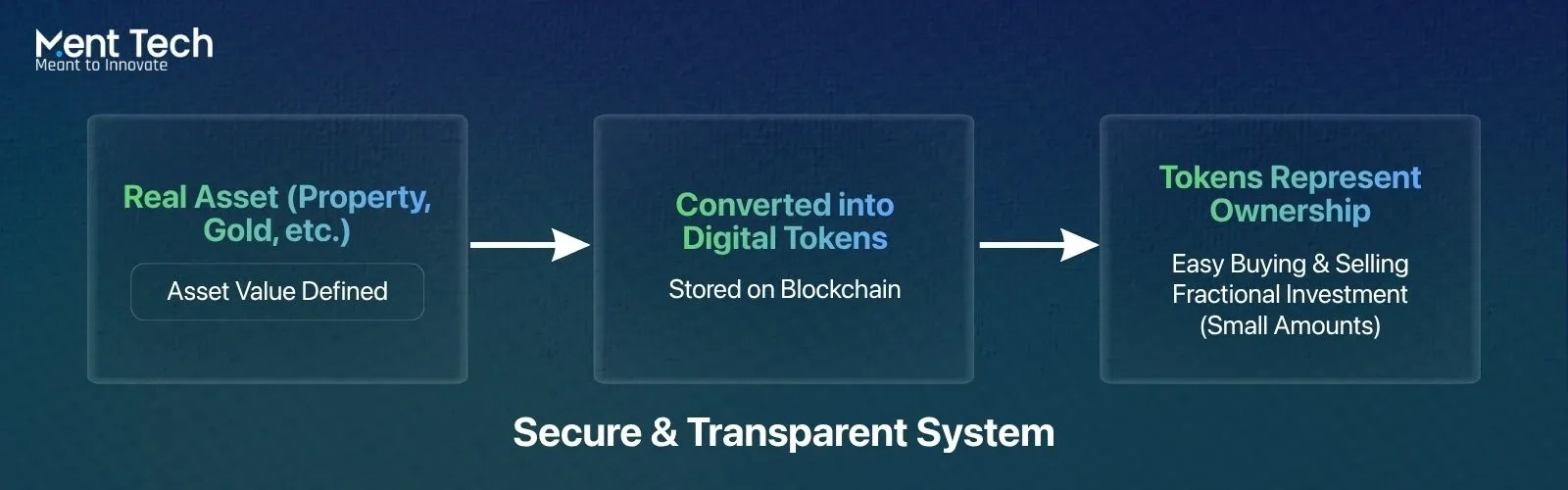
RWA tokenization means taking a real physical asset and turning it into a digital token on a blockchain. Think of it like slicing a pizza. Instead of one person buying the whole pizza, hundreds of people each get a slice.
A building worth $10 million can be broken into 10 million tokens worth $1 each. Anyone — anywhere in the world, can buy one token and own a tiny piece of that building.
Here is what makes this powerful. Before tokenization, most big assets were locked behind high entry costs. You needed millions of dollars to invest in commercial real estate or private equity. Tokenization removes that wall completely.
Assets being tokenized today include real estate, government and corporate bonds, commodities like gold and oil, private equity stakes, fine art and collectibles, infrastructure projects, and even intellectual property rights.
This is not a future idea. It is happening right now. JPMorgan’s Onyx platform has already processed billions in tokenized transactions. BlackRock’s BUIDL fund tokenized US Treasury bonds in 2024. The train has left the station. The question is whether regulations can keep up.
Discover everything you need to know about tokenizing real-world assets.
Rules Are the Real Foundation
Here is the truth that most people in crypto do not want to hear.
Technology is the easy part. Regulation is the hard part.
You can build the most secure, efficient RWA tokenization platform in the world. But if regulators do not recognize it, or worse, if they shut it down, none of that matters.
Good regulation does three things for the RWA industry. First, it builds trust. When people know a platform operates within the law, they feel safe putting their money in. Second, it unlocks institutional capital. Hedge funds and pension funds manage trillions of dollars, but they cannot touch anything that is not regulatory-compliant. Third, it creates a level playing field where honest platforms can compete without bad actors exploiting loopholes.
Right now, none of those three things are fully in place globally. That is the core challenge facing the entire industry.
Where the World Stands Today
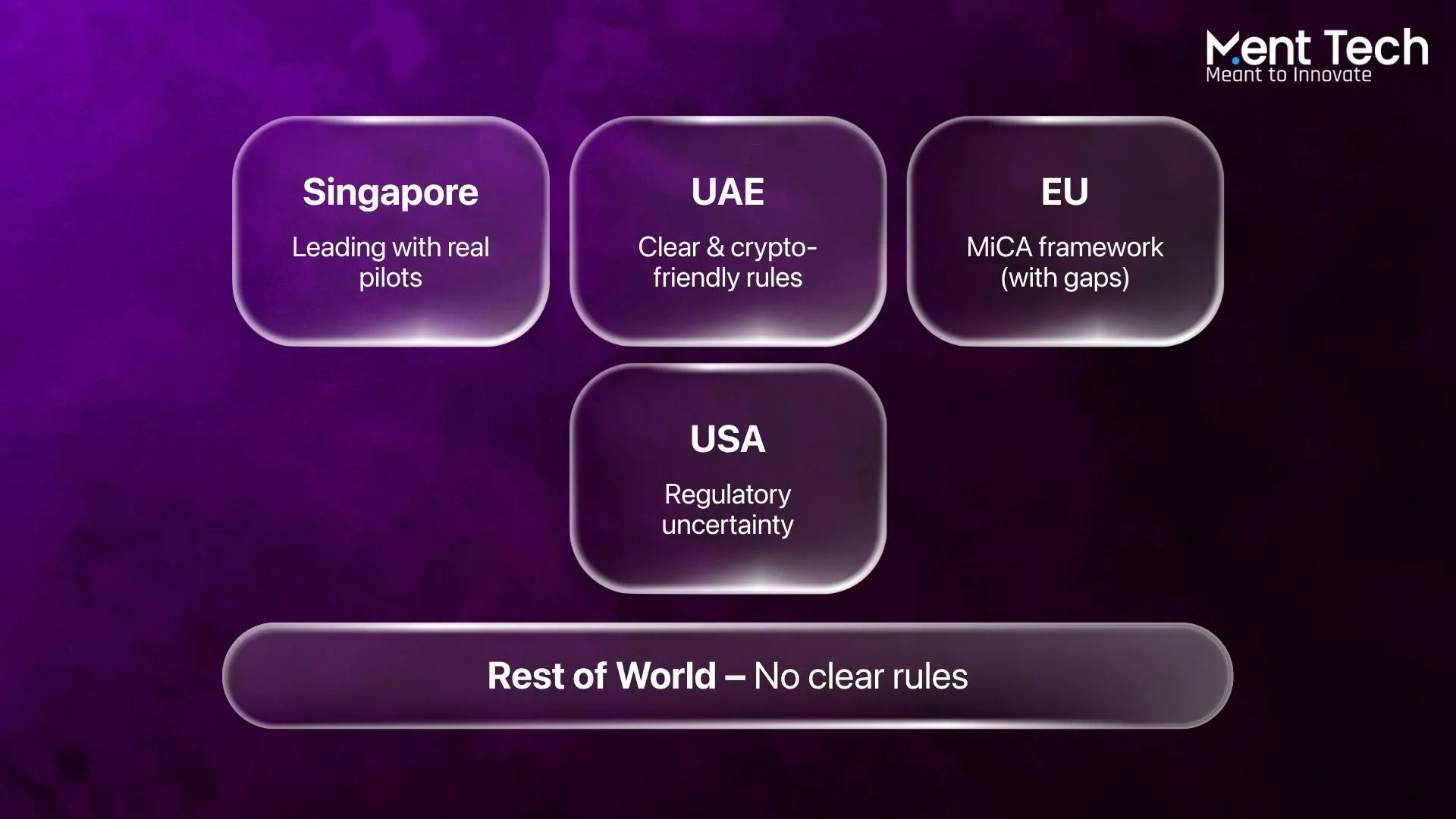
Different countries are at completely different stages. Here is where things actually stand today.
Singapore is the global leader. The Monetary Authority of Singapore launched Project Guardian, a real pilot program testing tokenized bonds and funds with actual banks. MAS has shown the rest of the world how a regulator can be both strict and innovation-friendly at the same time. Read more about Singapore’s approach to digital asset regulation here.
UAE has become the go-to destination for RWA platforms. ADGM and DIFC offer clear licensing frameworks that welcome crypto businesses. Many global projects are incorporating in the UAE specifically because of regulatory clarity. It is the Singapore of the Middle East.
European Union passed MiCA, the Markets in Crypto Assets regulation, in 2024. This is a big deal. It brought crypto regulation into a single framework across 27 countries. But MiCA still has important gaps when it comes to tokenized real-world assets specifically. Updates are expected before 2027.
United States is the biggest question mark. The SEC says most tokens are securities. The CFTC says some are commodities. Nobody agrees. Court cases are still being fought. Until Washington gets its act together, major US institutional capital will stay cautious about RWA platforms.
Rest of world, most countries have no dedicated framework at all. Operating in these markets means taking on serious legal risk.
5 Biggest Regulatory Problems Facing RWA Platforms Today
These five problems are slowing the entire RWA tokenization industry down right now.
1. No Global Standard
A platform that is fully legal in Singapore may be operating illegally in the US. There is no shared baseline between countries. This fragmentation makes building a global RWA platform nearly impossible. Developers have to rebuild their compliance system from scratch for every new market they enter. This is expensive, slow, and discourages innovation.
2. Unclear Asset Classification
Is a tokenized apartment a security? Is tokenized gold a commodity? Different regulators give different answers to the exact same question. This legal ambiguity forces platforms to make expensive legal bets, and sometimes lose them. Until every major jurisdiction agrees on a classification system, this problem will keep growing.
3. KYC and AML Gaps
Know Your Customer and Anti-Money Laundering rules were designed for traditional banks, not decentralized blockchain platforms. Verifying a user’s identity across 30 different countries while staying compliant with each country’s local AML laws is a nightmare. Platforms either over-comply and lose users, or under-comply and face regulatory action.
4. No Investor Protection Framework
Traditional finance has safety nets. Bank deposits are insured. Investment platforms are regulated. But if an RWA tokenization platform shuts down tomorrow, what happens to the investors? Who gets paid? How are assets recovered? Right now, there are no clear answers to these questions in most jurisdictions.
5. Cross-Border Transaction Complexity
Moving a tokenized asset from the US to Germany means navigating two completely different regulatory systems simultaneously. There is no legal bridge between them. This makes cross-border RWA transactions slow, expensive, and legally risky, the opposite of what blockchain is supposed to deliver.
What Must Change by 2030?
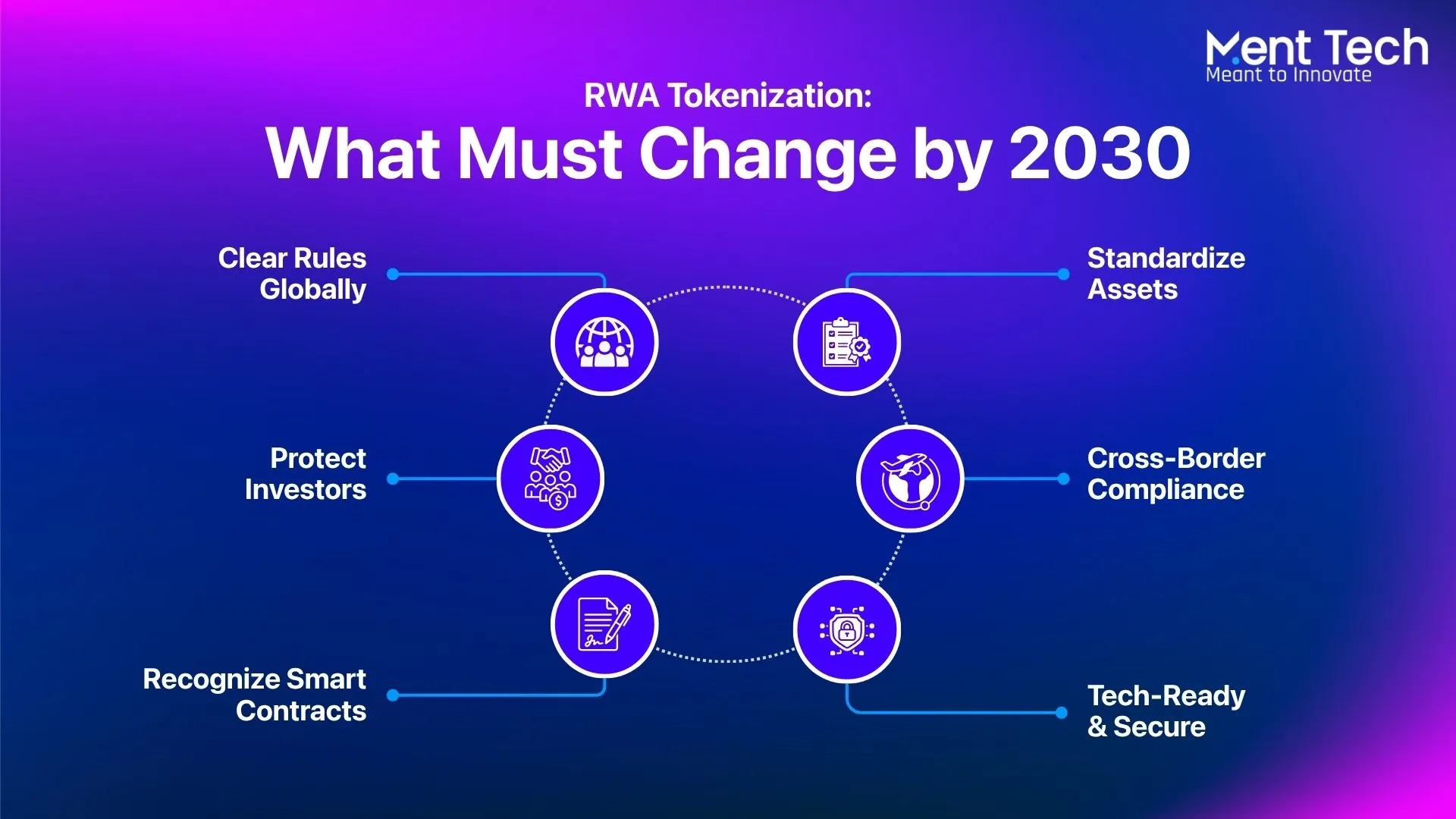
This is what needs to happen, specifically and concretely, before 2030.
1. A Global Regulatory Baseline
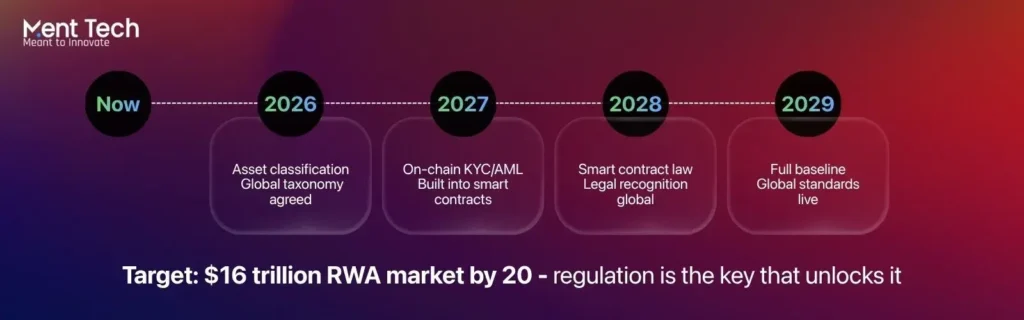
Countries do not need identical rules. But they need compatible ones. The Financial Action Task Force (FATF) created global AML standards for banking that almost every country follows. A similar body needs to do the same for tokenized assets. Platforms should be able to build once and operate in multiple markets without rebuilding their entire compliance stack from scratch.
2. A Universal Token Classification System
Every tokenized asset needs a clear legal category, security, commodity, utility, or a new category entirely. Regulators need to work directly with the RWA industry to build this classification system. Not in a boardroom without practitioners. In genuine collaboration. This eliminates the legal guesswork that is costing platforms time and money every single day.
3. On-Chain KYC and AML
Blockchain-native compliance tools need regulatory recognition. On-chain KYC means a user’s verified identity is attached directly to their wallet. When they buy a tokenized asset, compliance is automatic and instant. Regulators need to accept this approach as equivalent to, or better than, traditional methods. It is faster, cheaper, and more reliable.
4. Legal Recognition of Smart Contracts
Smart contracts execute automatically and without a middleman. But most courts do not recognize them as legally binding agreements. By 2030, this must change. A smart contract that transfers tokenized ownership needs the same legal standing as a notarized deed. The UK Law Commission has already started moving in this direction. Others need to follow.
5. Investor Protection Frameworks
Regulators must build clear rules for what happens when an RWA platform fails. Who gets paid first? How are tokenized assets recovered? What insurance exists? These protections are standard in traditional finance. They need to be designed specifically for the tokenized world, not just copied from outdated banking rules.
6. Regulatory Sandboxes Everywhere
Regulatory sandboxes, temporary lighter-touch environments where platforms can test products with real users, have proven effective in Singapore and the UK. More countries need to adopt this model aggressively. Waiting for perfect rules before allowing innovation is how industries get left behind.
7. Standardized Reporting
Every RWA platform today reports data differently. Regulators cannot easily monitor or compare them. A standardized reporting format, built specifically for tokenized assets, needs to become the global norm before 2030. This makes oversight easier and builds the kind of institutional confidence that unlocks billions in capital.
3 Reasons to Build Your RWA Platform Now
Waiting for perfect regulations is not a strategy. It is how you miss the market entirely. Here is why the smart builders are starting today.
The market is wide open. Most RWA platforms are still early-stage and regional. Competition is a fraction of what it will be in three years. Getting in now means shaping the market rather than chasing it.
Early movers influence regulation. Companies that are already operating have a real seat at the table when new rules are written. Regulators consult with platforms that have hands-on experience. Being early means your voice helps shape the rules everyone will follow.
Institutional money is coming fast. BlackRock, Fidelity, and JPMorgan are not experimenting anymore — they are deploying capital. When that wave fully arrives, the platforms that are already built, tested, and compliant will capture the majority of it.
Want to start tokenizing your assets safely? Reach out to Ment Tech now!
Why Partner with the Right RWA Development Team?
The technology behind RWA tokenization is complex. The regulatory landscape is even more complex. Trying to navigate both at the same time, without experienced guidance, is how projects fail.
The right development partner brings three critical things. Years of deep technical expertise, smart contracts, token architecture, and cross-chain compatibility all need to be built in the right way from the starting. Regulatory knowledge, a team that has built compliant platforms without sacrificing user experience. And real-world track record of successfully launched platforms bring experience that no amount of research can replace.
Future Trends in RWA Regulation
The landscape is shifting way too quick.
Here is what is coming before 2030 can do.
AI-powered compliance monitoring. Regulators will use artificial intelligence to monitor RWA platforms continuously, not just in annual audits.
Tokenized government bonds go mainstream. Multiple governments are already piloting sovereign tokenized bonds. When major economies fully commit, it forces every regulator globally to create clearer frameworks. This is one of the most powerful catalysts for regulatory change on the horizon.
Decentralized identity standards. A universal digital identity standard, where one verified identity works seamlessly across all platforms and jurisdictions, is coming. This solves the cross-border KYC nightmare that currently plagues every global RWA platform. Read about decentralized identity developments at W3C.
Carbon credit tokenization rules. Environmental assets are being tokenized rapidly. Regulators are watching closely. Dedicated rules for tokenized carbon credits and environmental assets will emerge before 2030, opening up an entirely new asset class for forward-thinking platforms.
Institutional DeFi frameworks. Regulated, permissioned DeFi protocols that allow institutional players to participate in decentralized finance are already being tested. By 2030, this will be a standard part of the RWA ecosystem. with dedicated regulatory frameworks to match.
Conclusion
RWA tokenization is changing finance forever. The technology is ready. The money is moving. The demand is real.
Regulations are still catching up, but they are getting there. Singapore is leading the way. The EU is building rules. Governments are running tests. By 2030, the rules will be very different from today.
The winners will be the teams who start building now. Build smart. Build with compliance in mind. Be ready when the doors open.
Don’t wait for perfect rules. They are always three years away.
Start today. Stay close to the conversation. Be ready when the wave comes.
Want to build on the right foundation? Ment Tech Labs builds AI-powered Web3 and blockchain products, the right way.