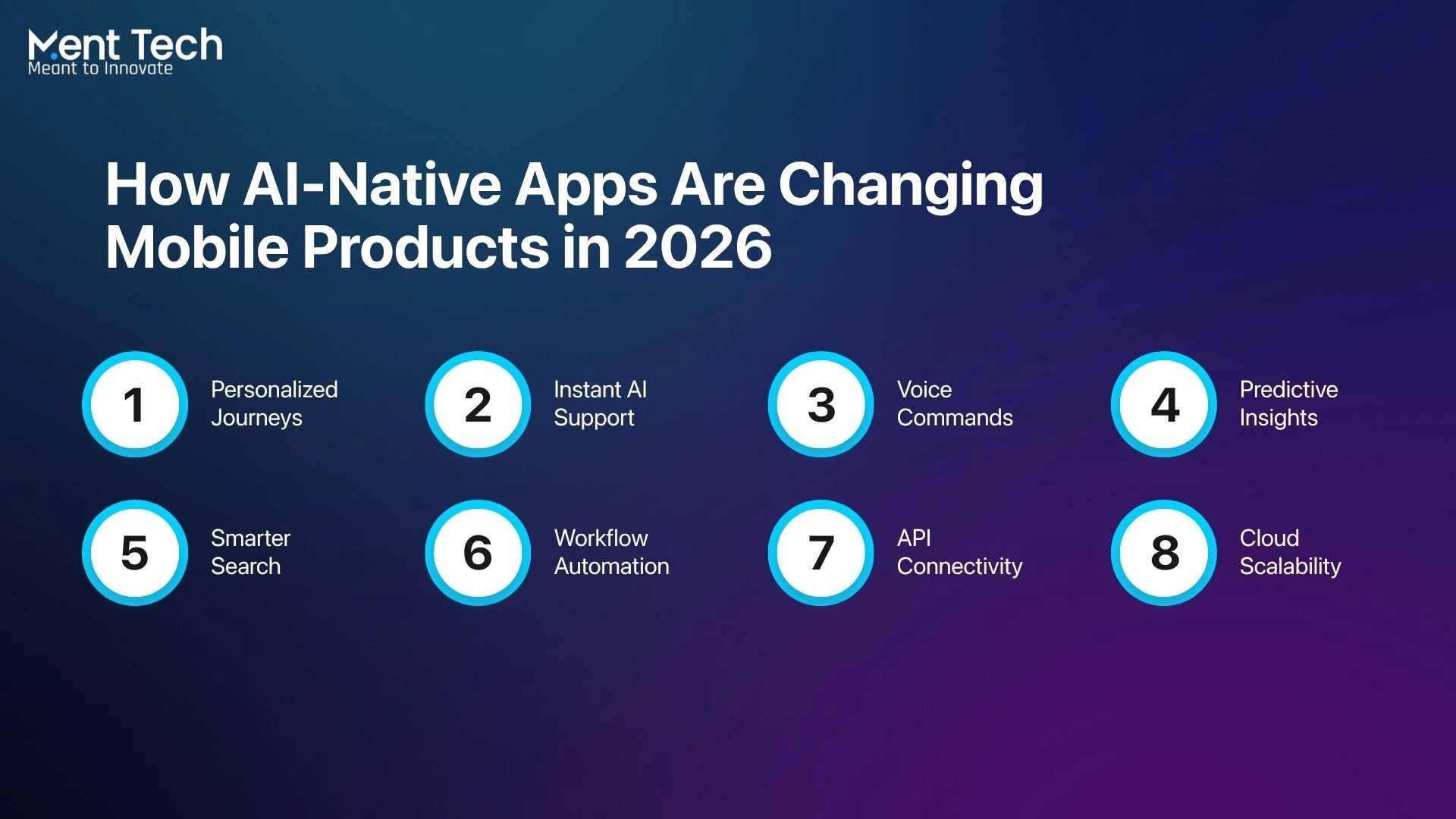
Mobile apps used to have one job: give people a simple way to tap into a website or a system that already existed. That’s not really true anymore. By 2026, the apps that actually get used are the ones built with AI baked in from the start, not added on after launch. The recommendation feed isn’t some extra widget. For a lot of apps, it’s the whole reason someone opens it.
People expect more now, even if they don’t say it out loud. They want the app to already know what they’re looking for. They don’t want to dig through three menus to find a support form when a quick answer would do. And they expect things to just connect, whether that’s a CRM, a payment system, or whatever the business already runs on behind the scenes.
That shift is changing what businesses actually want from a mobile app development company USA. Building for iOS and Android isn’t the hard part anymore; most companies can handle that. The harder question is whether a team can build something where AI and automation are part of the core product, not a feature tacked on six months after launch.
This is where Ment Tech Labs comes in. We help USA-based businesses build AI-native mobile apps, combining mobile engineering, generative AI, API integrations, and cloud-ready architecture into one product strategy, not a patchwork of add-ons.
What Is an AI-Native Mobile App?
An AI-native mobile app just means AI was part of the plan from day one, not something squeezed in after the fact. The app actually pays attention to what someone does and adjusts on the fly. Recommendations get better the more they’re used. A chatbot or voice assistant can handle a real question instead of pointing to a help page, and the app quietly picks up on things like a user about to drop off before anyone has to flag it manually.
This is the kind of work a mobile app development company USA gets asked for a lot now. It’s not really about tacking on one smart feature; it’s about baking user behavior tracking and automation into the app’s actual architecture. With the right artificial intelligence integration services, an app stops just showing information and starts responding to whoever’s actually using it.
Why Mobile App Development in the USA Is Shifting Toward AI-Native Products
Companies all over the US are not jumping into AI because it is popular. They are doing so because it is much harder to get the users excited than it used to be.
- Higher user expectations: People compare every app to the smartest one on their phone, so a mobile app development company USA now has to think past basic screens and flows.
- Need for automation: Manual approvals, repetitive tickets, and back-and-forth data entry are exactly what AI handles well, and it’s why artificial intelligence integration services are becoming a normal part of mobile projects, not an extra ask.
- Demand for personalized experiences: Users expect the app to adapt to them, not the other way around, which is pushing teams to use generative AI development services rather than static content blocks.
- Competitive digital products: When competitors are shipping AI features, a flat, static app starts to feel outdated fast.
- Better customer support: AI assistants handle the repetitive questions so human teams can focus on the harder ones.
- Integration with SaaS and enterprise systems: Apps are expected to integrate with CRMs, ERPs, and internal tools through robust API development services, rather than sit off to the side as a disconnected piece.
How AI Is Changing Mobile App Development in 2026
Honestly, AI stopped being some bonus feature a while ago. At this point, it’s just baked into how an app behaves, whether you notice it or not.
Personalized User Experiences
Hand the same app to two people, and they’ll probably see two different screens. It’s watching what you tap, what you skip past, and quietly guessing what you’ll want before you ask.
- Dashboards rearrange based on real usage.
- Recommendations shift with actual behavior.
- Notifications show up when they’re actually relevant.
AI Chatbots and In-App Assistants
Remember when a chatbot just dumped you on an FAQ page and left you to figure it out? That’s not really how it works anymore. It can follow the conversation, remember what you said earlier, and only pulls in a human when it actually needs to.
- Answers specific questions instantly.
- Walks users through tasks step by step.
- Cuts down support tickets significantly.
Voice-Enabled Mobile Interfaces
Typing on a phone while you’re doing five other things is annoying, so voice just takes over for that. Quick, hands-free, done.
- Voice search and commands.
- Hands-free appointment booking.
- Better accessibility for all users.
Predictive Analytics
This bit’s less about the user and more about the business behind the app. It’s basically spotting what’s about to happen before anyone has to ask.
- Flags churn risk early
- Predicts the likely next purchase
- Estimates demand before it spikes
Workflow Automation
A lot of this never touches the screen at all. It’s just running in the background, quietly keeping things moving so nobody has to push every single step by hand.
- Automates approvals and alerts.
- Routes internal tasks automatically.
- Reduces manual operational work.
AI-Powered Search
Search used to mean typing the exact right word or getting nothing back. Now it actually gets what you mean, even if you don’t phrase it perfectly.
- Semantic search understands intent.
- Smart filters narrow results naturally.
- Personalized discovery feels relevant, not generic.
This is pretty much why generative AI development services and api development services aren’t side requests anymore. They’re just part of how apps get built now.
What Services Should a Modern Mobile App Development Company in USA Offer?
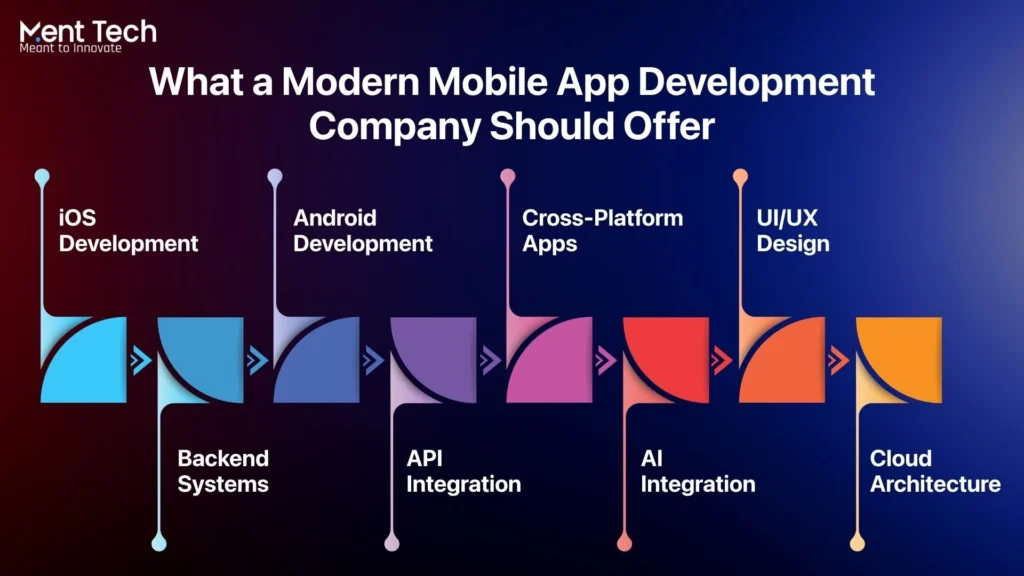
If a development partner can only build screens, that’s not really enough anymore. The best mobile app development company today covers a much wider range, because a mobile app isn’t just a front-end product; it’s a whole system working together behind the scenes.
1. iOS and Android app development
The basics still matter more than people give them credit for. An app needs to feel native and run smoothly on whichever platform someone actually owns.
2. Cross-platform app development
Not every business has the time or budget to build two separate apps from scratch. One codebase covering both platforms usually gets a product to market faster.
3. UI/UX design
A smart app that’s confusing to use still won’t get far. People decide within seconds whether something feels intuitive enough to stick with.
4. Backend development
Users never see this part, but it’s quietly doing all the heavy lifting. A weak backend means slow load times and an app that can’t keep up.
5. API development services
Apps rarely work in isolation anymore. They need to connect to payment systems, CRMs, and other tools a business already runs on.
6. Artificial intelligence integration services
This is the piece that turns a static app into something that actually adapts. Instead of one fixed screen, the app responds to how someone actually behaves.
7. Generative AI development services
Chatbots, content generation, and smart assistants all fall under this now, and it’s becoming a normal ask rather than a luxury add-on.
8. Cloud-ready architecture
An app needs to handle growth without falling apart, and that has to be planned from the start, not patched in after users are already straining it.
How AI-Native Apps Work Across Industries
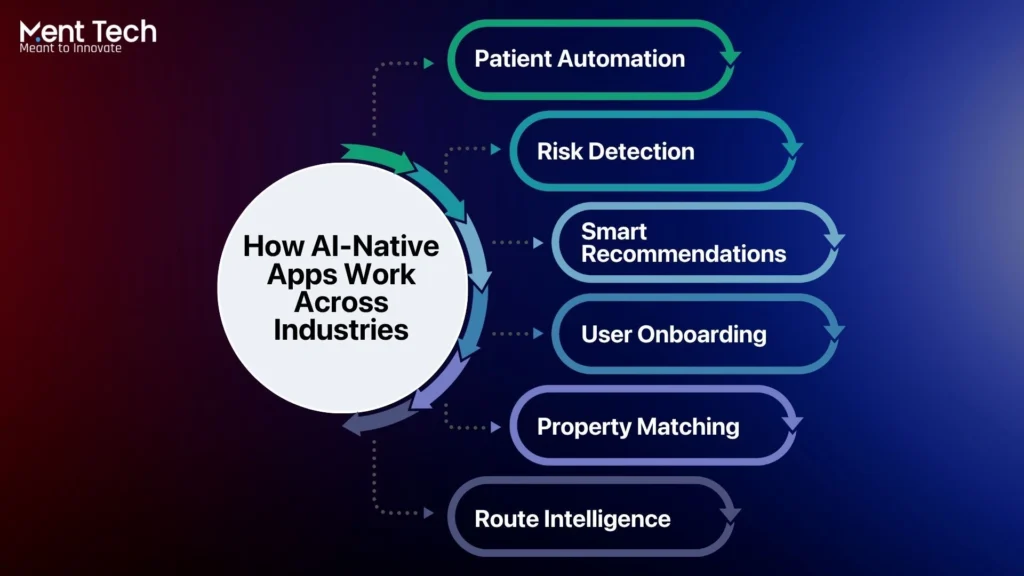
AI-native apps don’t really look the same from one industry to the next. What matters in healthcare isn’t what matters in logistics, so here’s a quick rundown of how it actually plays out.
- Healthcare
A lot of the busywork, scheduling, reminders, and answering the same basic patient questions over and over get handled by AI now instead of eating up staff time. It’s also made remote care way more practical, so patients get checked in on without always needing to come in.
- Fintech
Money apps can’t afford to be slow about risk, so fraud detection and identity checks need to happen fast and mostly invisibly. AI assistants and spending insights also give people an actual sense of their habits instead of leaving them to dig through statements.
- Ecommerce
Honestly, this is where most people run into AI without even clocking it. Recommendations that feel oddly accurate, searches that get what you mean even when you type it wrong, and support that doesn’t make you wait all add up to fewer abandoned carts.
- SaaS
The mobile version of a SaaS product can’t feel like an afterthought next to the desktop app. Onboarding assistants help new users actually figure things out instead of staring at a blank dashboard, and automation takes care of the clicking nobody wants to do manually.
- Real Estate
Property apps lean on AI to match listings to what someone’s genuinely looking for, sort out serious leads from casual browsers, and let people book a viewing without playing phone tag with an agent.
- Logistics
This one’s mostly invisible to the end user. It’s route intelligence adjusting on the fly, tracking that’s actually live instead of a vague estimate, and alerts that catch a problem before it turns into a missed delivery.
How to Choose the Best Mobile App Development Company in USA
Picking a development partner is one of those decisions that’s hard to undo once you’re a few months in, so it’s worth slowing down here.
1. Mobile app portfolio
Don’t just look at how polished the apps look. Try to find ones similar to what you’re building and see how they actually perform for real users, not just in screenshots.
2. AI development capability
Plenty of companies will say they “do AI.” Ask specifics, like what models they’ve worked with, how they handle data, and whether they’ve actually shipped AI features that stuck around past launch.
3. API and backend experience
This is the part that decides whether your app can grow or start breaking the moment real traffic shows up. It’s not flashy, but it’s where most long-term problems actually come from.
4. Cloud architecture
An app that works fine with 50 users can fall apart with 5,000 if the cloud setup wasn’t planned properly from the start. Ask how they think about scaling before it becomes a crisis.
5. Communication process
A team that goes quiet for two weeks then shows up with a surprise is a red flag, no matter how good their code is. Whether you’re talking to a mobile app development company Chicago team or a mobile app development company in New York, you want regular updates, not radio silence.
6. Post-launch support
Launch day isn’t the finish line; it’s closer to the starting point. A mobile app development company Los Angeles team, or anyone else you hire should be upfront about what happens after launch, because plenty of companies disappear right when bugs start showing up.
Final Thoughts
The role of a mobile app development company in the USA has genuinely shifted, and it’s not going back. It used to be about building screens and wiring up a backend. That’s just not enough anymore.
What businesses actually need now is a product engineering team, not just app developers. People who get how AI fits in, how APIs hold things together, how cloud setups handle growth, and how security can’t be an afterthought. The apps doing well right now were built by people thinking about the business, not just checking off features.
If you’re planning your next app or rethinking one that’s already live, partner with Ment Tech to build an AI-native mobile app designed for real users, scalable growth, and long-term value.