Introduction
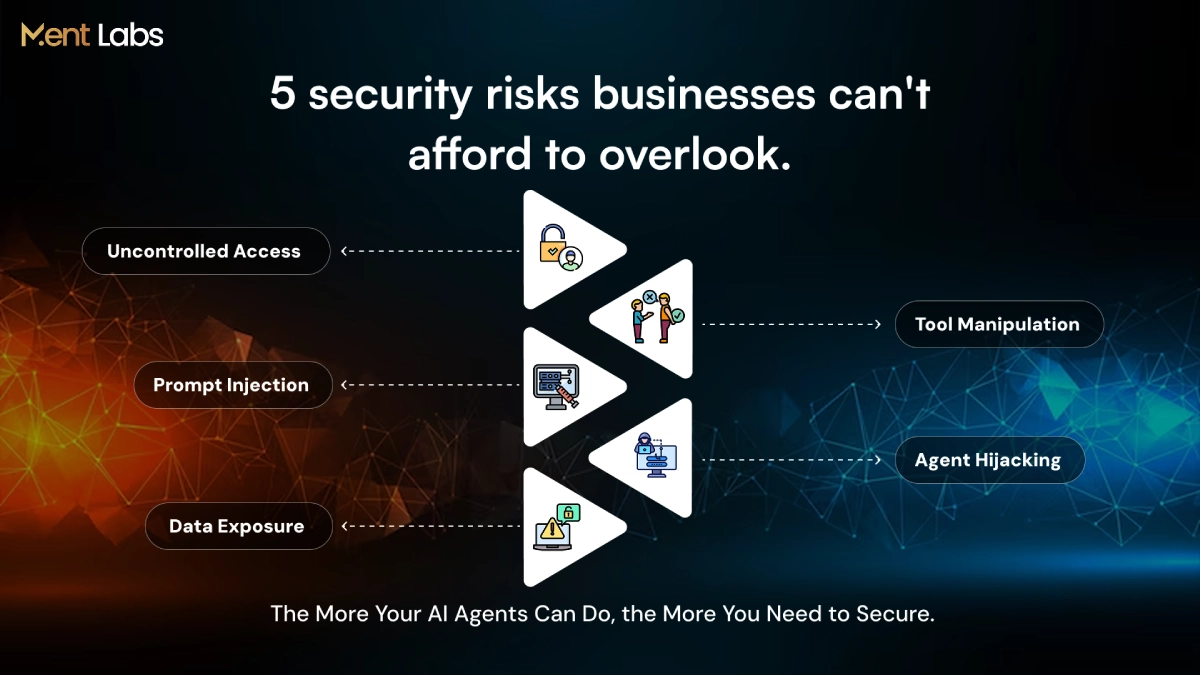
AI agents are now able to do more than just answer questions. AI agents can connect with business systems use tools that are linked and complete tasks, on their own. This new level of independence also brings security issues that companies cannot ignore.
If an AI agent has too much access or follows bad instructions, it can share private information or do things without permission. This makes Agentic AI Security important because more companies are using self-driving AI systems.
This blog examines the security risks that AI agents face explains why traditional cybersecurity may not be adequate, for AI agents and offers ways for businesses to better protect their AI systems from those security risks.
Why Does Agentic AI Require a Different Cybersecurity Approach?
Unlike software AI agents can make their own decisions, access sensitive data and take action on their own. This leads to security risks. We need protection, for AI agents.
1. Autonomous Decision-Making
AI agents are capable of making decisions. They can perform tasks without needing permission from a human. A wrong decision or a tricky instruction might cause AI agents to act in a way that is not intended.
2. Access to Multiple Business Systems
AI agents often connect to databases, APIs and internal applications. If an AI agent is compromised attackers could use those connections to access information.
3. Unpredictable AI Agent Actions
AI agents may take steps to finish the job. This makes AI agents actions harder to predict and harder to control.
4. Excessive Access Permissions
AI agents, with permissions can expose data. AI agents can also misuse systems if AI agents are compromised.
5. Real-Time Monitoring and Human Oversight
Keeping an eye on AI agent activities helps spot unusual behaviour, while human approval keeps risky actions in check.
How Agentic AI Expands the Enterprise Attack Surface
Every tool, every data source and every service that is linked to an AI agent brings security exposure. As every tool every data source and every service connection grow, managing the attack surface becomes more difficult.
1. MCP Servers and Tool Connections
MCP servers let AI agents use tools. MCP servers also let AI agents use services. Every tool endpoint is a way for the AI agent to interact. Each of these endpoints can become an exposure point.
2. Data Retrieval Pipelines
AI agents collect information from documents from knowledge bases and, from vector databases. These data pipelines create access points into enterprise systems.
3. Agent-to-Agent Communication
In agent systems the agents share information. Give tasks to each other. Every time a task is handed over it creates another link, in the process.
4. Persistent Agent Memory
AI agents record conversations, task details and the information they gather. AI agents’ memory can create places where business data might be exposed.
5. Code Execution Environments
AI agents can use sandboxes, terminals or execution tools to run code and process tasks. AI security and red teaming services can help AI agents find weaknesses in these environments, including sandboxes, terminals and execution tools.
Top Security Threats and Attacks in Agentic AI Systems
AI agents can be attacked through the data they process the tools they use and the tasks they carry out. Knowing these security risks helps businesses spot threats.
1. Prompt Injection Attacks
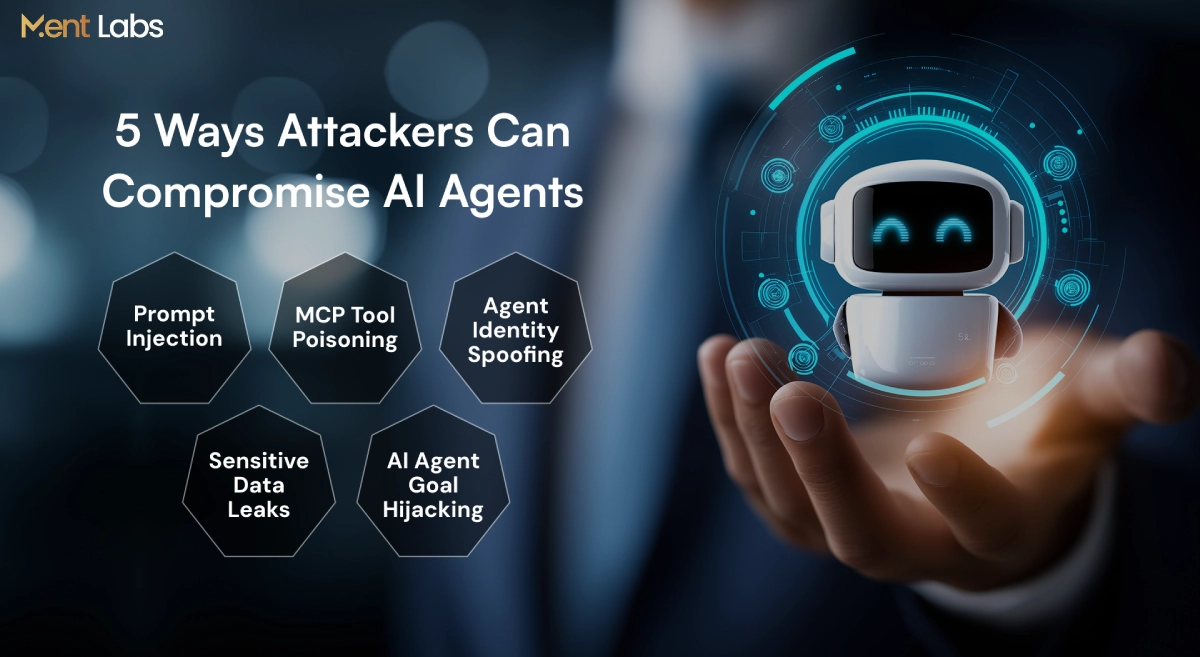
Attackers put instructions in emails, websites or documents that AI agents read. These instructions can fool AI agents into not doing the tasks that AI agents were supposed to do or into doing things that AI agents should not do.
2. MCP Tool Poisoning
Attackers can alter tool descriptions or responses to trick AI agents into using tools. Attackers can be stopped by secure MCP server integration services that help businesses keep tool descriptions safe.
3. Agent Identity Spoofing
An attacker can pretend to be an AI agent. The attacker may send requests or talk to systems. If the fake identity is accepted the attacker could cause actions.
4. Sensitive Data Leaks
Attackers can trick AI agents into giving out company information to people, outside the organization. This puts customer data, financial records and private documents in danger.
5. AI Agent Goal Hijacking
Attackers have the ability to secretly alter what an AI agent is supposed to do. This means the AI agent starts working toward a goal. Everything still seems normal, from the outside.
Key Security Controls to Protect Agentic AI Systems
AI agents often work with data. Are linked to essential business programs. If there are no protections even a small mistake can create issues with security. Here are five important things that companies need to have in place.
1. AI Agent Identity and Authentication
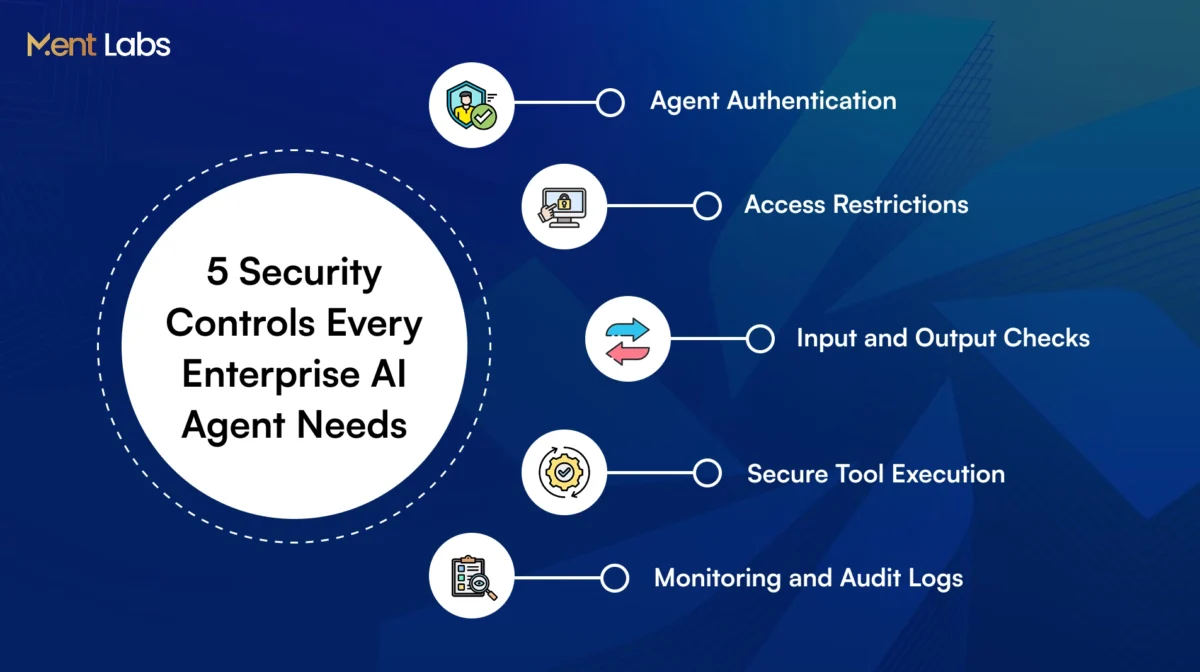
Every AI agent needs an identity. That way businesses can see which AI agent is accessing their systems. This also makes it easier to track activities and identify access.
2. Role-Based Access Control
Not every AI agent needs access, to all information. Giving each AI agent only the permissions that AI agent needs for AI agent tasks keeps business data safe. This approach also stops AI agents from reaching systems.
3. Input and Output Security Checks
AI agents handle information from sources yet not all of that information can be trusted. AI agents must examine everything that goes in and everything that comes out so that instructions are caught and sensitive data is not shared.
4. Secure AI Tool Execution
AI agents must have safeguards when AI agents run code or use external tools. If a business using enterprise AI integration services wants to protect its data the business using enterprise AI integration services can add controls to its workflows.
5. AI Agent Monitoring and Audit Logs
Businesses must keep an eye on their AI agents. Activity logs help businesses notice how AI agents act and help businesses discover what happened if AI agents do not work properly.
Best Agentic AI Security Solutions and Tools for Enterprises
Choosing a security solution decides how your business uses AI agents, the systems that AI agents access and the risks that come with those choices. Here are six agentic AI security solutions and service providers that are worth exploring.
1. Ment Labs AI Security and Red Teaming Services
Ment Labs helps businesses find weaknesses in their AI systems by using teaming prompt injection testing and security assessments. Ment Labs also reviews agent permissions and connected tools.
Best for: Enterprises building or deploying AI agents. Enterprises need security testing, risk assessments and expert help for AI agents before production.
2. Palo Alto Networks Prisma AIRS
Prisma AIRS helps security teams find AI agents, spot dangers and keep AI applications safe. It also provides teaming and protection while the AI is running.
Best for: companies that have many AI applications and agents. These companies need checking for threats and security monitoring.
3. Zenity AI Security Platform
Zenity helps businesses keep track of AI agents in their apps and cloud setups. It shows what AI agents are doing. Zenity spots activities. Gives security teams more control, over how AI agents behave.
Best for: Organizations using AI agents across business applications that need better visibility, better risk management and better AI agent governance.
4. Microsoft Defender for AI Agents
Microsoft Defender helps companies find dangers. Look for spots in AI assistants. Microsoft Defender works with Microsofts agent management system to provide protection, for businesses.
Best for: businesses using Microsoft 365 Copilot, Copilot Studio and other Microsoft services that want security, within their existing environment.
5. Cisco AI Defense
Cisco AI Defense helps businesses find weaknesses in AI applications and guard AI workflows. Cisco AI Defense also takes care of security concerns involving MCP servers and connected tools.
Best for: Enterprises that develop custom AI applications and agent workflows. Enterprises also need security testing and protection while running.
6. Noma Security
Noma Security helps businesses find AI helpers, spot risks and monitor their actions. Noma Security gives security view, on many cloud platforms and across many business settings.
Best for: Noma Security is ideal for enterprises that run AI agents on platforms and need one place to see everything to assess risks and to manage security.
Choosing the agentic AI security platform or service provider depends on your existing systems, on your security needs and, on how much access your agentic AI agents require.
How to Implement Agentic AI Security in Enterprise Environments
Securing AI agents is not, about adding security tools. Companies must know which AI agents they use, what dangers come with those AI agents and how to keep those dangers under control. Securing AI agents needs knowledge of the AI agents the risks and the ways to manage those risks. Here are six steps to get started.
1. Identify AI Agents and Assign Ownership
Please create a list of all AI agents that are operating across your business and explain what each AI agent does. Please assign a person to manage each AI agent so that responsibility’s clear.
2. Assess Security Risks in AI Workflows
Check how agents manage business tasks and check what information agents use. Pay attention to agents working with customer data agents working with payments and agents working with operations.
3. Set Clear AI Security Policies
Set clear rules for what AI agents can do, which tasks need approval, and who will handle security problems. Make sure the team knows these rules before using the agents.
4. Test AI Agents Before Deployment
Put security agents through real-world tests to see how they deal with situations. If something goes wrong in a test fix the problem before it is used in life.
5. Deploy AI Agents in Stages
Start with tasks before introducing agents throughout the business. Using enterprise AI development services can help teams include security checks at every step of the deployment.
6. Review and Update AI Security
Keep checking how agents perform after deployment. If you notice problems or make changes to workflows, review the security setup and update it where needed.
Conclusion
Businesses rely more on AI agents for tasks. Keeping AI agents secure becomes increasingly important. Agentic AI Security helps businesses protect information. Agentic AI Security prevents actions. Agentic AI Security avoids security issues that could disrupt operations.
At Ment Labs we help businesses build AI agents that’re secure, reliable and suited to their needs. We make sure security is part of every step in the development process. Our AI Agent Development services are designed to give you confidence, in building and deploying your AI agents. Contact us today to discuss how we can help you build and deploy AI agents with confidence.