Introduction
The financial world is stepping into an era. In this era, blockchain technology changes how assets are made, handled, and traded. Tokenized stocks give people ownership. Tokenized stocks do this by turning shares into blockchain assets. As a result, investing becomes easier, clearer, and faster.
Because interest in finance is growing many people ask what tokenized stocks are. They also ask how tokenized stocks differ from shares. This blog explains how tokenized stocks work. It also shows benefits, dangers and the effect, on investing.
This blog covers how tokenized stocks work, their differences from traditional shares, and the benefits and risks investors should know. It also explores leading blockchain stocks in 2026, platform development costs, and what the future holds for digital stock trading.
What Are Tokenized Stocks and Why Are They Attracting Global Investors?
The investment world is changing because blockchain technology gives ways to show and use financial assets. Tokenized stocks are copies of normal shares. They use blockchain networks to keep track of who owns them and the trades. By mixing the trust of stock markets with the flexibility of blockchain tokenized stocks can make investing easier, clearer and faster. Features such as owning a part of a share and quick trades help this.
As more investors look into stocks and how they might change things the idea is getting more notice worldwide. With stock tokenization company shares become blockchain-based assets opening chances for liquidity and market access. The rise of equities, tokenized securities and, on-chain equities shows how this technology could change how people buy, own and trade assets later.
How Does Stock Tokenization Work on the Blockchain?
Stock tokenization turns company shares into blockchain-based tokens, making it easier to track ownership and manage trades. Businesses can also use a multi-asset tokenization platform to issue and manage different asset types in one place.
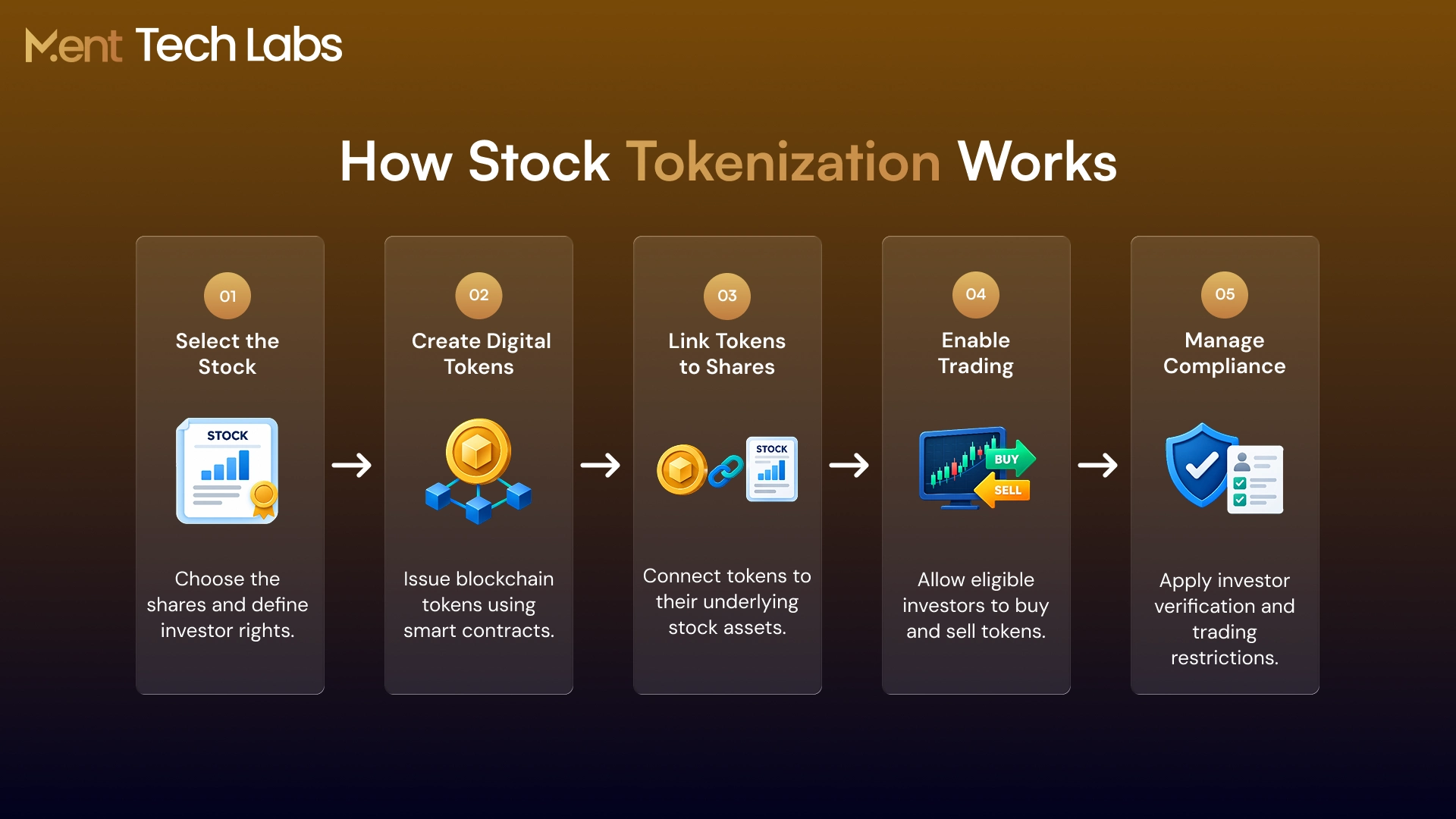
1. Selecting the Stock Asset
Stock tokenization starts by picking the stock or equity asset that will become a token. Businesses lay out the ownership details, investor rights, and management rules. Stock tokenization creates a structure for the tokenized asset.
2. Creating Digital Tokens
After the asset structure is set, blockchain networks and smart contracts build the tokens. Stock tokenization contracts manage ownership records, transfers and transaction rules. Stock tokenization keeps the process secure and efficient.
3. Connecting Tokens With Shares
Each token must be linked to the real-world stock it represents. Stock tokenization maintains the token’s value and reliability. Verification methods and custody solutions give investors confidence in the representation.
4. Enabling Digital Trading
Once tokens are made they can be traded on blockchain-powered platforms. Stock tokenization lets investors access stock assets with greater flexibility. Stock tokenization supports smoother transactions.
5. Managing Security and Compliance
Security and compliance are essential for trust in financial systems. Stock tokenization relies on identity verification, regulatory checks and secure infrastructure. Stock tokenization protects investors while supporting -asset solutions.
Tokenized Stocks vs. Traditional Stocks: What’s the Difference?
Both tokenized and traditional stocks represent company ownership, but they work differently. Traditional stocks use established financial systems, while tokenized stocks use blockchain technology to enable a more digital and flexible investment experience through solutions like a tokenized secondary marketplace.
| Key Difference | Tokenized Stocks | Traditional Stocks |
| Ownership | Ownership is represented through digital tokens stored on a blockchain network. | Ownership is recorded through stock exchanges and financial institutions. |
| Technology | Uses blockchain networks and smart contracts to manage ownership and transactions. | Uses traditional systems managed by brokers and stock exchanges. |
| Trading | Allows digital trading with faster transfers and supports blockchain-based marketplaces. | Trading takes place through stock exchanges during specific market hours. |
| Accessibility | Can make investing more flexible through options like fractional ownership. | Access depends on brokerage platforms and traditional market availability. |
| Transparency | Blockchain provides a clear and traceable record of ownership and transactions. | Records are maintained by centralized financial systems. |
The key difference between traditional and tokenized stocks lies in how ownership is managed and traded. While traditional stocks remain widely used, tokenized stocks introduce a blockchain-based approach to digital ownership and investment.
What Benefits and Opportunities Do Tokenized Stocks Offer Investors?
Tokenized stocks give investors another way to access stock markets, invest smaller amounts, and manage transactions. Here are five benefits worth knowing.
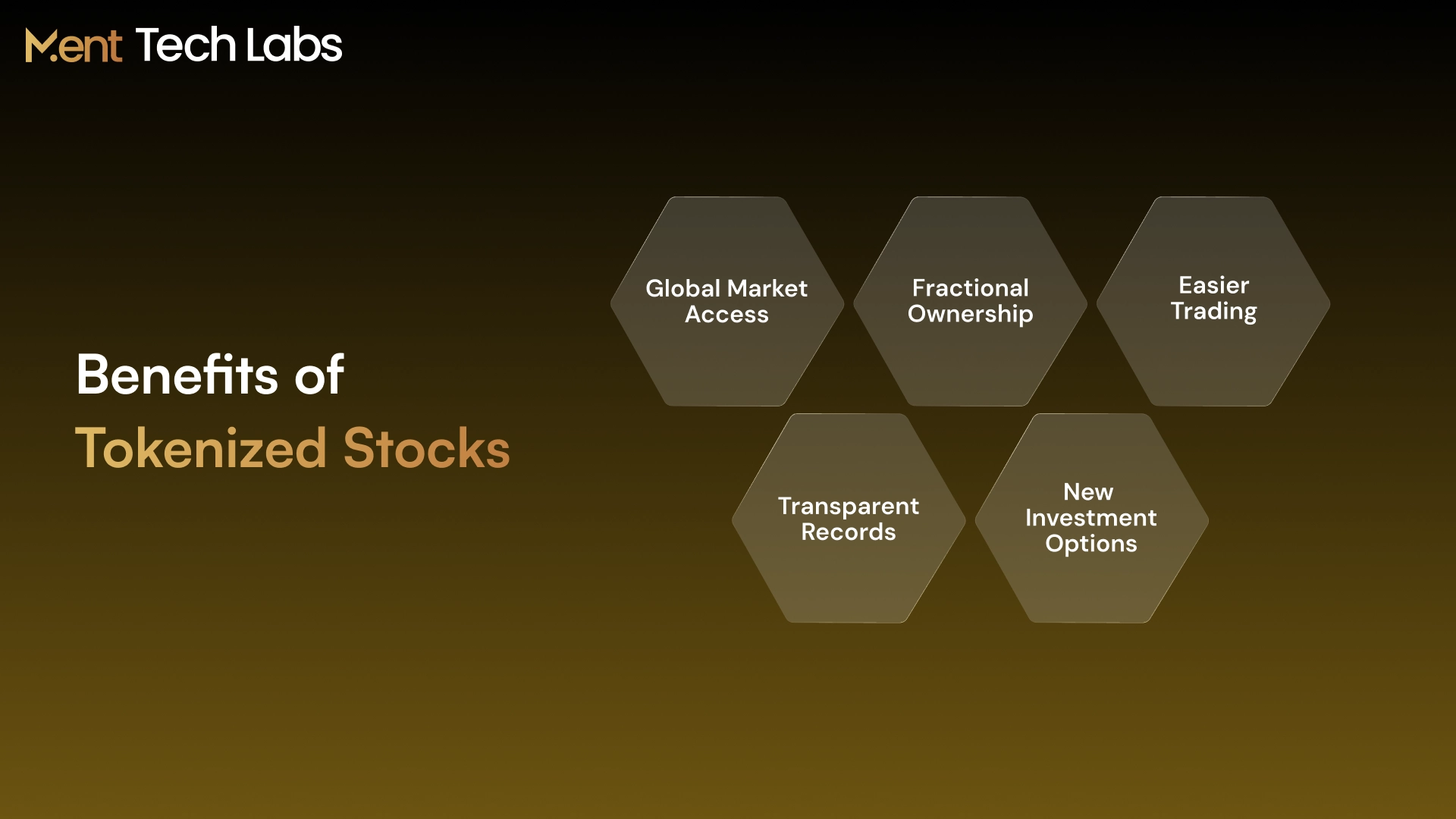
1. Global Market Access
Want to invest in companies ? Tokenized stocks can make international market exposure easier to explore where local regulations and platforms allow it.
2. Fractional Ownership
You don’t always need to buy a share. Some platforms let you invest amounts in stock-linked tokens making expensive stocks more accessible.
3. Easier Stock Trading
Tokenized stock trading can simplify how assets are bought, sold and settled. Some platforms also support trading, beyond market hours.
4. Transparent Ownership Records
5. New Investment Opportunities
Tokenized stocks can support ways to invest and settle transactions. A stablecoin payments platform can also help investors move funds across services.
What Risks Should You Know Before Investing?
Thinking about buying stocks? You should not focus on the share price. You should find out who holds the shares whether you can sell whenever you want and what would happen if the platform has problems.
Regulatory Uncertainty: A platform might sell stock tokens in one country. Could face limits in another country. You must check that you are allowed to buy them where you live.
Platform Security: What happens if your wallet is hacked or the trading site stops working? You might lose access to your tokens. You should find out who holds them and how they are protected.
Liquidity Issues: Buying a token does not guarantee that someone will want to buy it back. If trading is slow you might have to sell for a price than you expected.
Ownership Rights: Not every stock token gives you a share of the company. Some tokens pay dividends while others only follow the share price and give no voting rights.
Price and Custody Risks: Your token may trade for a price, from the real share. There is also a risk if the firm that holds the underlying shares goes out of business.
Before buying read the print carefully. Check who holds the shares what you are entitled to. Whether you can get your money back when you need it.
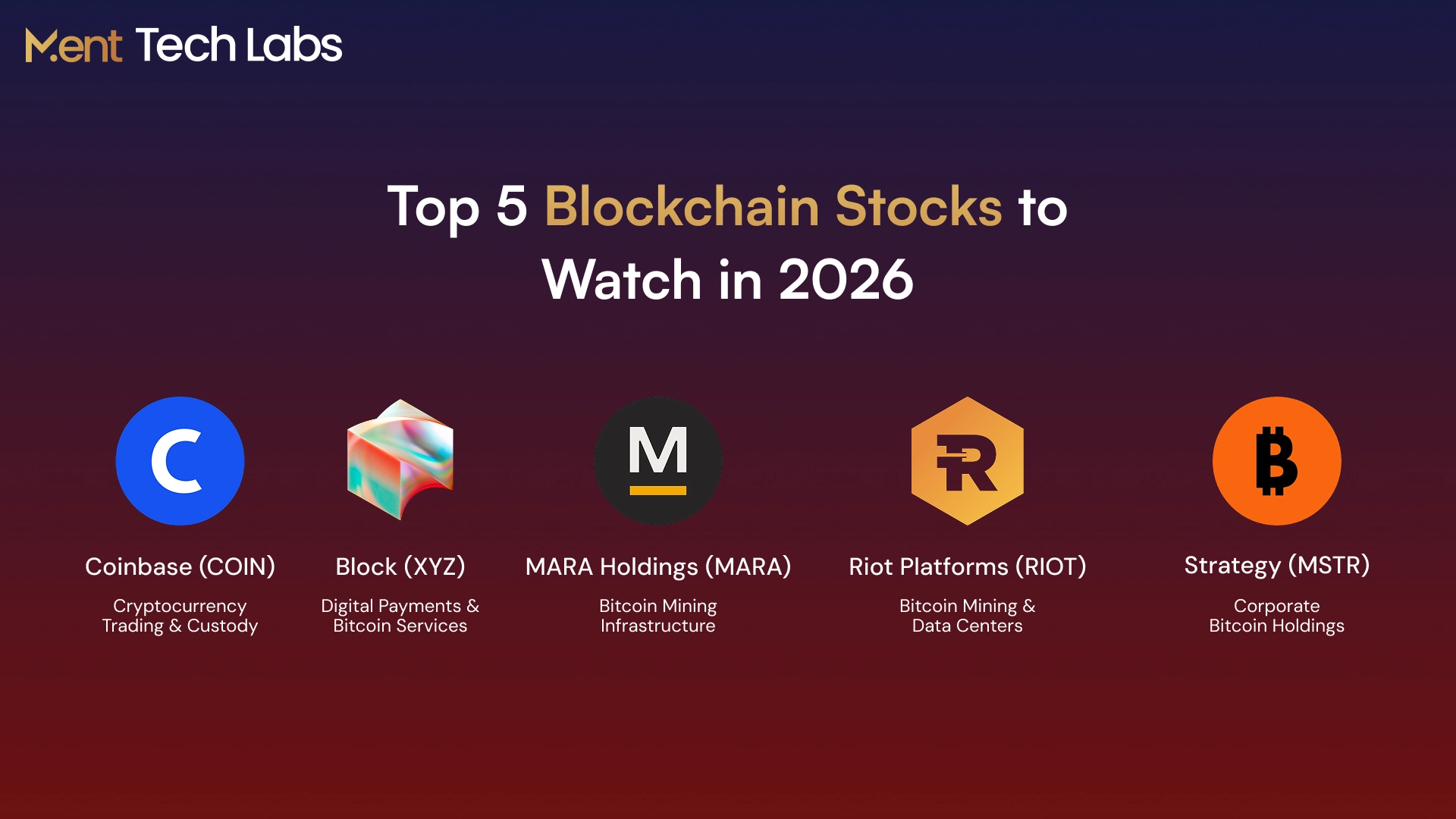
Top 5 Leading Blockchain Stocks to Know in 2026
You don’t need to own Bitcoin to invest in the businesses built around it. Some make their money from crypto trading while others run mining operations or handle payments. Here are five companies worth a look in 2026.
1. Coinbase Global (NASDAQ: COIN)
Coinbase makes much of its money when customers trade crypto. More buying and selling usually means fees coming in though quiet markets can take a toll.
2. Block Inc. (NYSE: XYZ)
Block owns Square, which many shops use to accept payments and Cash App, where users can buy Bitcoin. Its payment business reaches beyond crypto.
3. MARA Holdings (NASDAQ: MARA)
MARA runs Bitcoin mining facilities filled with computers. Keeping those machines running isn’t cheap especially when electricity prices rise.
4. Riot Platforms (NASDAQ: RIOT)
Riot mines Bitcoin and has been expanding its data center operations. How much it spends on power matters as much as how much Bitcoin it produces.
5. Strategy Inc. (NASDAQ: MSTR)
Strategy has made Bitcoin a major part of its treasury. That decision leaves its share price heavily exposed to Bitcoins market swings.
These businesses have different costs and sources of income. Before picking a stock spend some time looking at its earnings, debt and exposure, to Bitcoin prices.
How Much Does It Cost to Build a Tokenized Stock Platform?
Building a tokenized stock platform can cost $40,000 to over $300,000. The price rises with added features like stock trading, investor verification, and custody services.
Make the cost range more actionable. Clarify what each tier includes.
| Platform Type | What’s Included | Estimated Cost |
| Basic MVP | Token issuance, investor signup, wallet integration | $40,000-$80,000 |
| Mid-Level Platform | Multiple stocks, KYC/AML checks, custody support | $80,000-$150,000 |
| Enterprise Platform | Stock trading, compliance, custom integrations | $150,000-$300,000+ |
| Annual Maintenance | Hosting, security updates, technical support | 15-20% of build cost |
What Influences the Cost of Development?
Including markets more custody providers or additional trading features can increase the budget. Legal requirements, security audits and unique integrations also contribute to the cost. Utilizing existing systems can help reduce the expenses.
Note: These are examples of software development costs, not prices. Licensing, legal charges, custody fees and other ongoing costs might be additional.
What Does the Future Hold for Digital Stock Trading?
Buying and selling stocks might change a lot in the coming years. With blockchain moving into finance investors might have freedom to decide when to trade, how much to invest and where their money goes. I think this will bring possibilities.
1. Trading Beyond Market Hours
Why wait for the market to open? Some tokenized stock platforms could let investors trade at night or on weekends. This would give investors flexibility.
2. Quicker Trade Settlement
Buying shares takes seconds but final settlement can take many minutes. Blockchain could cut that wait by making transfers and settlements direct.
3. Investing With Amounts
High priced stocks may become easier to buy through fractional ownership. Investors could purchase a portion instead of buying a whole share.
4. Easier Access to Foreign Stocks
Buying into companies might become simpler with tokenized platforms.. Access will still depend on local rules and tokenization compliance services that help platforms meet legal requirements.
5. More Payment Options
Stablecoins could give investors another way to fund trades and settle payments. This might reduce reliance, on bank transfers when they are supported.
Final Thoughts
Tokenized stocks are giving investors ways to buy and trade shares. Smaller investments and quicker settlement sound appealing but its worth checking ownership rights trading risks and regulations before putting money in.
Ment Tech helps businesses develop stock platforms with features that matter in day-to-day trading. From investor onboarding and secure transactions to, on-chain dividend distribution each part is built around how the platform will work.
Thinking about launching a tokenized stock platform? Ment Tech Labs can help you work through the compliance requirements. Contact us today to talk about your plans.