Every few years, something comes along that makes traditional finance look outdated. Right now, that’s RWA tokenization. Real estate deals that used to take months are turning into digital tokens. Private equity that only institutions could touch is opening up to regular investors. And businesses are moving fast because the opportunity is too big to ignore.
But building a real-world asset tokenization platform isn’t as simple as putting an asset on a blockchain and calling it done. You’re dealing with legal ownership structures, investor verification, jurisdiction rules, and smart contracts that need to hold up under real regulatory scrutiny. Miss any of that, and you don’t have a compliant platform. You have a liability.
In this blog, we will include everything from the platform architecture and compliance essentials to the actual step-by-step build process. So whether you are exploring a real estate tokenization platform, planning to build an asset tokenization platform, or just want to understand how it all fits together before talking to a blockchain development company, you will find it here.
What Is RWA Tokenization?
RWA tokenization is simply digitizing real assets, such as real estate, bonds, or even art, and representing the ownership as a digitized token on the blockchain. Instead of a single individual owning the entire asset, ownership is divided into smaller digital tokens that can be bought, sold, and traded in a fraction of the time. It’s not a very complicated process, but it is revolutionizing the transfer and movement of assets.
This is where an asset tokenization platform comes in. It’s the infrastructure that actually makes this possible. It handles the legal structuring, the token creation, and the rules around who can buy and sell. Without a proper tokenized assets platform behind it, none of this works at scale, and definitely not in a way that holds up legally.
Why Are Enterprises Building RWA Tokenization Platforms?
Liquidity Unlock: Real estate, private equity, and other traditionally illiquid assets can now trade in smaller pieces instead of sitting locked up for years. This is one of the biggest reasons enterprises are investing in asset tokenization platform development right now.
Faster Settlements: Traditional asset transfers can take weeks because of paperwork, intermediaries, and manual verification. A tokenized asset platform cuts most of that down to hours, sometimes minutes.
Lower Entry Barriers: Fractional ownership means investors don’t need huge capital to get in. A real estate tokenization platform, for example, lets someone own a small share of a property instead of the whole thing.
Global Investor Access: Blockchain doesn’t care about geography. Enterprises can open up assets to investors across borders without the usual banking and paperwork headaches.
Transparency Built In: All transactions are permanently recorded on an unchangeable ledger, so you have an indisputable trail. Those days of tracking down documents or trying to identify who has what are gone.
Automation Through Smart Contracts: Dividend payments, audit checks, and ownership transfer can be automated while avoiding manual operation steps.
What Types of Real-World Assets Can Be Tokenized
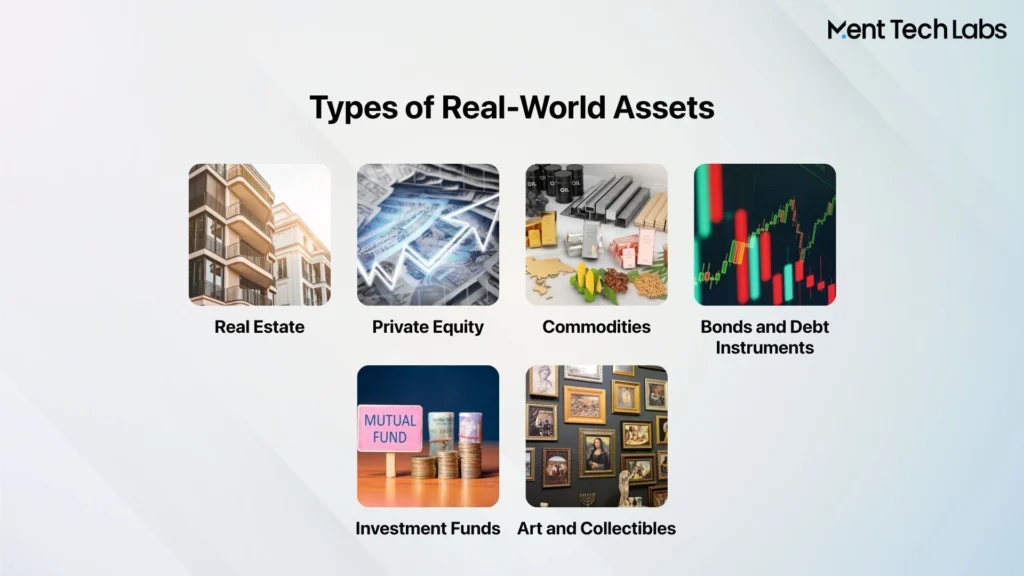
Not every asset makes sense to tokenize, but the ones that do are opening up markets that used to be locked away. Here are the ones we see enterprises actually building around.
1. Real Estate
This is probably the biggest use case out there. A real estate tokenization platform lets a commercial building or residential property be split into digital shares, so investors can own a piece without buying the whole property.
2. Private Equity
Startups and growing companies can tokenize equity instead of going through the usual slow fundraising process. It also makes managing investors a lot easier since everything is tracked on-chain.
3. Commodities
Gold, silver, oil, and even agricultural products can be represented as tokens. This makes trading faster and ownership tracking a lot more transparent than the traditional commodity markets.
4. Bonds and Debt Instruments
Governments and companies are starting to issue tokenized bonds because settlement is faster and there are fewer middlemen involved.
5. Investment Funds
Asset managers can tokenize fund units, which makes subscriptions, redemptions, and compliance tracking a lot smoother on an asset tokenization platform.
6. Art and Collectibles
Luxury art, collectibles, and high-priced goods can be separated into smaller ownership units. Even the hoi polloi [common folks] will have a chance to lay their hands on what was previously the preserve of the hyper-rich.
How an RWA Tokenization Platform Works
A lot of people assume tokenization is just “put the asset on the blockchain,” but there’s actually a proper flow behind it. Here’s how it usually plays out on a real asset tokenization platform.
Asset Structuring: The asset gets placed inside a legal wrapper, usually an SPV, so the token actually represents real, enforceable ownership and not just a digital placeholder.
Valuation and Token Design: The asset gets valued, and the team decides how ownership will be split, basically how many tokens will represent the total value.
Investor Verification: Before anyone can buy in, they go through identity checks. This is a core part of any compliant asset tokenization platform.
Token Issuance: Once verification is done, the smart contract mints the tokens and assigns them to approved investor wallets.
Compliance Checks on Every Transfer: Every time a token moves, the system automatically checks it against compliance rules, so nothing slips through.
Trading and Ownership Tracking: Investors can hold, trade, or earn returns on their tokens, and ownership is fully tracked on-chain at all times.
Core Components & Tech Stack of a Tokenization Platform
Every asset tokenization platform is built on a handful of core pieces, and each one runs on real technology behind the scenes. Here’s what actually goes into building one.
Identity Registry: This keeps track of verified investor identities and links them to wallet addresses. Most platforms build this using permissioned token standards like ERC-3643, which tie KYC status directly to a wallet. If a wallet isn’t approved, it simply can’t interact with the token.
Compliance Engine: This is what checks every single transfer in the background, things like holding limits, country restrictions, and investor eligibility, before it’s allowed to go through. It usually runs on smart contracts written in Solidity.
Security Token Contract: This handles the actual heavy lifting, minting tokens, transferring them, burning them, and distributing dividends. Most teams deploy this on Ethereum, Polygon, or other EVM-compatible chains since they play well with existing tools.
Custody Layer: This connects the physical asset and its legal paperwork to the token sitting on-chain. It’s usually backed by custody solutions and solid key management, so nothing gets lost in translation between the real world and the digital one.
Trading and Marketplace Layer: This is where investors actually buy, sell, or trade their tokens, either through a platform’s own exchange or a connected third-party one. Most of this gets built using React or Next.js on the front end.
Oracle Integration: This pulls real-world data, like pricing or valuation updates, straight into the smart contracts so everything stays accurate. Chainlink is usually the go-to tool for this.
How to Build an RWA Tokenization Platform: Step-by-Step Development Process
Once you’ve got the architecture and compliance side figured out, the actual build follows a pretty clear path. Here’s how it usually plays out when you’re working with a web3 development company on an RWA tokenization platform development.
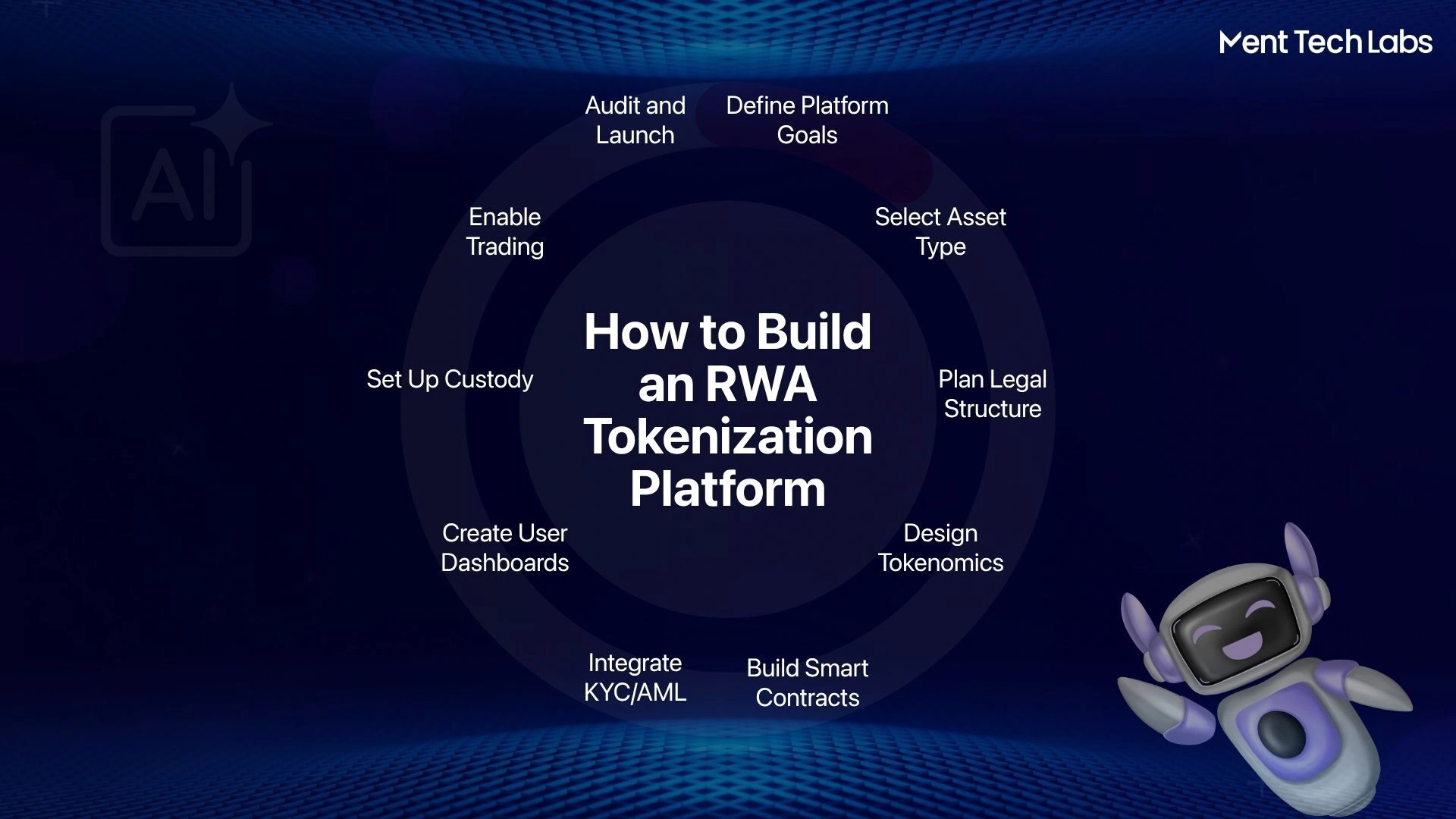
Step 1: Get Clear on Your Objectives
Before anyone touches code, you need to know what asset you’re tokenizing, who your investors are, which jurisdictions you’re operating in, and how the platform will actually make money. Everything else builds on this.
Step 2: Handle the Legal Groundwork
This is where legal experts come in to figure out securities classifications, licensing needs, and jurisdiction-specific rules. It’s tempting to skip ahead, but doing this late almost always creates headaches down the line.
Step 3: Design Your Tokenomics
Now you decide how the asset gets split up, what the token supply looks like, how returns get distributed, and how redemption works for investors. This needs to actually match the asset, not just look good on paper.
Step 4: Build the Smart Contracts
This is the real technical work: the security token contract, compliance engine, identity registry, and transfer logic all come together here. Most of the heavy lifting in rwa tokenization platform development happens at this stage.
Step 5: Plug In KYC and AML
Investors need to be verified before they can buy in, so this step is about connecting identity verification and AML screening tools into a smooth onboarding flow.
Step 6: Design the Interfaces
Investors, issuers, and compliance teams all need dashboards that actually make sense to use. Wallet connections, tracking, and reporting all live here.
Step 7: Set Up Custody and Enable Trading
Physical assets and legal paperwork need to stay tied to the on-chain token through solid custody. Once that’s set, you can open up secondary trading so investors actually have somewhere to buy and sell.
Step 8: Audit, Launch, and Keep Improving
Before going live, third-party audits catch anything that could go wrong. After launch, it’s about watching how the platform performs, updating compliance as regulations shift, and expanding into new markets over time.
Cost of Building an RWA Tokenization Platform
There’s no single number here, and honestly, anyone who gives you a flat quote without asking questions first probably hasn’t thought it through. The cost depends heavily on how complex your compliance requirements are, what asset you’re tokenizing, and how many jurisdictions you’re planning to operate in. That said, here’s a realistic breakdown based on what most projects actually involve.
| Cost Factor | What It Involves | Estimated Cost Range |
| Compliance Complexity | KYC/AML integration, identity registry, jurisdiction-based transfer rules | $15,000 - $40,000 |
| Smart Contract Development | Security token contract, compliance engine, transfer logic | $20,000 - $60,000 |
| Asset Class Complexity | Real estate needs more legal structuring than something like a bond | $10,000 - $30,000 |
| Custody Integration | Connecting physical assets and legal documentation to the token | $10,000 - $25,000 |
| UI/UX and Dashboards | Investor, issuer, and compliance dashboards | $15,000 - $35,000 |
| Secondary Trading Setup | Exchange integration or marketplace functionality | $10,000 - $30,000 |
| Smart Contract Audits | Third-party security and compliance audits | $8,000 - $20,000 |
Realistically, a full build lands anywhere between $80,000 and $200,000+. A real-world asset tokenization platform development company will scope this based on your asset and jurisdictions, and smart contract development services often shift the budget depending on audit rigor.
Key Challenges in RWA Tokenization Platform Development
Building the tech is honestly the easier part. The real headaches usually show up in places most people don’t think about until they’re already deep into the project.
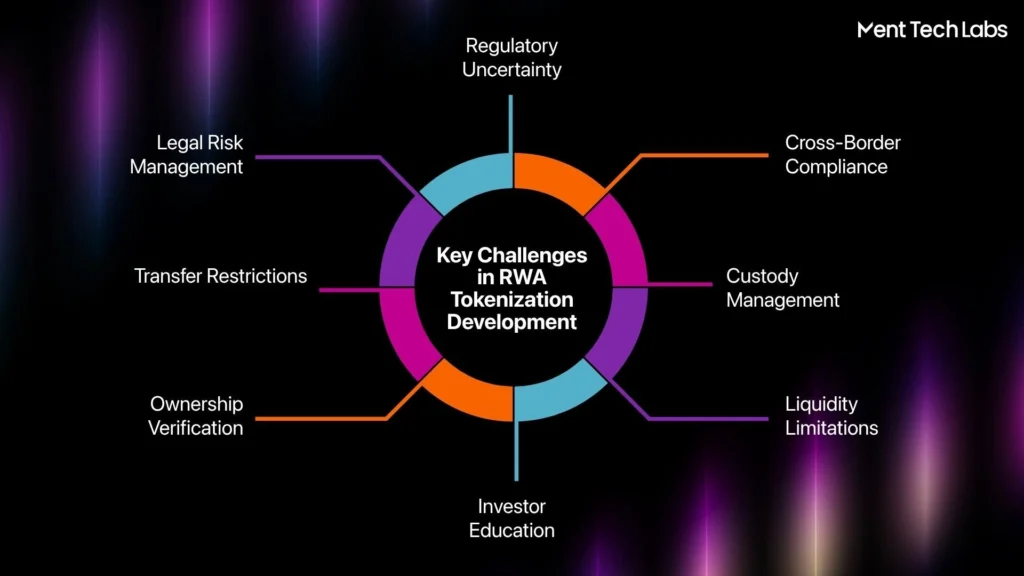
1. Regulatory Uncertainty
Rules around tokenized securities keep shifting, and something that’s compliant today might not be in a few months. A good real-world asset tokenization platform development company builds in flexibility from the start, so compliance rules can be updated without tearing apart the whole smart contract setup.
2. Cross-Border Conflicts
An asset that’s totally fine to sell in one country might be restricted in another. If you want investors from different regions, your compliance logic needs to actually account for that, which makes the identity and transfer rules a lot trickier to get right.
3. Custody Complications
Linking a physical asset to its token sounds simple on paper, but proving that the token still represents real, legal ownership years down the line takes more than good code. It needs custody arrangements that would actually hold up if someone challenged it legally.
4. Liquidity Limitations
Just because something’s tokenized doesn’t mean people will trade it. Plenty of platforms get the tokenization part right and still end up with no real secondary market, which kind of defeats the point of doing this in the first place.
5. Investor Education Gaps
Most everyday investors have never touched a permissioned token before. Someone has to explain why they can’t just send it to any wallet like a normal crypto asset and why that restriction is actually protecting them, not limiting them.
Final Thoughts
RWA tokenization isn’t a passing trend. It’s slowly becoming how real assets actually move, and businesses that get the compliance and architecture right early are the ones who’ll benefit as the market catches up. The idea was never the hard part. Building something that holds up legally and doesn’t fall apart when regulations shift. That’s where most projects struggle.
Shortcuts don’t really work here. Skipping proper legal structuring or rushing compliance to launch faster almost always costs more to fix later. A solid asset tokenization platform takes time to build right, and honestly, it should.
If you’re serious about entering this space, having the right team matters. Ment Tech helps businesses design and build compliant, scalable RWA tokenization platforms, from smart contracts to compliance architecture. Worth having that conversation now rather than later.