Stock trading is no longer limited to traditional exchanges and fixed market hours. With tokenized stock platform development, businesses can bring shares onto blockchain networks and make them easier to trade, divide, and manage.
McKinsey estimates that tokenized market capitalization could reach nearly $2 trillion by 2030, excluding cryptocurrencies and stablecoins. That shows tokenization is quickly moving from an emerging idea to a serious part of modern finance.
Building a reliable platform, however, takes more than creating a token. It requires strong custody, compliance, secure trading systems, and the support of an experienced real-world asset tokenization platform development company. This blog covers the key features, development process, technology, cost, and revenue models.
What Is a Tokenized Stock Trading Platform?
A tokenized stock trading platform is an online trading market in which company stocks are represented as blockchain-based tokens. Investors are able to trade or keep those tokens just as normal stocks do, whereas blockchain maintains a record of all transactions.
Tokenized stock platform development allows companies to offer benefits like fractional investment, prompt settlement, and automated compliance screening. A mature platform can enable tokenized secondary market development, allowing eligible investors a regulated environment in which to trade these securities post-offering.
Why Businesses Are Investing in Tokenized Stock Trading Platforms
Businesses are exploring tokenized stock platform development because it can make share trading faster, more accessible, and easier to manage. The World Economic Forum highlights fractional ownership, programmability, and a shared ownership record as some of tokenization’s main advantages.
- Wider investor access: Fractional shares lower the amount needed to participate.
- Faster settlement: Blockchain can reduce delays and manual reconciliation.
- Lower operating effort: Smart contracts can automate transfers, restrictions, and distributions.
- New revenue opportunities: Platforms can earn through issuance, trading, custody, and subscription fees.
Asset tokenization platform development for companies entering digital capital markets provides a solution to upgrade the equity infrastructure. Engaging a professional blockchain development company is now the right choice to link together blockchain, compliance, custody, and trading layers into one robust platform.
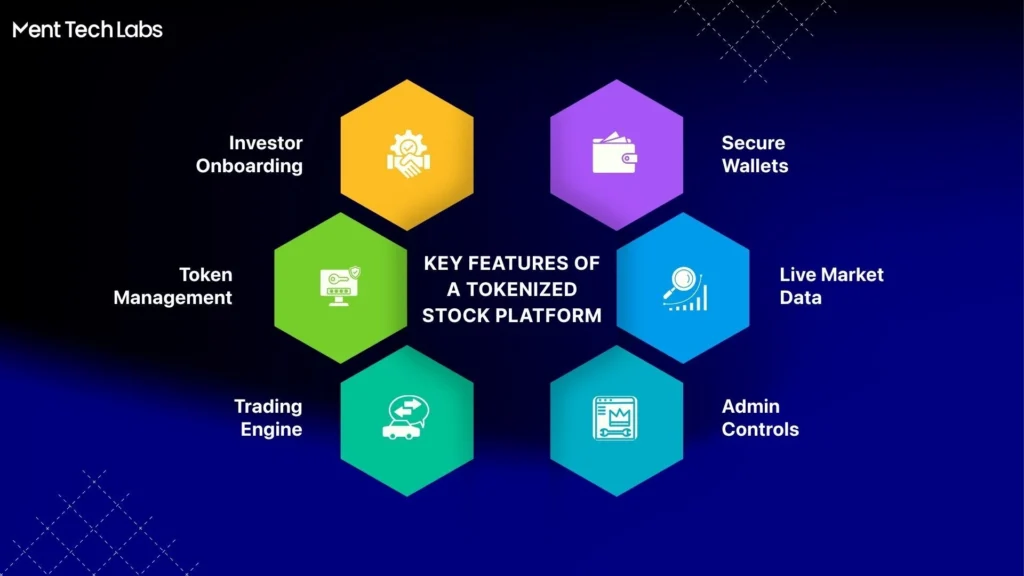
Key Features of a Tokenized Share Trading Platform
A good platform should be simple for investors to navigate while seamlessly handling trading, ownership, and compliance behind the scenes.
1. Simple Onboarding
Anyone should be able to register, verify, undergo KYC, and use the product with minimal hassle and complication.
2. Token Management
The smart contract should manage the creation, movement, and destruction of the token and maintain the link to the appropriate underlying share.
3. Trading Engine
A good trading engine needs to be able to place market orders and limit orders, consider fractional trading, and compare buyers and sellers.
4. Secure Wallets
Investors need secure and user-friendly wallets where they can store, send, and manage their tokenized shares straight from the platform.
5. Live Market Data
Live prices, charts, portfolio value, and trading history enable users to keep track of their holdings and make educated trading decisions.
6. Admin Controls
Administrators should be able to manage users, assets, transactions, restrictions, and reports from one place through secure API development services.
Compliance, Custody, and Investor Rights in Tokenized Stock Trading
A tokenized stock may exist on a blockchain, but it still represents a regulated financial product. That is why compliance, custody, and investor rights need to be clearly defined before tokenized stock platform development begins.
1. Regulatory Compliance
The platform will need to comply with the securities rules of each country they operate in (KYC/AML, investor categories and screening, transfer restrictions, record keeping, required licenses or regulated partnerships, etc.).
2. Share Custody
The actual shares must be stored securely by a licensed custodian, broker, or other approved financial institution. Each issued token should be attached to the share or financial interest that it is representing.
3. Investor Rights
The investors must know what they actually get out of the token. It could be a dividend stream, voting rights, redemption rights, or just exposure to the underlying stock.
4. Transfer Rules
Smart contracts can stop unapproved transfers, enforce holding periods, and restrict trading in certain locations. A reliable smart contract development company can build these rules directly into the token’s transfer process.
Technology Stack and Token Standards for a Tokenized Stock Platform
The technology behind the platform should support fast trading, secure ownership records, and smooth connections with financial systems. During tokenization platform development, each layer needs to work together without making the experience difficult for users.
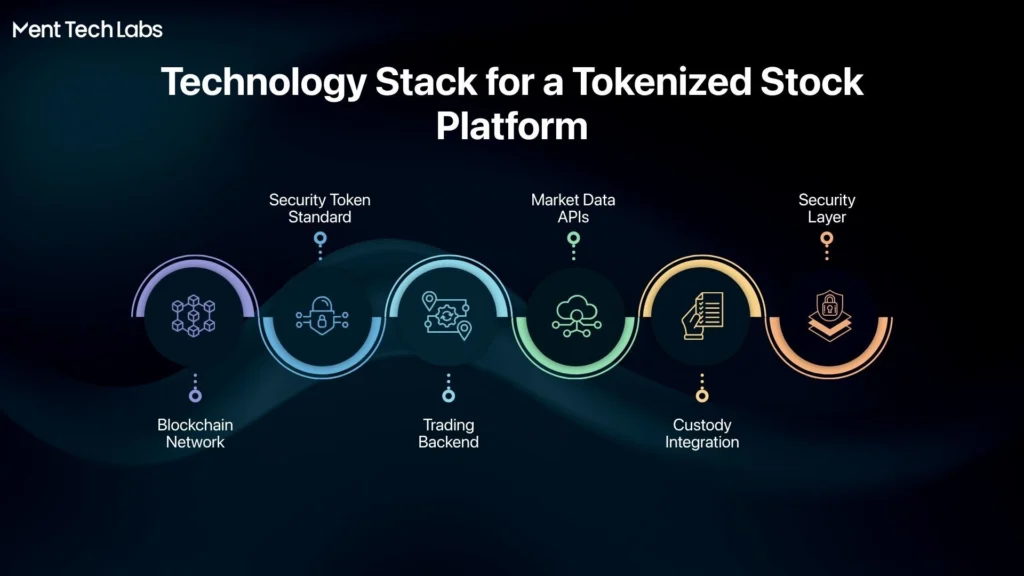
Blockchain Network: Ethereum, Polygon, or a permissioned blockchain can be used depending on transaction speed, cost, privacy, and regulatory needs.
Token Standard: Standards such as ERC-3643 help add investor verification, transfer restrictions, and compliance rules directly to tokenized shares.
Backend System: The backend manages accounts, orders, portfolios, payments, transaction records, and the day-to-day activity taking place across the platform.
APIs and Data: APIs connect the platform with custodians, KYC providers, payment services, wallets, and live stock market data.
Security Layer: Encryption, access controls, smart contract audits, and transaction monitoring help protect both investors and platform operators. These systems also create a secure foundation for tokenized secondary marketplace development.
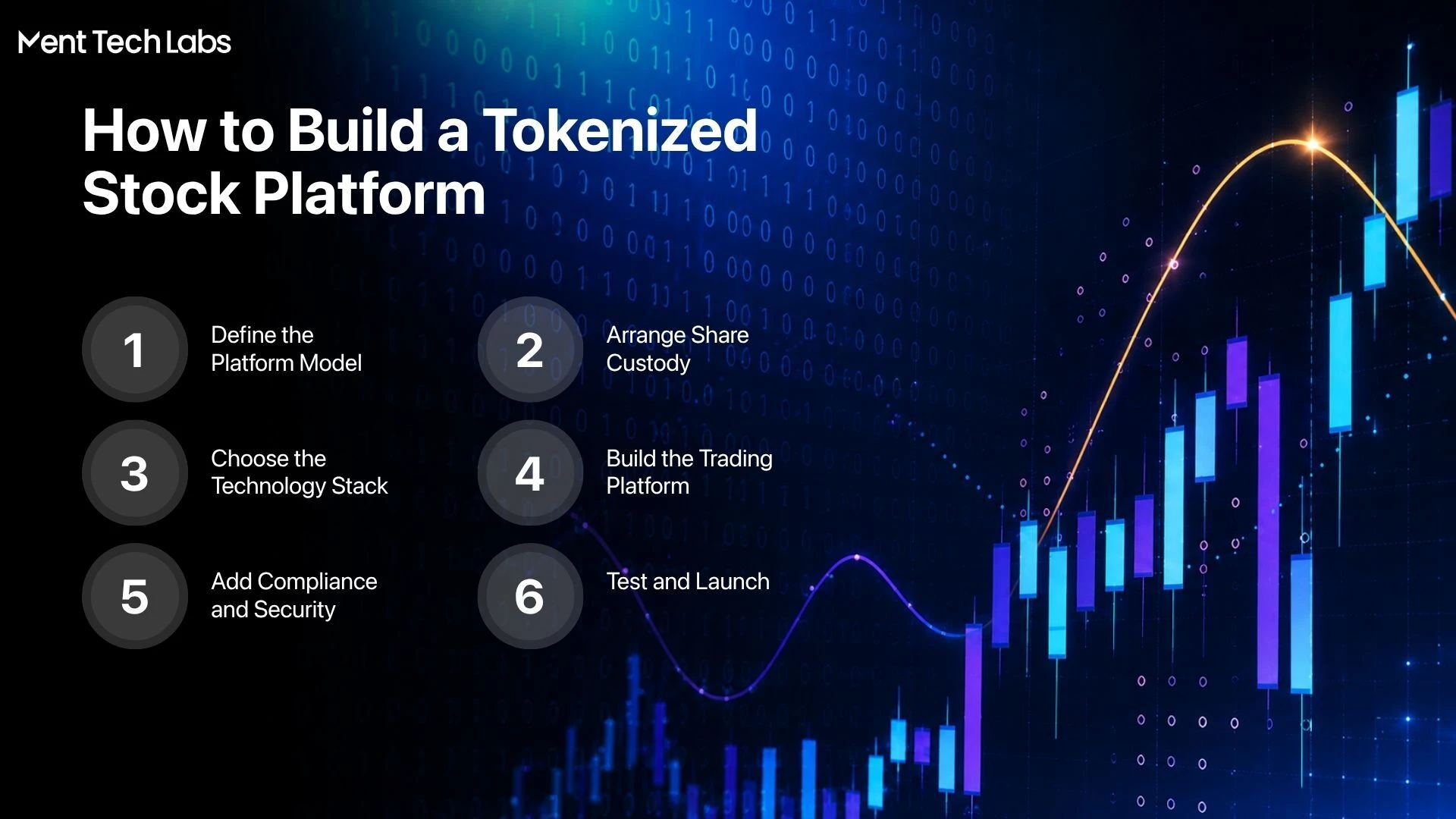
Step-by-Step Tokenized Stock Platform Development Process
Building a tokenized stock platform starts with the legal model, not the code. Each decision around ownership, custody, compliance, and trading affects how the final platform must be built.
1. Define the Platform Model
Start by deciding what the tokens will represent, who can invest, and where the platform will operate. Tokenized securities remain subject to securities laws, even when ownership is recorded on a blockchain.
- Choose asset-backed or synthetic stocks
- Define investor and ownership rights
- Select target countries and users
2. Arrange Share Custody
Next, decide who will hold the underlying shares and how each token will remain connected to them. The custody setup should also cover redemptions, dividends, and regular asset reconciliation.
- Partner with a regulated custodian
- Maintain clear token-to-share backing
- Plan redemption and corporate actions
3. Select the Technology
Choose a blockchain, token standard, and platform architecture that fit the project’s compliance and performance needs. ERC-3643, for example, supports identity-based eligibility checks and controlled token transfers.
- Compare public and permissioned networks
- Choose a compliance-ready token standard
- Plan scalability, privacy, and transaction fees
4. Build the Platform
This stage brings together the investor portal, trading engine, wallets, admin dashboard, and external integrations. A capable stock tokenization platform development company should keep the experience simple for both investors and operators.
- Develop onboarding and portfolio dashboards
- Build order matching and settlement flows
- Connect custody, banking, and market data
5. Add Compliance and Security
Compliance rules should work inside each transaction rather than depend entirely on manual reviews. Identity registries and permissioned token controls can prevent ineligible investors from receiving or transferring assets.
- Integrate KYC and AML checks
- Add transfer and jurisdiction controls
- Conduct smart contract audit services
6. Test and Launch
Before a full launch, test how the platform behaves under real trading conditions. A controlled pilot helps uncover settlement issues, compliance gaps, and confusing user flows before more investors join.
- Test security, speed, and order handling
- Launch with a limited investor group
- Monitor transactions and improve continuously
Tokenized Stock Platform Cost and Development Timeline
There is no fixed price for building a tokenized stock platform. The final cost depends on what you are building, how many features you need, which markets you plan to enter, and how much work is required for compliance, custody, and third-party integrations.
| Platform Type | Estimated Timeline | Estimated Cost |
| White-Label Platform | 1-2 months | $20,000-$50,000 |
| Custom MVP | 5-8 months | $80,000-$150,000 |
| Mid-Scale Platform | 8-14 months | $150,000-$300,000 |
| Enterprise Platform | 12-24 months | $300,000-$800,000+ |
These figures are useful for early planning, but the actual tokenized stock platform cost may be higher once legal support, licensing, custody, market data, and security audits are added.
Monetization Models for Tokenized Stock Trading Platforms
There are a number of ways a tokenized stock platform can generate revenue. The most appropriate model will depend on the type of users it is catering to, the assets that are listed, and trading activity levels.
1. Trading Fees
The platform can collect a modest transaction fee each time an investor trades a tokenized share. This makes the most sense when the number of trades remains fairly constant.
2. Listing Fees
Payment is received from the companies and issuers who choose to list their tokenized share. It could be for asset review, onboarding, token setup, following compliance rules, etc.
3. Issuance Fees
Businesses can charge issuers for creating and distributing new stock tokens. Pricing usually depends on the legal structure and technical work involved.
4. Custody Fees
Platforms that arrange secure custody can charge a monthly or annual fee for holding and managing the assets behind the tokens.
5. Premium Plans
Paid plans can offer more in-depth market data, advanced charts, lower commissions, tools to manage your portfolio, or early access to certain features.
6. White-Label Licensing
A ready-built platform can be licensed to brokerages, fintech firms, and asset managers under their own brand. This gives the business a recurring revenue stream and helps recover the initial tokenized stock platform cost.
Final Thoughts
Tokenized stocks are opening up a new way to issue, trade, and manage shares. They can make investing more accessible while giving businesses more control over settlement, ownership records, and investor access.
Simultaneously, the development of tokenized stock platforms also requires strategic planning. From inception, attention should be paid to compliance, custody, investor rights, security, and liquidity.
If you are a business moving into this space, you should aim to develop the best possible platform, certainly technically, but also one that is logical, trustworthy, and accessible to investors. Contact us to review your idea and develop a practical development route map.