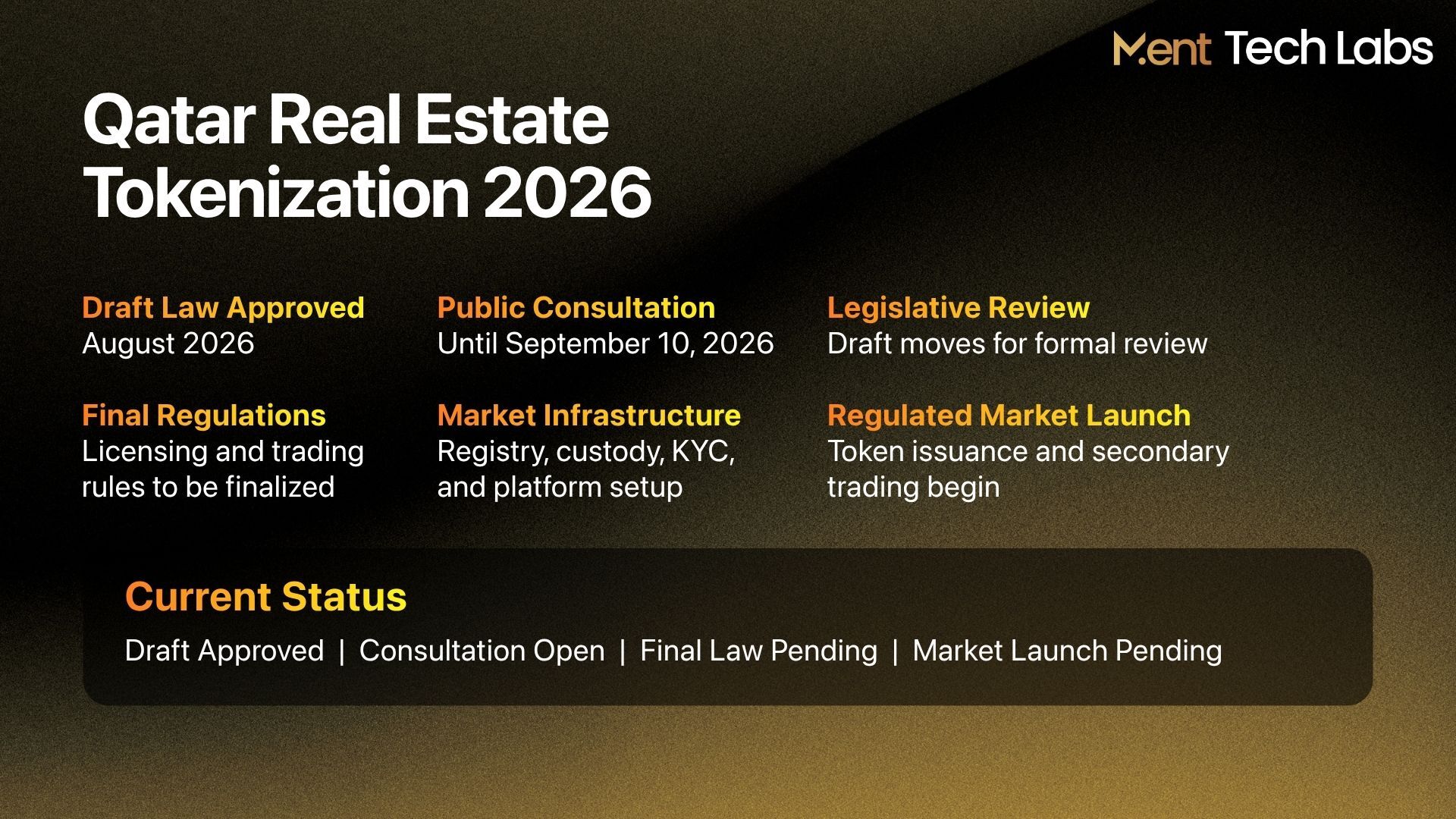
Qatar moved closer to regulated real estate tokenization in August 2026 when the Cabinet approved the draft Real Estate Tokenization Law along with its executive regulations.
The latest Qatar real estate tokenization 2026 update is the publication of the draft on the government’s Sharek platform, with public consultation open until September 10, 2026.
For now, tokenized real estate remains in the regulatory stage. The final law, licensing process, and full market rollout are still pending, but the draft gives a clearer view of how property tokens could be issued, registered, and traded in Qatar.
How Qatar’s Digital Assets Framework Supports Real Estate Tokenization
The Qatar Digital Assets Framework, introduced through the Qatar Financial Centre, created the legal and technical foundation for tokenized assets. It gives tokenized real estate a clearer path by recognizing token-based property rights, smart contracts, and regulated digital asset services.
1. Legal Recognition
The framework recognizes digital tokens as representations of rights in underlying assets, helping establish legal certainty around ownership and transfer.
2. Token Services
It sets rules for token generation, validation, custody, transfer, and exchange, creating the core infrastructure needed for regulated asset tokenization.
3. Smart Contracts
Smart contracts are legally recognized within the framework, allowing ownership rules, transfers, and other transaction conditions to be handled digitally.
4. QFC Sandbox
The QFC Digital Assets Lab allows companies to test real-world tokenization models, including property-related use cases, within a supervised environment.
What Qatar’s 2026 Real Estate Tokenization Law Proposes
Qatar’s draft Real Estate Tokenization Law is intended to bring property tokens into the country’s formal real estate system. Rather than treating tokenization as a separate blockchain activity, the proposed legal and regulatory framework connects digital ownership with existing property records, regulated trading, and investor protection.
- Defined Ownership
The draft aims to clearly define what a real estate token represents and what rights its holder receives. This is important for establishing a legal connection between the digital token and the underlying property.
- Registry Connection
Real estate tokens would be directly linked to Qatar’s Real Estate Registry. This creates an official record behind tokenized ownership and helps reduce uncertainty around who legally holds rights in the property.
- Regulated Trading
The proposal also sets the foundation to regulate real estate tokenization and the trading of property tokens rather than allowing them to move through an unregulated market.
- Investor Protection
Investor security, market transparency, and transaction reliability are central to the draft. The framework is being developed jointly with bodies including the Qatar Central Bank, the Qatar Financial Markets Authority, the Ministry of Municipality, and the General Real Estate Regulatory Authority.
Overall, the proposal is designed to make real estate tokenization in Qatar part of the regulated property market while still allowing room for new digital investment models.
How Tokenized Property Ownership Will Work in Qatar
Under Qatar’s proposed model, a real estate token would not exist separately from the underlying property. The digital ownership record would remain connected to Qatar’s official Real Estate Registry, giving tokenized real estate a legal link to the asset behind it.
The draft framework provides for two main ownership structures:
1. Direct property ownership
A property can be divided into equal digital interests, with each token representing a defined share of rights in that property.
2. Company-based ownership
The property can be held through a special-purpose real estate company, while investors hold tokens representing interests in that company and, indirectly, the property it owns.
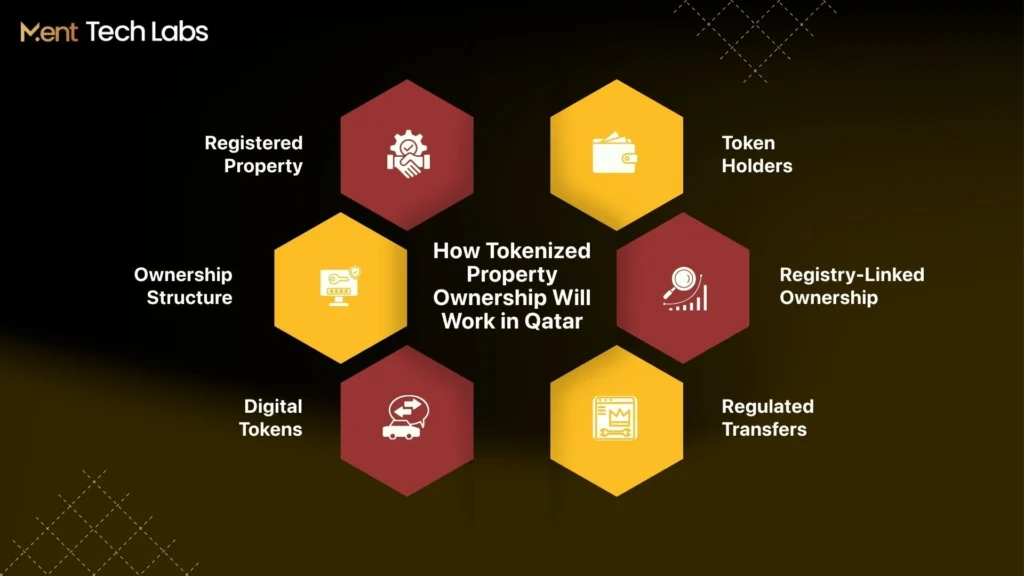
The ownership journey would broadly work like this:
Registered Property → The property must first exist within Qatar’s official real estate registration system and meet the applicable eligibility requirements.
Ownership Structure → The property is structured either for direct fractional ownership or through a property-holding company.
Digital Tokens → The approved ownership interests are represented digitally as tokens linked to the underlying property or company.
Token Holders → Investors acquire these tokens and receive the rights attached to their respective ownership interests.
Official Ownership Record → Token ownership and transfers remain tied to the formal registration framework rather than relying only on a blockchain record.
This structure is central to real estate tokenization in Qatar because it is designed to connect digital investment with legally recognized property rights, rather than treating property tokens like standalone crypto assets.
Foreign Investor Access to Tokenized Property in Qatar
For international investors, tokenization could make Qatar property easier to access through smaller digital interests, but existing foreign ownership rules still apply. For anyone considering tokenized property for foreign investors in Qatar, three points matter:
- Eligible Ownership Areas: Qatar updated its foreign ownership rules in 2026, with non-Qataris now permitted to own property in 10 designated freehold areas, including The Pearl, Lusail, West Bay, and the newly added Simaisma Resort and Beach Project.
- Existing Ownership Rules: A digital token may change how an investment is structured or transferred, but foreign investors will still need to meet the ownership and eligibility rules that apply to the underlying property.
- Pending Regulatory Details: The final Qatar real estate tokenization regulations for 2026 will need to clarify how existing foreign ownership limits, usufruct rights, investor eligibility, and property-related benefits apply when an investment is held through tokens rather than a conventional title.
Regulation of Real Estate Token Issuance, Trading, and Compliance in Qatar
Qatar’s model combines its existing digital asset rules with new property-specific controls, covering the full lifecycle from token creation to investor trading.
Before Issuance
The property and token structure must be clearly defined before an offering can reach investors.
- Property eligibility and valuation
- Token rights and disclosures
- Licensed issuance providers
Investor Onboarding
Investor participation would take place through regulated platforms with checks designed to protect both ownership records and market integrity.
- Identity and KYC checks
- AML compliance requirements
- Investor eligibility controls
Trading and Oversight
Real estate token transfers would remain supervised and connected to Qatar’s official property records rather than relying only on blockchain transactions.
- Regulated trading platforms
- Registry-linked transfers
- Custody and market oversight
Impact of Real Estate Tokenization on Qatar’s Property Market
The Qatar real estate tokenization 2026 initiative could make property investment more flexible by opening new ways to access, finance, and trade real estate.
1. Wider Access
Tokenized real estate could allow investors to take smaller positions in high-value properties instead of purchasing an entire asset.
2. Better Liquidity
A regulated secondary market could make property interests easier to buy and sell, depending on the final rules and market adoption.
3. New Funding
Developers and property owners could use tokenization as another way to raise capital, supporting the wider growth of Qatar digital assets and regulated blockchain use.
What Happens Next for Qatar Real Estate Tokenization in 2026
The next phase of the Qatar real estate tokenization regulations 2026 will move through consultation, legislative review, and implementation before a wider market rollout.
- Public Consultation
Feedback on the draft law and executive regulations remains open through Sharek until September 10, 2026.
- Legislative Review
The proposal will then move through Qatar’s formal legislative process, where provisions can still be reviewed or amended.
- Final Regulations
Authorities will need to finalize the detailed rules that regulate real estate tokenization, including operational and licensing requirements.
- Platform Licensing
Approved service providers and trading platforms will need to meet the applicable regulatory standards before offering tokenized property services.
- Market Infrastructure
Registry integration, custody, investor onboarding, payment flows, and compliance systems will need to be ready for live transactions.
- Market Launch
Property token issuance and secondary trading can begin once the framework is fully operational. Qatar has not yet announced a confirmed date for a nationwide rollout.
Final Thoughts
Qatar real estate tokenization 2026 shows how quickly the country is moving toward a regulated digital property market. The final impact will depend on how the new rules are implemented across ownership, trading, and investor access.
For businesses planning to enter this space, Ment Tech Labs provides RWA tokenization platform development for property issuance, investor onboarding, compliance, token management, and secondary-market workflows.
Follow Ment Tech Labs for more updates on tokenized real estate, RWA regulations, and digital asset infrastructure as Qatar’s framework continues to evolve.