Introduction
A few years ago, AI coding tools were mostly used to help with code writing or finish a small number of lines. Now AI Coding Agents can go through codebases search, for and fix problems run tests and manage complicated coding jobs that would usually take developers many hours to finish.
Tools such, as Claude Code, Cursor and GitHub Copilot help make coding easier. Tools each have their strengths. Tools some handle projects while other Tools work better for quick fixes and everyday tasks.
In this blog we’ll look at the 10 AI Coding Agents in 2026 check what each one provides and examine the security risks that come with them. We’ll also see how Ment Labs helps companies create coding agents that match their requirements.
What Are AI Coding Agents and How Do They Work?
AI Coding Agents are software development tools powered by language models. AI Coding Agents can understand coding instructions. Carry out tasks, with minimal human involvement. Unlike AI coding assistants that mainly suggest code, AI Coding Agents can explore repositories edit many files, run commands and test their changes. AI Coding Agents help developers handle everything from fixing bugs to implementing features while keeping developers involved in reviewing the results.
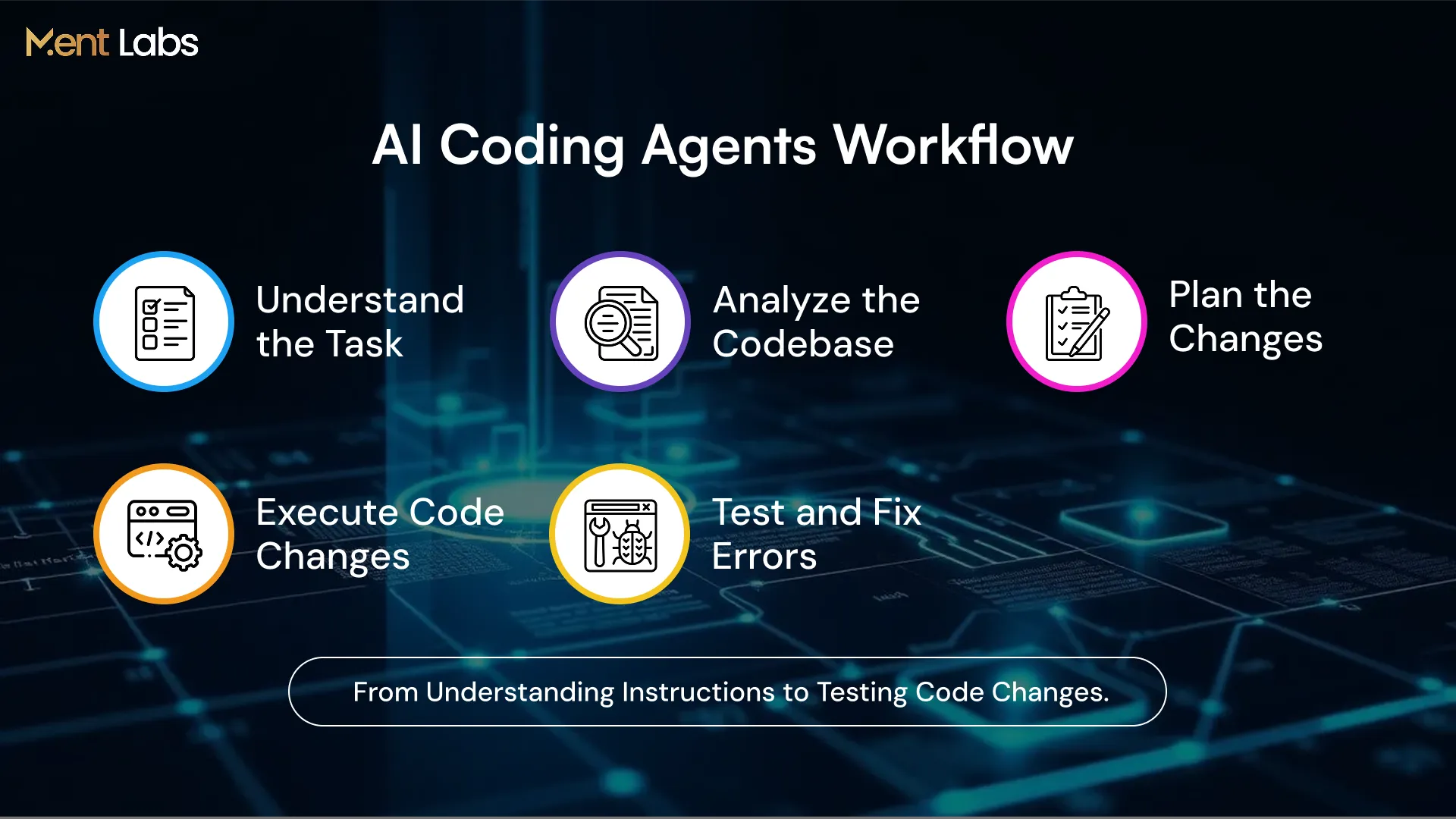
1. Understand the Task
The agent looks at the developer’s instructions to figure out what needs to be done. The agent thinks about fixing a bug adding a feature or making changes, to existing code. The agent keeps the developer’s instructions in mind while planning the steps.
2. Analyze the Codebase
The agent looks at the project files the code structure and the dependencies to understand how everything fits together. The agent then pinpoints the parts of the code that require changes.
3. Plan the Changes
The agent splits the task into steps and figures out which files and tools the agent needs. The agent finds this easier to manage the work before changing the code.
5. Test and Fix Errors
The agent runs tests to check if the changes work properly. If it finds any errors it fixes them. Runs the tests again. Then the developer reviews the code.
10 Best AI Coding Agents for Developers in 2026
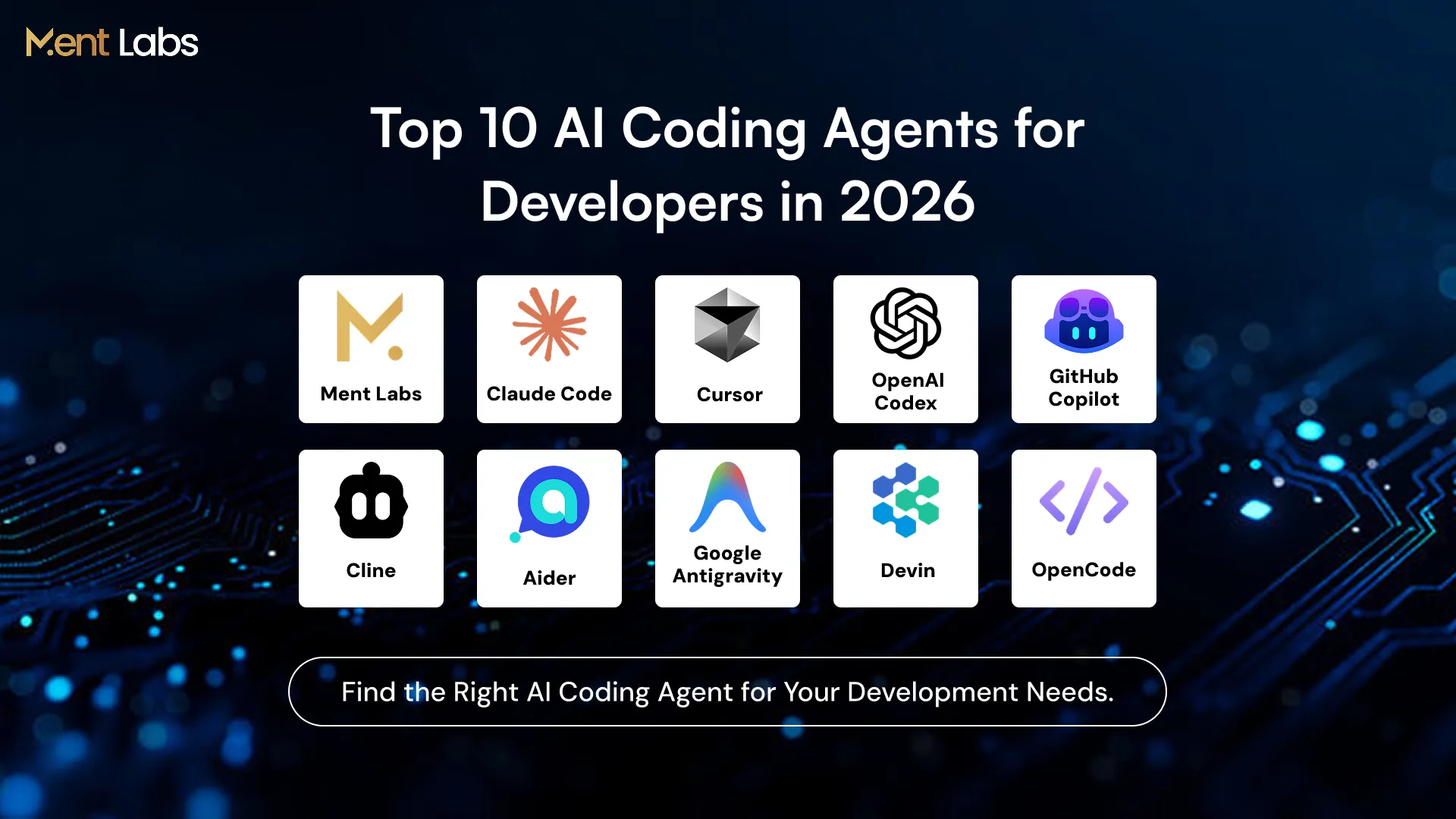
There are coding tools to choose from. Choosing the coding tool depends on the specific development needs you have. Below are ten coding tools that’re worth looking at. These coding tools range from to-use AI coding agents to custom enterprise development services.
1. Ment Labs
Ment Labs helps businesses build coding agents that fit their development needs. Ment Labs offers AI agent development services. Builds custom AI solutions that work with existing tools and workflows. Ment Labs also helps improve codebases, test and secure applications so that businesses can build software.
Best for: Enterprises that want custom AI coding agents that integrate with existing systems, automate development tasks and support engineering workflows.
2. Claude Code
Developed by Anthropic Claude Code is a tool that helps developers handle coding tasks right from the terminal or from supported IDEs. It can look through codebases search for and correct errors make changes to files and execute commands. Thanks to MCP integration developers can also link it with tools and services.
Best for: Developers who are working on projects that include code refactoring, debugging and tasks that need modifications, in many different files.
3. Cursor
Cursor is an AI-powered code editor designed to help developers work with code across files. In Agent mode it can locate code write new features run terminal commands and fix errors. Developers get to review the suggested changes before applying them to their projects.
Best for: Developers who want to build features update files at once and manage daily coding work all inside one editor.
4. OpenAI Codex
OpenAI Codex helps developers write code, review code and update code without doing everything. OpenAI Codex can find bugs add features and run tests in local environments or in cloud environments. Developers can also assign coding tasks. Review the changes once they are completed.
Best for: Engineering teams that want to automate coding tasks manage projects and review code changes through cloud-based workflows.
5. GitHub Copilot
GitHub Copilot helps developers write, edit and improve code inside their coding environment. GitHub Copilot’s Agent Mode can locate the files make changes and complete coding tasks that involve several steps. GitHub Copilot also connects with GitHub so teams can work together easily on existing projects.
Best for: Developers using GitHub. GitHub Copilot is ideal for those who want help, with coding, managing repositories and doing development tasks.
6. Cline
Cline is an open-source coding assistant that developers can use in code editors, terminals or on desktop computers. Cline helps developers create and edit files run commands and
spot errors in code. Developers can also choose which AI model Cline will use and can decide which actions Cline must ask for developers approval before carrying them out.
Best for: Cline is best for developers who want control over developers AI models developers coding tools and developers code changes, without depending on a single provider.
7. Aider
Aider is a source coding tool that lets developers work directly from the terminal. Aider connects to existing Git repositories. Can use a variety of AI models from local to cloud based. Aider’s Git integration helps developers keep track of changes and update code across files at once.
Best for: Developers who like to work in the terminal and want control, over Git workflows and AI-assisted code changes.
8. Google Antigravity
Google Antigravity is a development platform powered by AI that helps developers manage coding tasks with AI agents. Google Antigravity can review project code edit files, run commands and handle tasks that involve several steps. Developers can use Google Antigravity through its editor and agent management interface.
Best for: Developers who use Google’s AI tools and want to automate coding tasks manage projects and work with AI agents all, in one development environment.
9. Devin by Cognition
Devin is an AI software engineering agent created by Cognition. It helps with coding tasks. Reduces the need for manual work. It can plan work write code fix problems and run tests. Programmers can give it projects watch how it progresses and check the changes before they are approved.
Best for: Engineering teams that want to automate coding tasks fix bugs and keep existing software projects up, to date.
10. OpenCode
OpenCode is an open-source AI coding agent that developers can use in the terminal through a desktop app or in supported code editors. It supports AI models and allows users to add their own custom agents, plugins and MCP integrations. Developers have control over what the agent can access and can review all changes before approving them.
Best for: Developers who are looking for a coding tool that works with different AI models and can be adapted to match their everyday development routines.
Comparison of the Top 10 AI Coding Agents in 2026
Not every coding agent behaves the way. Some coding agents help developers write and correct code while other coding agents can handle development tasks. The table below compares the AI coding agents by what they do by their strengths by the platforms they support and, by their features.
| AI Coding Agent | Specialization | Key Strengths | Platform Focus | Notable Features |
| Ment Labs | Custom AI agent development | Builds agents around business needs and existing workflows | Enterprise systems and development tools | Custom integrations, workflow automation, and codebase improvements |
| Claude Code | Complex coding tasks | Handles large codebases, debugging, and refactoring | Terminal and IDEs | MCP connections, file editing, and command execution |
| Cursor | AI-powered code editing | Helps write code and make changes across multiple files | AI-powered code editor | Agent Mode, code suggestions, and built-in review tools |
| OpenAI Codex | Automated coding tasks | Handles bug fixes, feature development, and code reviews | Cloud, terminal, and IDEs | Cloud-based tasks, automated testing, and code changes |
| GitHub Copilot | Everyday coding assistance | Helps write code and work with GitHub repositories | GitHub and supported IDEs | Agent Mode, code completion, and repository integration |
| Cline | Open-source coding automation | Lets developers choose AI models and control agent actions | IDEs and terminal | Model selection, terminal commands, and approval settings |
| Aider | AI pair programming | Makes code changes while keeping track of Git history | Terminal | Repository maps, Git commits, and multi-file editing |
| Google Antigravity | Agent-based software development | Helps plan, organize, and carry out coding tasks | Agent-focused IDE | Agent Manager, terminal access, and task verification |
| Devin | Independent development tasks | Handles assigned coding work with developer oversight | Cloud-based environment | Task planning, testing, and pull request preparation |
| OpenCode | Customizable coding assistance | Supports different AI models and development setups | Terminal, desktop, and web | Custom agents, model options, and MCP integrations |
Top 5 Security Risks of Agentic AI Coding Tools
AI coding agents can manage coding tasks, access project files, and run commands with manual effort. However, giving AI coding agents this level of access also raises security concerns. Businesses using AI product engineering services need to consider these risks when integrating AI coding agents into their development workflows. Here are five common security risks developers should know about.
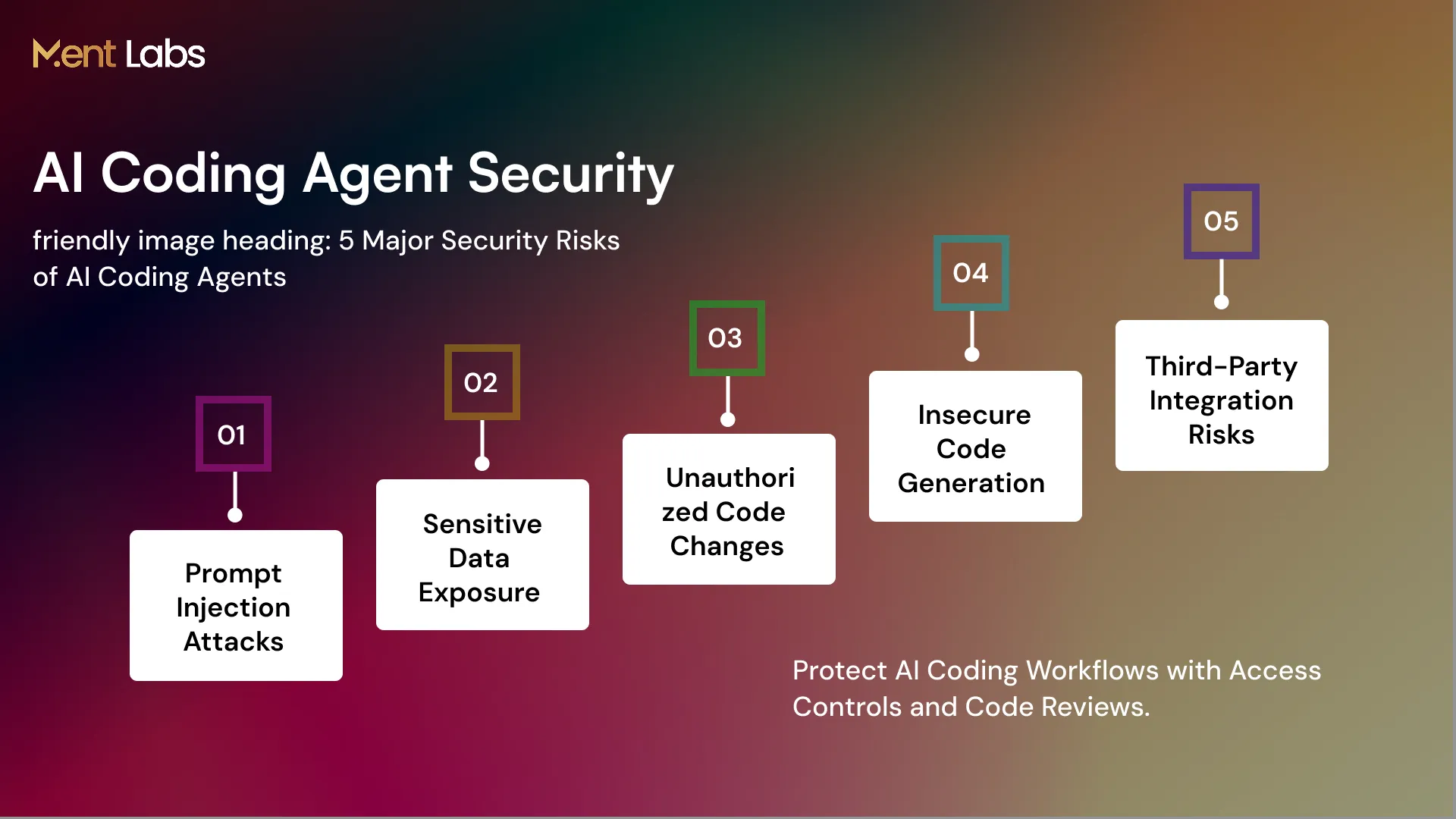
1. Prompt Injection Attacks
Hackers can hide instructions, inside files, documents or websites that coding agents use. If a coding agent follows these instructions the coding agent might change code. Carry out actions that the developer never approved.
2. Sensitive Data Exposure
While working on a project coding agents may encounter passwords, API keys or private company data. If proper access controls are missing coding agents might unintentionally share passwords, API keys or private company data, with tools or services.
3. Unauthorized Code Changes
If coding agents have much access coding agents may edit important files, delete code or change system settings, without permission. This can lead to errors. Affect how the application works.
4. Insecure Code Generation
AI-generated code sometimes has security issues. For example AI-generated code may have authentication or may handle data improperly. These security gaps can leave applications, to attacks. Therefore developers must carefully review AI-generated code. Test it before putting it into production.
5. Third-Party Integration Risks
Many coding agents use APIs, plugins and MCP servers to get work done. If these connections are not secure coding agents might expose project data or allow attackers to access the development environment.
How Ment Labs Builds Custom AI Coding Agents for Enterprises
Ment Labs helps businesses build custom AI Coding Agents which work with the tools and processes businesses already use. Ment Labs focuses on making everyday coding tasks easier cutting down work and helping development teams work more efficiently.

1. Understanding Development Workflows
We first check how your development team operates what tools they. Where they spend the most of their time. This helps us identify tasks that coding agents can take care of.
2. Building Custom AI Coding Agents
Our developers build coding agents that fit your business needs. Coding agents can help teams write code fix bugs, run tests and manage development tasks.
3. Connecting with Existing Development Tools
We connect coding agents with your repositories, IDEs and internal systems. With our AI workflow automation services we help teams automate tasks without replacing the tools that are already used.
4. Managing Security and Access
We set up access controls to determine which files, systems and tools an agent is allowed to use. Developers can also. Approve key changes before they are actually applied.
5. Testing and Deployment
We test coding agents on development tasks to see how well coding agents work and where improvements are needed. Once coding agents are ready we help teams deploy coding agents and make adjustments as team needs change.
Conclusion
AI Coding Agents are helping developers spend time on repetitive tasks and more time building software. Tools, like Claude Code, Cursor and GitHub Copilot make coding, debugging and testing easier. Not every tool will suit every project so its important to consider your teams workflow development goals and security needs before choosing one.
If the existing tools do not match how the team works Ment Labs can help build a specific solution. With AI copilot development services Ment Labs creates solutions that fit with the team’s tools and processes. Contact us today to discuss the project and learn how a custom coding agent could help the team.