One AI agent can handle many tasks, but some jobs need more than one set of capabilities. That’s where AI Agent Swarms come in. Instead of asking a single agent to do everything, different agents can take care of research, data analysis, and checking results while working toward the same goal.
Getting these agents to work together is what makes the idea exciting. They have to share information understand what each one is in charge of and plan their moves. Without this adding more agents can make a task complicated instead of easier.
In this blog, we’ll look at how AI Agent Swarms work, the tools used to build them, and the different ways agents can coordinate. We’ll also explore where businesses are using them, how they compare with multi-agent workflows, and what lies ahead for this technology.
What are self-replicating AI agent swarms?
Self-replicating AI agent swarms work a little differently from regular agent systems. When there’s too much work for one agent, it can create another instance to handle part of the job. These agents can split up tasks, share what they’ve found, and work together without putting everything on a single agent. Not every agent swarm can do this, though.
Think of a research project with hundreds of documents to review. Rather than going through them one by one, an agent could create additional instances to examine different files at the same time. This sounds useful, but it also brings some risks. Businesses need to know how many agents are running, what they can access, and when they should stop.
Top 6 Tools and Frameworks for Building AI Agent Swarms
Choosing the right framework matters when several agents need to work. Here are five tools that help developers manage tasks, communication and coordination.
1. Ment Labs
Ment Labs builds custom multi-agent systems that help businesses manage tasks across different tools and workflows. Its AI agent development services cover agent coordination, system integration, testing, and deployment.
2. LangGraph
LangGraph helps developers build workflows where agents can share information and move between tasks. It also supports approvals and error handling making it useful for complex projects that need more control.
3. CrewAI
CrewAI lets developers create teams of agents with responsibilities. One agent might research a topic while another reviews the findings. It’s a choice, for automating research, reporting and everyday business tasks.
4. LangChain
LangChain helps programmers link agents to databases, APIs and business tools. It is commonly used in AI agent development services to create systems that can find information handle documents and interact with applications.
5. AutoGen
AutoGen first created by Microsoft Research lets agents send messages talk about tasks and check each others work. It is helpful, for seeing how multiple agents can work together even though the project is now stored away in favor of Microsoft Agent Framework.
6. Agency Swarm
Agency Swarm helps developers bring agents in groups. Each group has roles and ways to talk to each other. Every agent can have its tools and tasks. This makes it simpler to handle how work goes from one agent to another.
How AI Agent Swarms Differ from Multi-Agent Workflows
Both agent swarms and multi-agent workflows involve using agents to complete tasks but they work in different ways. Multi-agent workflows have a sequence that must be followed. Agent swarms allow agents to exchange information, split up work and change their steps whenever necessary.
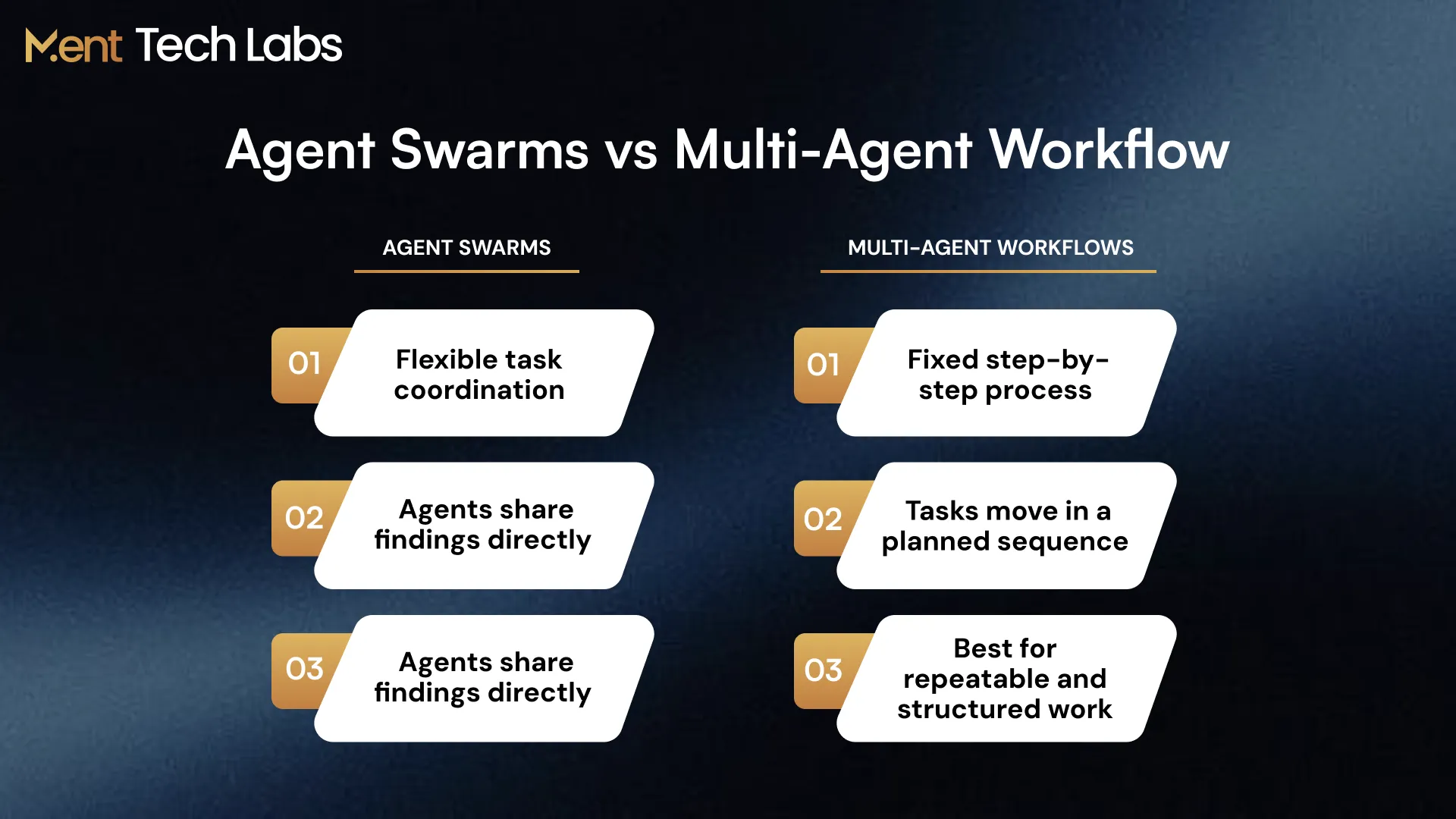
| Feature | Agent Swarms | Multi-Agent Workflows |
| Task Execution | Agents can adjust tasks as work progresses. | Tasks usually follow a predefined process. |
| Coordination | Agents can communicate and hand off work directly. | A workflow or coordinator typically manages the process. |
| Flexibility | Better suited to changing requirements. | Better suited to repeatable tasks. |
| Best Use Cases | Research, complex troubleshooting, and open-ended problems. | Invoice processing, approvals, and routine operations. |
| Main Challenge | More difficult to monitor and control. | Less flexible when unexpected situations arise. |
Note: Multi-agent workflows suit structured tasks, while agent swarms work better when tasks need flexibility and collaboration.
Key Orchestration Patterns and Emerging Trends in AI Agent Swarms
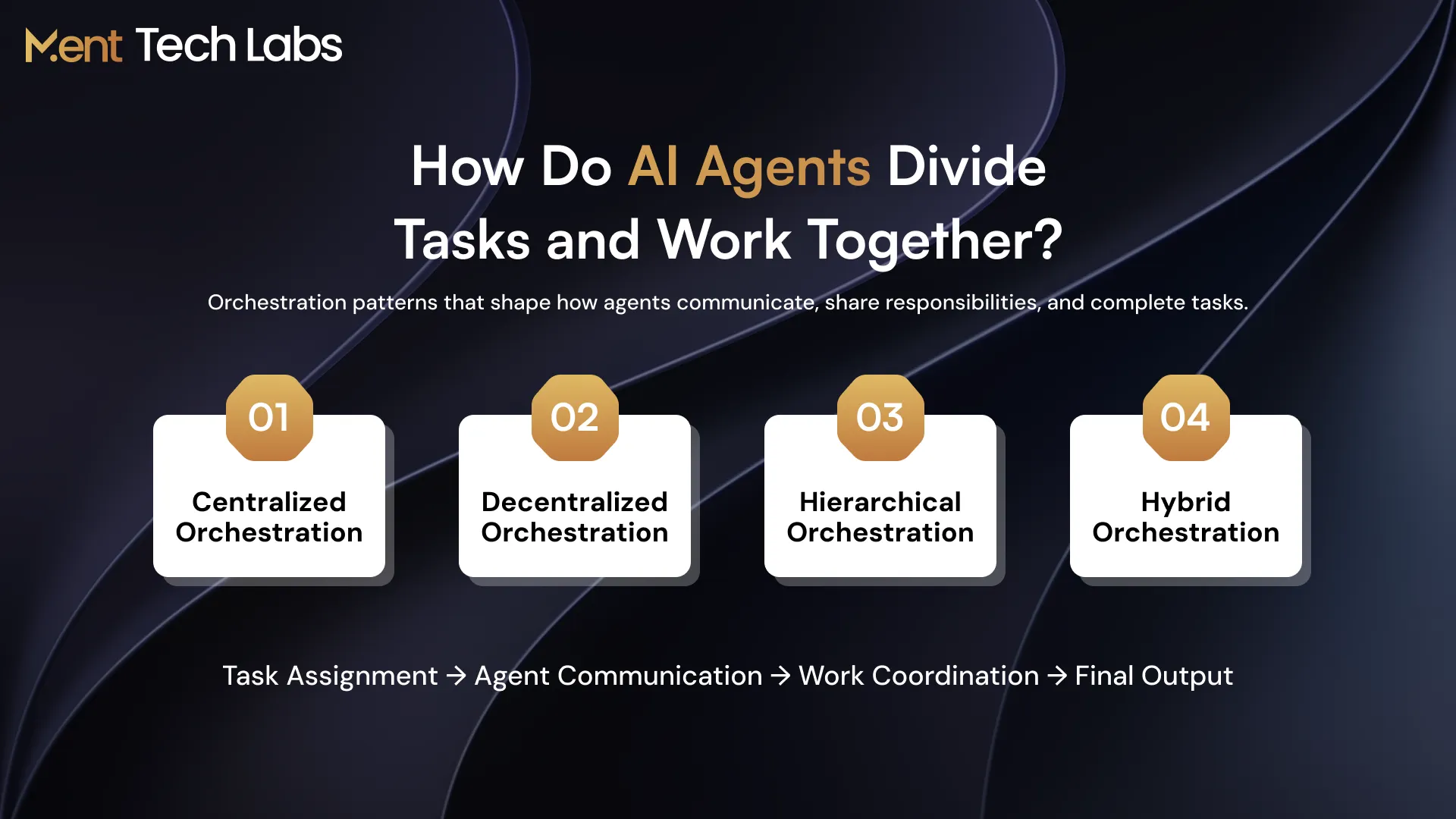
Agent swarm orchestration helps agents divide tasks and work together. With AI workflow automation services, businesses can manage how agents share information and complete tasks.
1. Centralized Orchestration
One agent takes the lead like a manager and assigns jobs to agents. It then gathers the results back from them. This setup is helpful when a company wants roles and a single person, in charge. Everyone knows who to report to and decisions come from one place.
2. Decentralized Orchestration
Agents talk to each other directly. They don’t wait for one person to tell them what to do. Instead they share what they’ve found pass tasks to each other and choose what to work on based on what’s needed. It’s more flexible and faster when things change quickly.
3. Hierarchical Orchestration
A lead agent takes a project and breaks it down into smaller tasks. Then it assigns those tasks to agents that are trained for jobs. These agents can pass on work to others if they need help. This method works well when a project has steps and needs clear organization.
4. Hybrid Orchestration
This method mixes down control with teamwork, between agents. A central authority stays in charge of decisions. At the time agents work together to manage everyday tasks. This way businesses can keep control over areas while letting agents do the routine work.
Emerging Trends in AI Agent Swarm Orchestration
- Dynamic Task Handoffs: Agents give work to agents based on what each agent is good, at and what the next part of the task needs.
- Parallel Task Execution: Several agents work on parts of a project all at the same time instead of waiting for one step to be done before starting the next one.
- Shared Context and Memory: Agents use information from tasks that were done before so they don’t have to do the work again and so the information stays the same.
- Human. Monitoring: Teams watch what agents are doing control who can access what and check decisions that need a person to approve them.
Practical Applications of AI Agent Swarms Across Industries
AI Agent Swarms can take on tasks that involve teams, different systems and various responsibilities. This is where companies can apply them effectively.
1.Banking and Financial Services
Reviewing a payment usually requires checking many records. Agents can divide the work look for behavior and highlight anything that the fraud team needs to look into.
2.Healthcare
Tracking appointments, insurance claims and patient documents takes a lot of time. Agents can find missing information and share updates, between departments reducing the amount of paperwork.
3.Retail and E-commerce
When orders are delayed people who work in customer service can look up delivery updates check stock and handle customer requests. Services that use enterprise AI help link the systems that are involved.
4.Manufacturing and Supply Chain
Late shipments can cause problems with production. People who work in customer service can look at orders check stock levels and help teams find other options.
5.Software Development
Finding bugs takes time. People who work in customer service can look at code run tests and compare results to help developers find the issue.
6.Cybersecurity
Suspicious logins can be missed. People who work in customer service can look at security logs connect activity and tell security teams, about possible dangers.
The Future of Execution and Coordination in AI Agent Swarms
The future of AI Agent Swarms is, about managing tasks working together and trying out different situations. With enterprise AI integration services companies can link these agents to their systems. This helps them make choices.
1. Execution: Agents That Get Work Done
- Independent Task Handling: Agents can finish tasks that are approved without needing to be told what to do at every step.
- Cross-System Actions: They can change records handle requests and work, between business applications that are connected.
- Problem Handling: Agents can spot tasks that did not work try to fix them in a safe way or send the problems to people for help.
2. Coordination: Agents That Work Together
- Smarter Task Distribution: Agents could assign work based on each others capabilities and availability.
- Information Sharing: Teams of agents may exchange findings without repeating the work.
- Better Decision-Making: Agents could compare results. Agree on the next step before moving forward.
3. Simulation: Agents That Test Possibilities
- Scenario Testing: Companies could look into how delays in the supply chain or changes, in what customers want might influence how they run their business.
- Risk Assessment: Agents could assist in finding issues before any changes are actually made.
- Planning Alternatives: Groups could look at different options and learn about the pros and cons of each before making a choice.
What is the Swarm Intelligence Market Size in 2026?
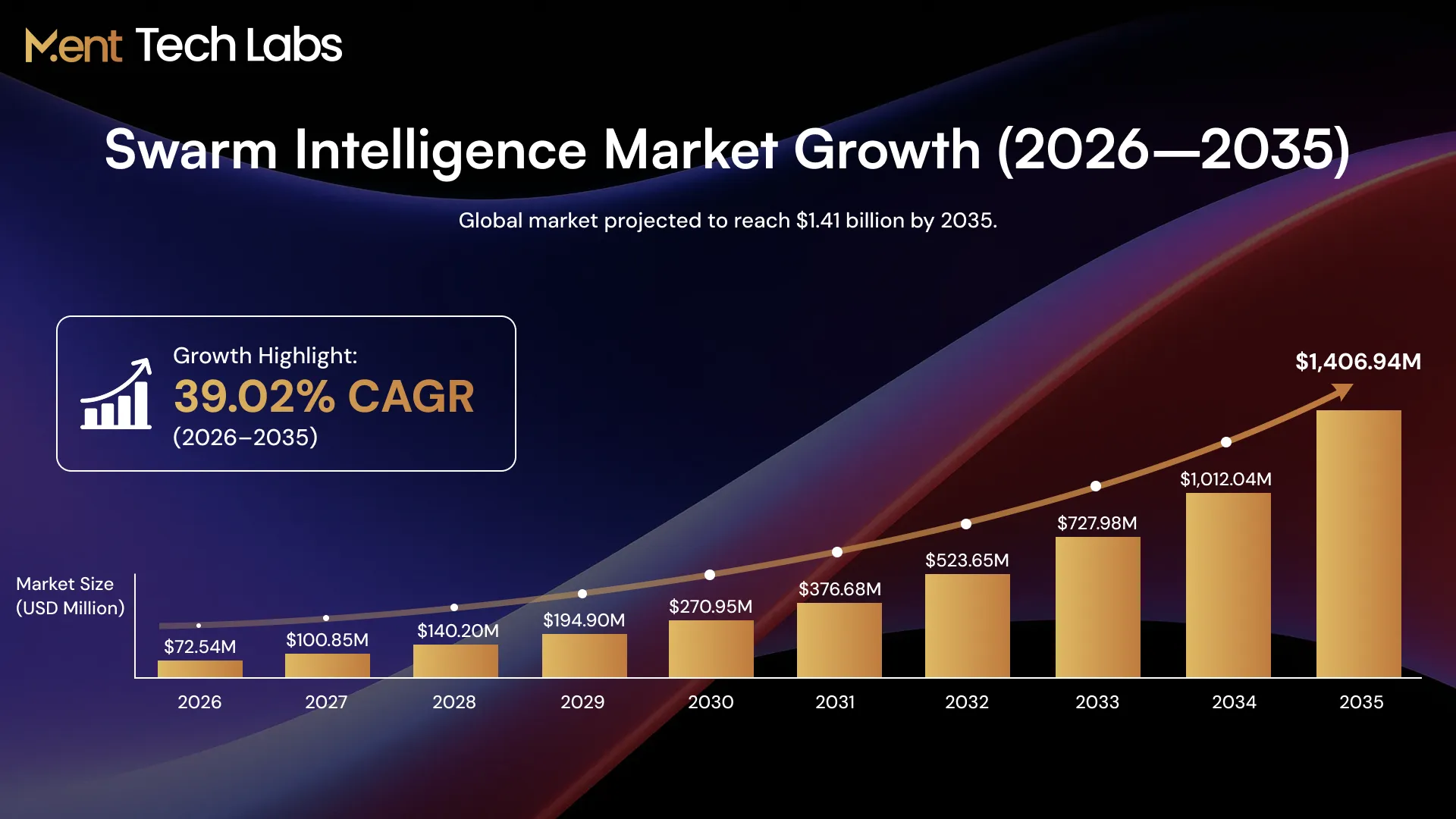
The swarm intelligence market was valued at $52.18 million in 2025 and is expected to reach $72.54 million in 2026. Looking further ahead, estimates put it at nearly $1.41 billion by 2035, with an annual growth rate of 39.02%. These numbers show just how much attention systems that can work together are starting to receive.
A lot of this interest comes from robotics, drones, and factory automation. Companies want machines that can share information, adjust when things change, and get work done without someone managing every step. The market isn’t limited to AI Agent Swarms, but the growing demand for this kind of coordination is worth watching.
Conclusion
AI Agent Swarms help businesses manage tasks. AI Agent Swarms let many agents share work and coordinate decisions. From customer support to cybersecurity AI Agent Swarms offer ways to handle everyday challenges.
However successful implementation of AI Agent Swarms requires roles, proper oversight and access to the right tools. With MCP server integration services businesses can connect AI Agent Swarms with existing systems and data.
Looking to bring AI Agent Swarms into your business? Contact Ment Labs to discuss your project. Find the right solution, for your team.