Introduction
Context engineering provides an AI model the data to answer a request. The data comes from conversations, documents, instructions or business systems. The focus is on the choices of the data rather than the provision of everything.
While prompt engineering involves designing instructions, context engineering controls where the model has access to information from. Since models can only ingest a certain amount of information at once, providing relevant context helps in generating more correct answers.
This blog looks at the mechanics of context engineering, its critical elements, how it differs from prompt engineering, as well as context windows, AI agent memory, applied strategies, and case studies.
What Is Context Engineering in AI?
Context Engineering involves determining the kind of information that should be accessible to an AI model prior to performing any specific task. The information could either come from conversations within the document or from users’ preferences and other information stored in business systems. Context Engineering therefore entails providing the AI model with information that it requires while withholding irrelevant information.
The accuracy of an AI response is determined by the information that is available to the AI model. In the absence of such information, the AI model can give wrong responses. In cases where too much irrelevant information is provided to the AI model, it could get overwhelmed and confused.
How Does Context Engineering Work?
Context engineering begins by determining the information required for a task. Context engineering collects details, from documents, previous conversations and linked systems. After collection context engineering filters and arranges the data so the model can focus on the important parts.
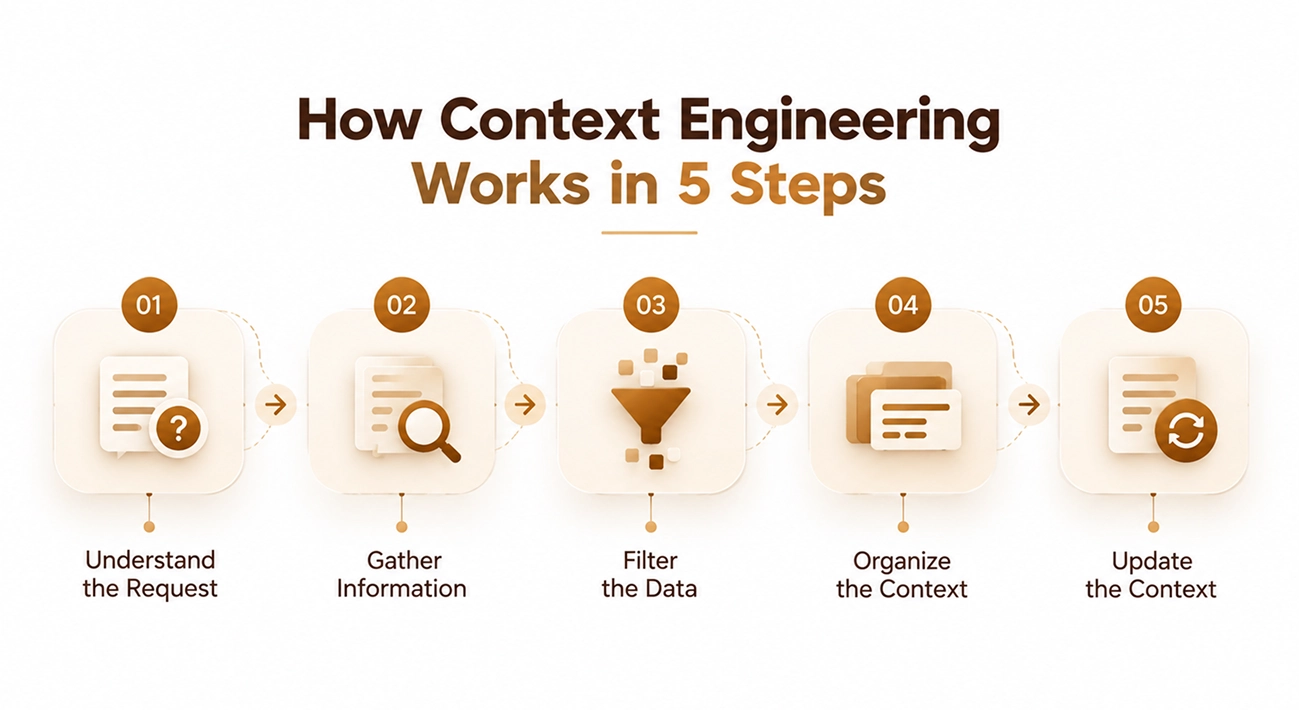
1. Understand the Request
First Understand the Request means to see what the user wants. Understand the Request helps decide which facts are needed to finish the task.
2. Gather Information
Next Gather Information means to collect facts, from papers, talks or business systems. Gather Information provides the background needed to handle the request.
3. Filter the Data
Unrelated or repeated details are removed from the collected information. This keeps the context focused on the task.
4. Organize the Context
The selected information is arranged alongside the instructions. The model then uses these details to prepare its response.
5. Update the Context
As new information comes in, the context is updated to reflect the changes. This helps the model stay on track during longer tasks.
Key Components of LLM Context
LLM context includes the information a language model uses to understand a request and prepare an answer. It can come from instructions, past conversations, documents, or connected tools. Each component helps the model follow the task and work with relevant details.
1. Instructions and Prompts
These tell the model what job to do and how to act. Clear instructions help it follow rules and stay on track with what the user wants.
2. Conversation History
Earlier messages help the model know what has already been talked about. This lets it keep up with conversations without forgetting points.
3. External Knowledge
Useful documents, databases and other sources give information that’s not in the models training. This helps it answer questions with new information.
4. Tool Outputs
AI models can access information through connected tools, APIs, search systems, and RAG development services. These sources help models retrieve relevant data and complete tasks more accurately.
5. Agent Memory
Memory keeps information like what users like and details, from past talks. It helps AI agents keep going in the direction during tasks and chats.
Context Engineering vs Prompt Engineering: Key Differences
Context engineering and prompt engineering work in ways. Context engineering decides what data AI needs while prompt engineering focuses on how the instructionsre written. Both are important, in enterprise AI integration services because AI must have directions and the correct business data to perform well.
| Key Difference | Context Engineering | Prompt Engineering |
| Focus | Considers the information that the model requires to accomplish the task. | Considers the best ways to formulate the request and make the task understandable. |
| Information | Uses data extracted from documents, previous conversations, and interconnected systems. | Relies on written instructions, examples of answers, and formatting. |
| Approach | Preserves useful data, eliminates unnecessary details, and adds new data if required. | Entails modifying the prompt when necessary if the response is not optimal |
| Applications | Helps AI agents deal with customer records, company documents, and information from various systems. | Is effective for everyday tasks such as writing, answering questions, and creating summaries. |
| Primary Purpose | Ensures that the model has the appropriate data and information to generate a useful response. | Ensures that the request is formulated properly so the model can understand it. |
Understanding Context Windows and Context Management
A context window is the amount of information an AI model can handle in one go. It holds instructions, past chats, documents and other stuff needed to finish a job. Every model has a ceiling. If too many things are added key points can slip out or be missed.
Context management decides what data to keep, change or drop while a task moves forward. By using MCP server integration services AI agents can pull info from linked tools and business systems whenever they need it. This cuts down on loading amounts of data all, at once and lets models work with fresh useful info.
Core Context Engineering Techniques
Good context engineering is not simply about giving the AI model information. Good context engineering is about controlling what the model sees and keeping details ready as the task moves forward. Four common context engineering techniques for this are listed below.
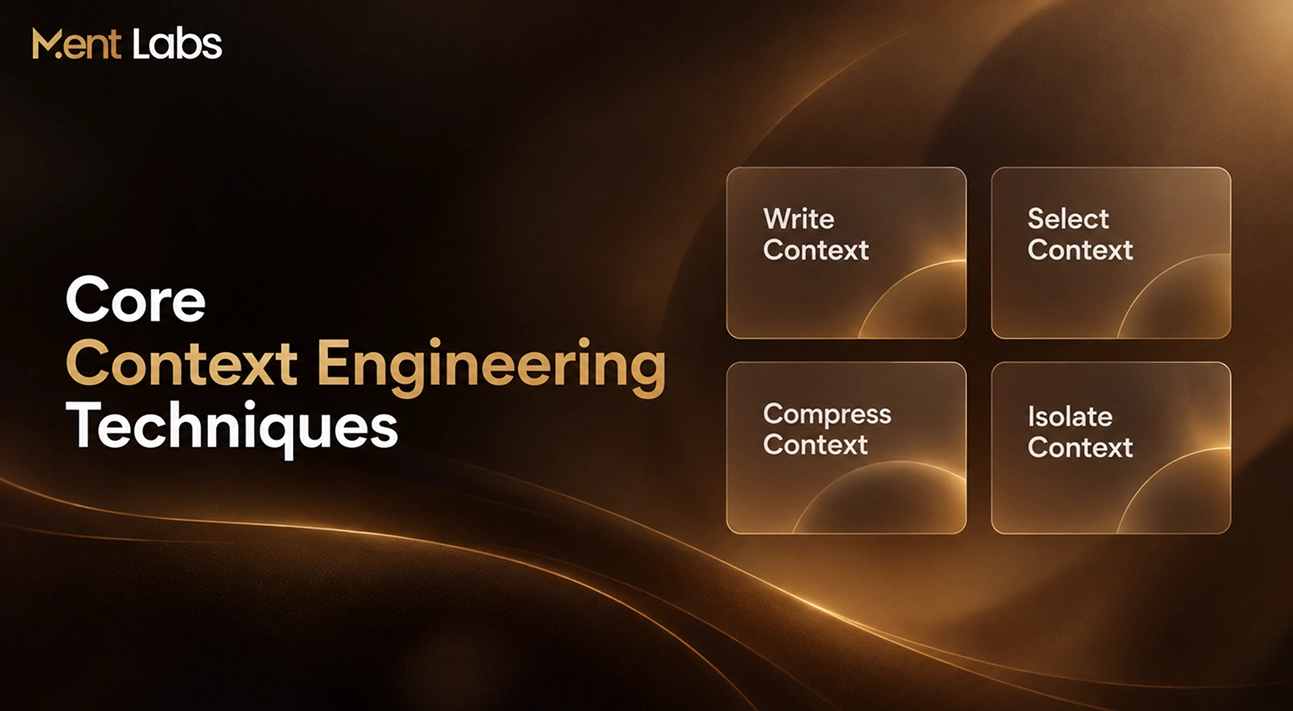
1. Write Context
Important details are saved outside the context window so they can be used later. These details may include task notes, past decisions or information the agent needs to remember.
2. Select Context
Not every piece of information is useful, for every task. This context selection technique brings in documents conversation details or tool results only when they are needed.
3. Compress Context
Long conversations and large documents can quickly fill the context window. Summarizing messages and removing repeated details helps save space without losing information.
4. Isolate Context
Complex tasks can be divided among AI agents, each working with its context. This keeps details out of the way. Makes larger tasks easier to manage.

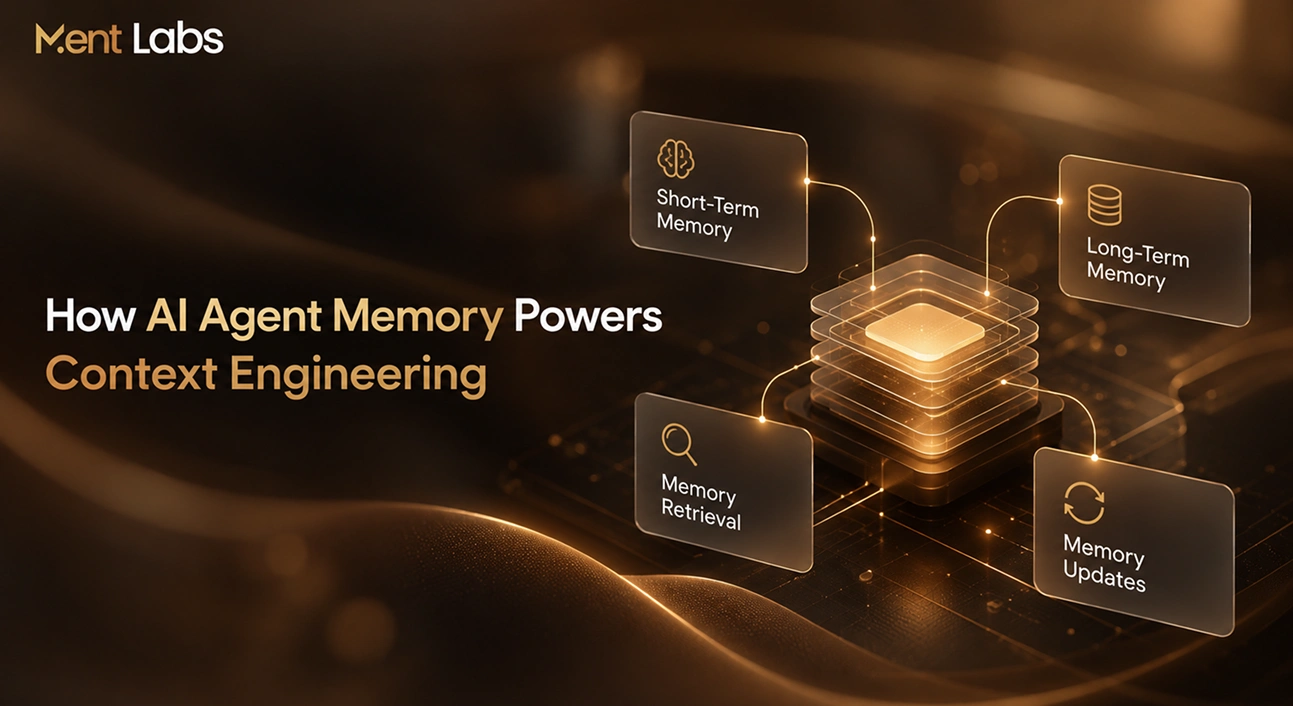
The Role of AI Agent Memory in Context Engineering
AI agent memory helps agents remember useful details from past conversations and ongoing tasks. It also supports AI API cost optimization by retrieving only relevant information when needed, reducing unnecessary token usage.
1. Short-Term Memory
This holds chats and details needed for the current task. It lets AI agents stay on track during a conversation without forgetting what was just said.
2. Long-Term Memory
This saves stuff like user likes past choices and important facts for later use. Of asking again agents can recall this data and keep things smooth.
3. Memory Retrieval
This. Brings back saved info when it matches a new request. It lets agents use the details without loading every single thing they’ve ever stored.
4. Memory Updates
This keeps saved info up, to date as new things come in. If something old is wrong. No longer needed it gets fixed or deleted so the agent doesn’t get confused.
Context Engineering Best Practices and Real-World Examples
Context engineering is about knowing which information should be kept and which can be omitted. The challenge is to keep details relevant and ready when they are needed.
1. Choose Relevant Information
Examine what the task actually needs before adding documents or records. Omit everything that does not help answer the request.
2. Keep Data Updated
Check if the records, documents, and policies are still current. Using information may mean working with details that have already changed.
3. Manage Context Size
Repeated details can make conversations longer. Use more tokens. Removing repeated details can reduce usage and help keep AI API costs low.
4. Protect Sensitive Data
Keep records available only when absolutely necessary. Make sure users can see the data that users are authorized to view.
5. Check Response Quality
Compare the answers with the source documents to see whether anything was missed or misunderstood. These checks can reveal where the information needs attention.
Real-World Examples of Context Engineering
1. Banking: Banks can use transaction details, customer records and internal policies to answer questions, about accounts.
2. Healthcare: Healthcare teams can combine authorized records, appointment data and clinic guidelines to handle administrative tasks.
3. Customer Support: Support teams can rely on order details and previous conversations to solve problems without making customers explain the thing again.
Conclusion
Context engineering helps AI systems use the information they need to understand requests and give answers. Managing context windows picking data and keeping agent memory can really improve performance. Without context even well‑written instructions may result in incomplete or wrong answers.
At Ment Labs we help businesses build systems by using enterprise AI product engineering. From data integration to context management we focus on creating solutions that meet business needs.
Planning to build or improve a product? Ment Labs can help you work through the requirements and development process. Contact us today to talk about your project.