Introduction
Keeping logistics operations running is not always easy. Delayed shipments, disconnected systems, and limited visibility can make it hard for businesses to track goods and share information with suppliers, warehouses, and transport providers. Blockchain in Logistics offers a way to improve transparency by helping businesses track shipments and share data.
In this blog, we will look at how blockchain works in logistics and why traditional supply chains face challenges. Blockchain is changing everything. We will also explore the applications of blockchain, the latest market trends, and the opportunities that blockchain brings to the industry. Finally, we will discuss how businesses can integrate blockchain into their existing logistics systems.
What Is Blockchain in Logistics?
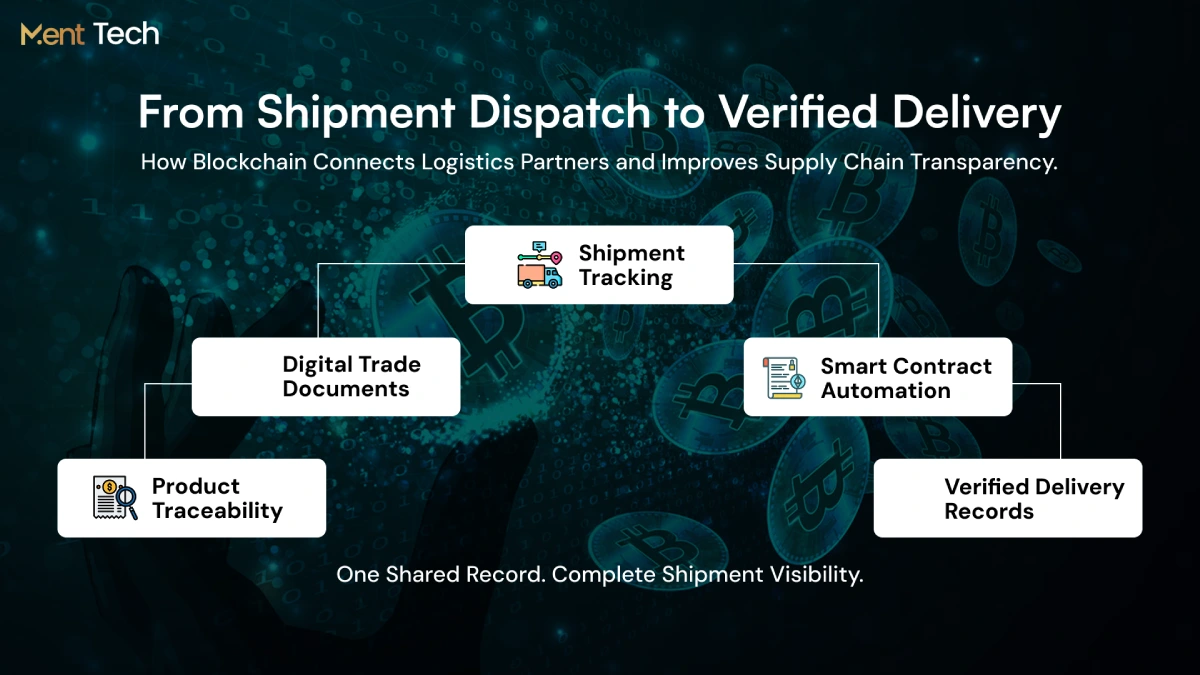
Blockchain in logistics can help businesses keep all shipment information in one location so that authorized suppliers, transporters, and warehouses can view the same records. Blockchain in logistics makes it simpler to track shipments, confirm documents, and keep everyone informed, avoiding scattered data and needless confusion.
For example, when a shipment leaves a warehouse, the details of that shipment can be written to the blockchain. Kept up to date as that shipment travels. Everyone who is part of the shipment process can look at the status of that shipment without having to make phone calls or fill out paperwork. Businesses can use blockchain development services to create tools that make shipment logistics clearer and more efficient.
Key Challenges in Traditional Logistics and Supply Chain Management
Logistics involves suppliers, manufacturers, transporters, and warehouses. Logistics keeps shipments on track. Logistics keeps information flowing between suppliers, manufacturers, transporters, and warehouses. That becomes difficult when systems are disconnected and processes are manual.
1. Limited Shipment Visibility
Tracking shipments across carriers and locations can be difficult. Delayed updates make tracking shipments harder for businesses, and they find it tough to keep customers informed.
2. Disconnected Logistics Systems
Logistics companies often use systems for inventory, transport, and warehouse management. When these systems do not connect, sharing updates becomes difficult. Logistics companies find that API Development Services help bring them.
3. Manual Shipping Documentation
Shipping needs documents, such as invoices, bills of lading, and customs forms. Shipping documents prepared by hand are more likely to have errors, missing paperwork, and shipment delays.
4. Delivery Delays and Inventory Disruptions
Sometimes things get held up when you least expect it. That can throw off your delivery dates. Leave you short on stock. It is hard to keep track of what you have when word about a shipment does not come in on time.
5. Poor Shipment Traceability and Accountability
When goods move through parties, I notice that tracking goods becomes difficult. If goods are lost, damaged, or delayed, finding out where goods went wrong can take time.
How Blockchain Works in Logistics and Supply Chain Management
Blockchain creates a shared record. Blockchain allows authorized logistics partners to access shipment information. Here is how the process works:
1. Shipment Details Are Recorded
When goods leave a warehouse, we record the shipment ID, the goods origin, the goods destination and the time the goods were dispatched on the blockchain.
2. Transactions Are Verified
Before adding information, the blockchain network verifies the transaction through the agreed validation process. The blockchain network verification helps prevent incorrect records.
3. Shipment Updates Are Tracked
Goods move between warehouses, carriers, and distribution centers. When that happens, authorized users add updates to the ledger. Connected tracking devices also add updates to the ledger.
4. Smart Contracts Automate Processes
Smart contracts can automatically perform tasks when the agreed conditions are fulfilled; for example, they can release payment once delivery is completed. Businesses can take advantage of Smart Contract Development Services to make these processes easier.
5. Records Are Shared With Authorized Parties
Suppliers, transporters, distributors and warehouse teams can view shipment records that’re relevant. This helps Suppliers, transporters, distributors, and warehouse teams stay updated, and it reduces repeated checks of shipment records.
6. Delivery Is Recorded and Confirmed
Once the goods reach their destination, the delivery details of the goods are added to the blockchain. Every authorized party can look at the status of the goods and verify the shipment record.
For example, when a shipment reaches a warehouse, its arrival is recorded through a barcode scan or tracking device. Authorized parties can verify the delivery without extra paperwork, saving time and reducing manual work.
Key Use Cases of Blockchain in Logistics
Blockchain has applications beyond tracking shipments and automating payments. Blockchain helps logistics businesses manage documents, monitor goods, verify products, and handle compliance.
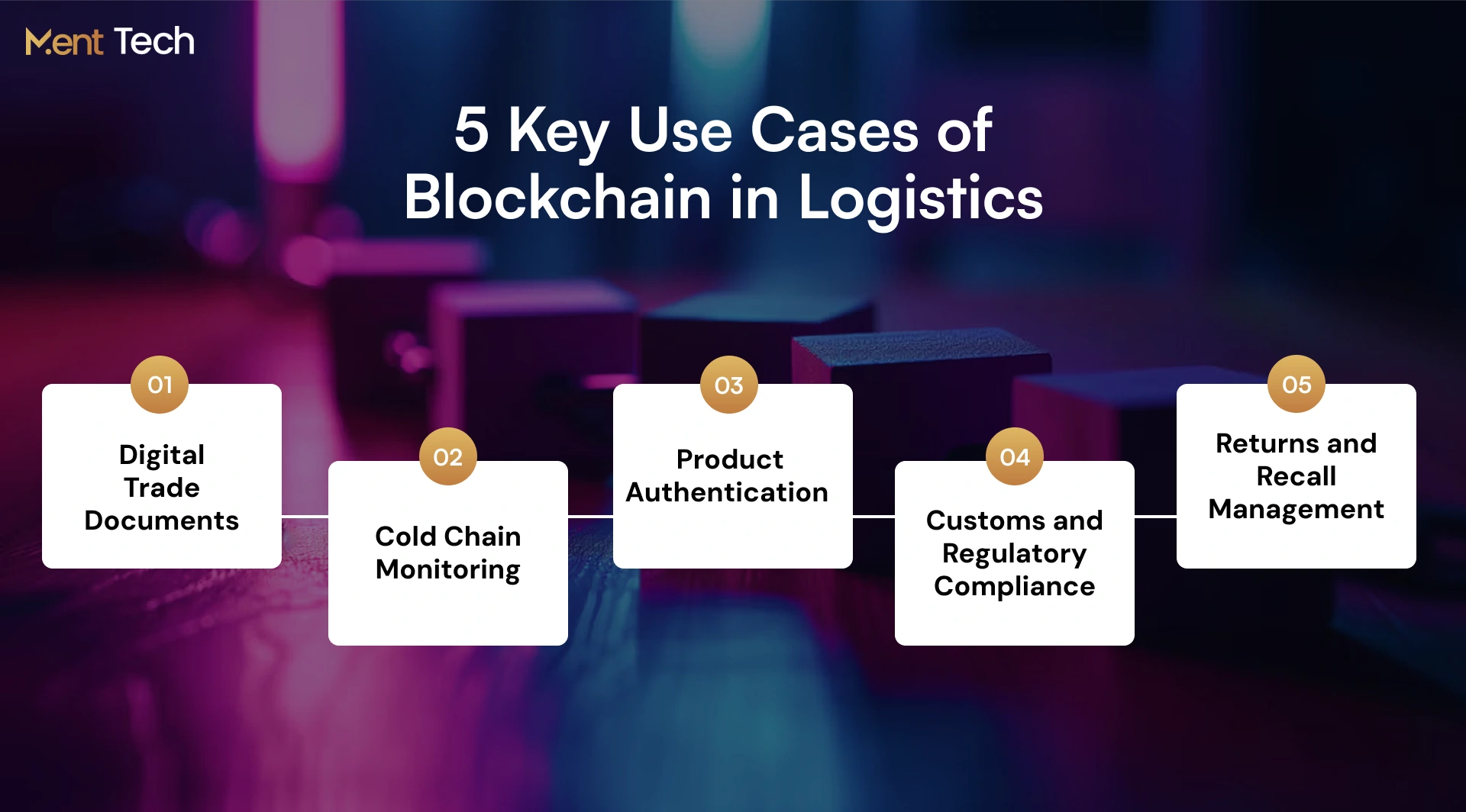
1. Digital Trade Documents
Blockchain helps businesses trace products involved in returns or recalls. Blockchain can identify affected goods and check their movement across the supply chain.
2. Cold Chain Monitoring
IoT sensors can track temperature changes while medicines, vaccines, and food products are being transported. Blockchain makes these records available and easy to access. This helps businesses keep an eye on how the products are doing during transit.
3. Product Authentication
Blockchain helps with documents such as bills of lading, invoices, and certificates of origin. Blockchain makes documents easier to verify and share. Blockchain benefits reduce paperwork. Avoid document-related delays.
4. Customs and Regulatory Compliance
Blockchain helps businesses verify where products come from and track their journey. This makes it easier to identify counterfeit goods, especially in the pharmaceutical and food industries.
5. Returns and Recall Management
Blockchain helps businesses trace products that’re part of returns or recalls. Blockchain allows them to find goods more quickly and to see how those goods move through the supply chain.
Blockchain in Logistics: Market Trends and Growth Opportunities
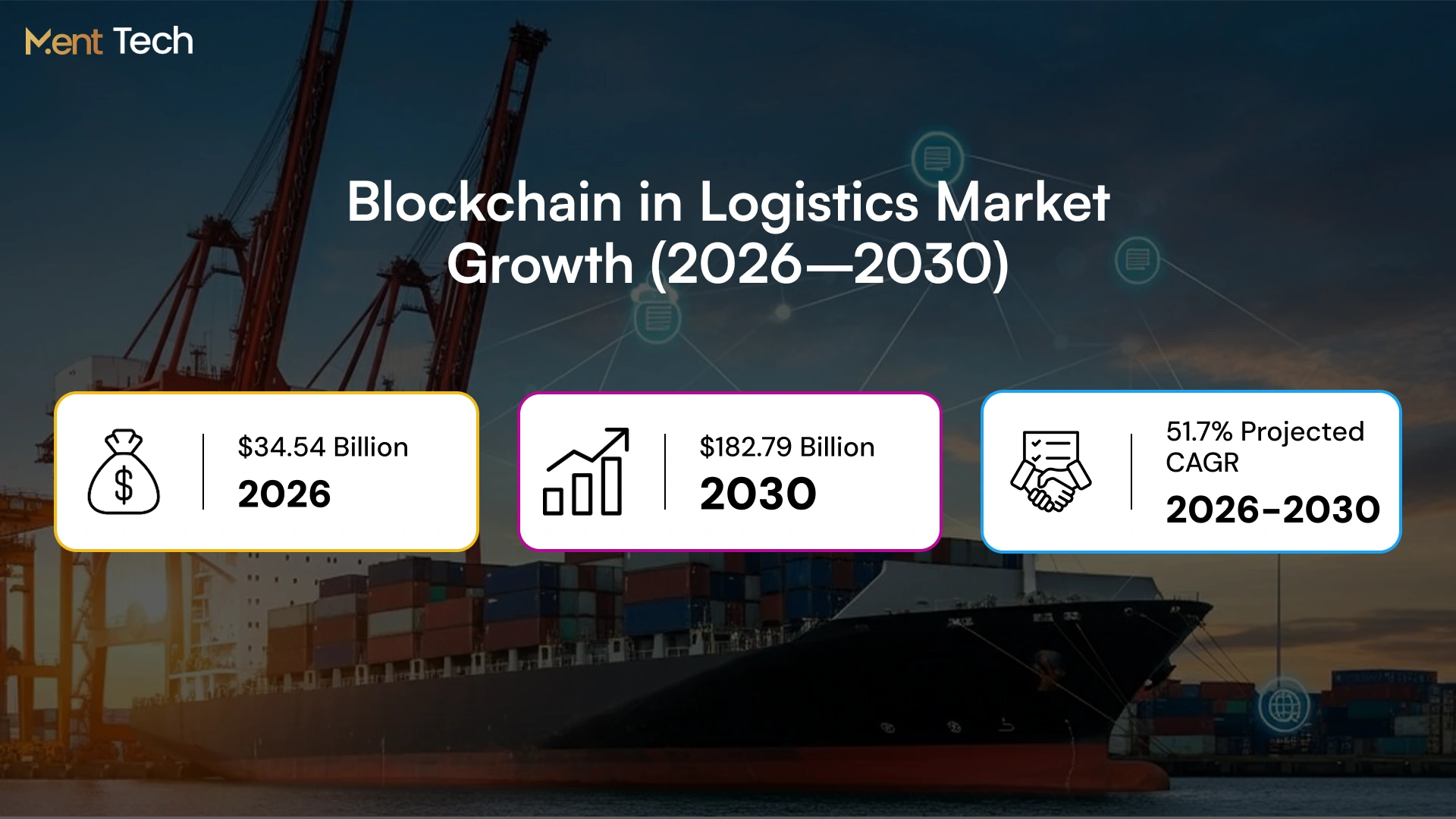
The blockchain in logistics market is gaining momentum as more companies look for better ways to manage shipments and supply chain operations. The market is projected to grow from $22.72 billion in 2025 to $34.54 billion in 2026, and reach $182.79 billion by 2030, with a CAGR of 51.7%. This growth is largely driven by the need for better shipment tracking, reliable data sharing, and fewer delays in logistics operations.
Many logistics companies are looking into tracking, digital shipping records and smart contracts to make daily operations easier and I notice that this trend is gaining momentum. Blockchain also helps logistics companies track products and manage compliance across locations. As supply chains become more connected, the role of logistics in logistics is expected to grow.
How to Integrate Blockchain Into Existing Logistics Systems
Businesses don’t need to replace their entire logistics software to adopt blockchain. They can connect it with existing ERP, WMS, and TMS systems to improve how information is shared and managed.
1. Review Existing Systems
Look at how your current systems handle inventory, shipments, and warehouse operations. Identify where information is delayed or manual work creates problems.
2. Set Integration Requirements
Decide what information needs to be shared between logistics partners, such as shipment details, delivery updates, and transaction records. This helps keep the integration clear from the beginning.
3. Select the Right Blockchain Network
Choose a blockchain network based on your business needs, data privacy, and transaction volume. Private and consortium networks are useful when access needs to be limited to selected partners.
4. Connect Existing Systems Through APIs
APIs help connect blockchain with ERP, WMS, and TMS platforms without replacing existing software. Enterprise Software Development can help businesses build integrations that fit their current systems.
5. Set Up Data and Smart Contracts
Decide which records should be stored on the blockchain and which can stay in existing databases. Smart contracts can also automate tasks such as delivery confirmation and payment approvals.
6. Test and Launch the Integration
Start with a small pilot to check whether the systems exchange information correctly and run smoothly. Once everything works as expected, expand the integration to other logistics operations
How Much Does It Cost to Implement Blockchain in Logistics?
The cost of building a blockchain solution for logistics depends on what a business needs. A basic pilot or MVP may cost around 50,000-150,000, while a complete platform connecting multiple logistics partners can cost 400,000-1,500,000 or more. Smart contract audits may add another 5,000-25,000 to the budget.
Key Factors Affecting Development Costs
- Number of Partners: Bringing more suppliers, carriers, and warehouses onto the platform requires additional development and coordination.
- System Integration: Connecting blockchain with existing ERP, TMS, and WMS software can add to the development work.
- Blockchain Network: Choosing between public, private, and consortium networks affects setup and ongoing maintenance costs.
- Smart Contract Complexity: More advanced workflows, automated payments, and security checks require additional time and resources.
Conclusion
Managing shipments, coordinating with partners and tracking goods can be very hard for logistics businesses. we think that Blockchain in Logistics can make these jobs simpler by giving better shipment visibility, cutting down paperwork and letting the right people access information. Blockchain in Logistics also gives logistics businesses transparency when they run their operations.
When combined with IoT, blockchain can make shipment monitoring even more effective by helping businesses track product conditions during transit. IoT Development Services can help build connected solutions for these needs. Looking to bring blockchain into your logistics operations? Contact Ment Tech today to discuss your requirements and get started.