Introduction
Hospitals, insurance companies, and healthcare providers deal with amounts of patient data every day. Sharing medical records securely between different systems is still a challenge. Blockchain in Healthcare can help address this by making medical data easier to track, improving transparency, and giving patients control over who can access their information.
In this blog we will look at how blockchain’s changing the healthcare industry what the market growth forecast looks like for 2026 and five major benefits of blockchain. We will also cover five real‑world applications of blockchain. Explain how blockchain can help keep patient information safe.
What Is Blockchain in Healthcare?
Blockchain in Healthcare helps hospitals, doctors, and insurance companies share and verify information securely. Blockchain in Healthcare uses a shared ledger that lets authorized users track records and spot unauthorized changes.
For example, when a person goes to a hospital, doctors might need to see the same medical records. Blockchain can help them check these records and control who sees them without revealing information. This makes blockchain technology in healthcare, for making data sharing better being more open and keeping patient privacy safe.
How Blockchain Is Transforming the Healthcare Industry
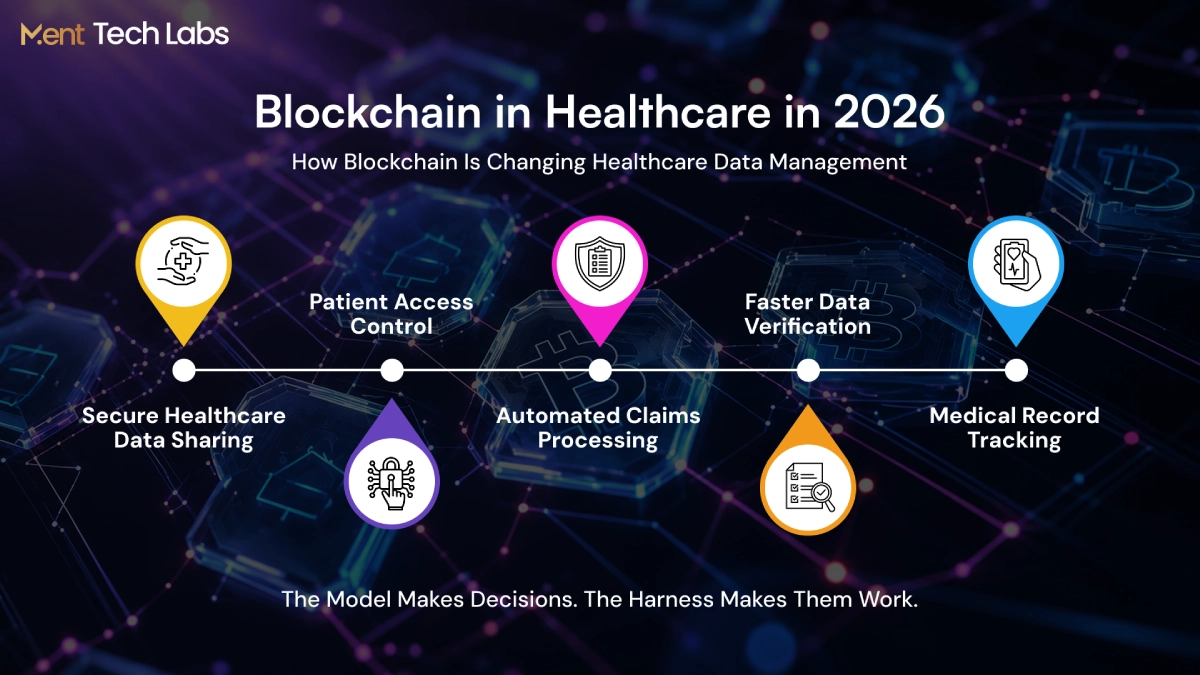
Healthcare providers often have records that are scattered, with approvals that are slow and systems that do not talk to each other. Blockchain can help healthcare providers improve how medical information is shared, verified, and managed.
1. Medical Record Sharing
Blockchain helps doctors get records across hospitals, and Blockchain reduces repeated requests for the same medical information.
2. Patient Data Control
Patients can manage who gets access to their records and track when their information is accessed through blockchain-based systems.
3. Healthcare Data Exchange
Blockchain helps hospitals, labs and insurers share verified information. This reliable data sharing is also important for Healthcare AI Platform Development. Accurate patient information is essential in this process.
4. Automated Claims Processing
Smart contracts can automate insurance claim verification based on rules that are set in advance, cutting down paperwork and speeding up processing.
5. Medical Record Tracking
Blockchain records each time medical information is updated, and Blockchain helps healthcare providers keep track of changes and spot any modifications.
Blockchain Technology in Healthcare Market Growth Forecast 2026
The global blockchain healthcare market is expected to reach $4.18 billion in 2026, up from $3.03 billion in 2025, growing at a rate of 38%. According to The Business Research Company, the market is projected to reach $14.78 billion by 2030, with a compound annual growth rate (CAGR) of 37.1% from 2026 to 2030.
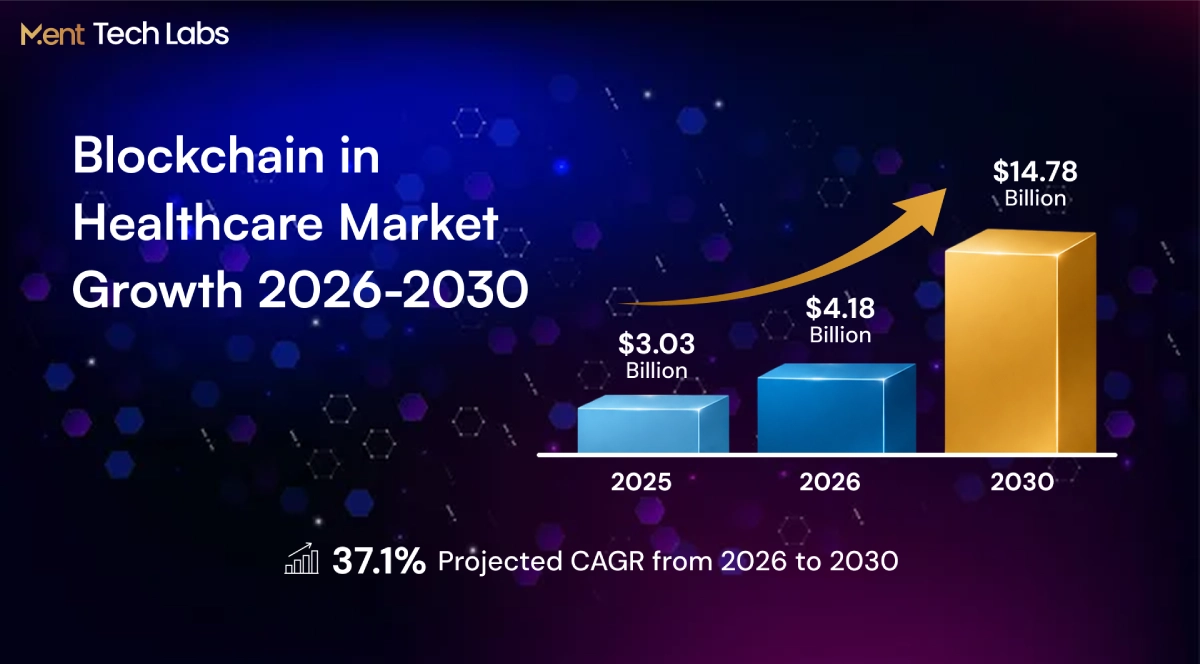
Growth in this field comes from the need for patient records better data sharing and fewer data breaches. Hospitals, insurers and pharmaceutical companies are also looking into blockchain, for claims processing, medical records and drug tracking.
5 Real-World Blockchain Applications in Healthcare
Blockchain is finding uses in healthcare, from managing patient records to tracking medicines. Here are five blockchain applications in healthcare and how they are being used in projects.
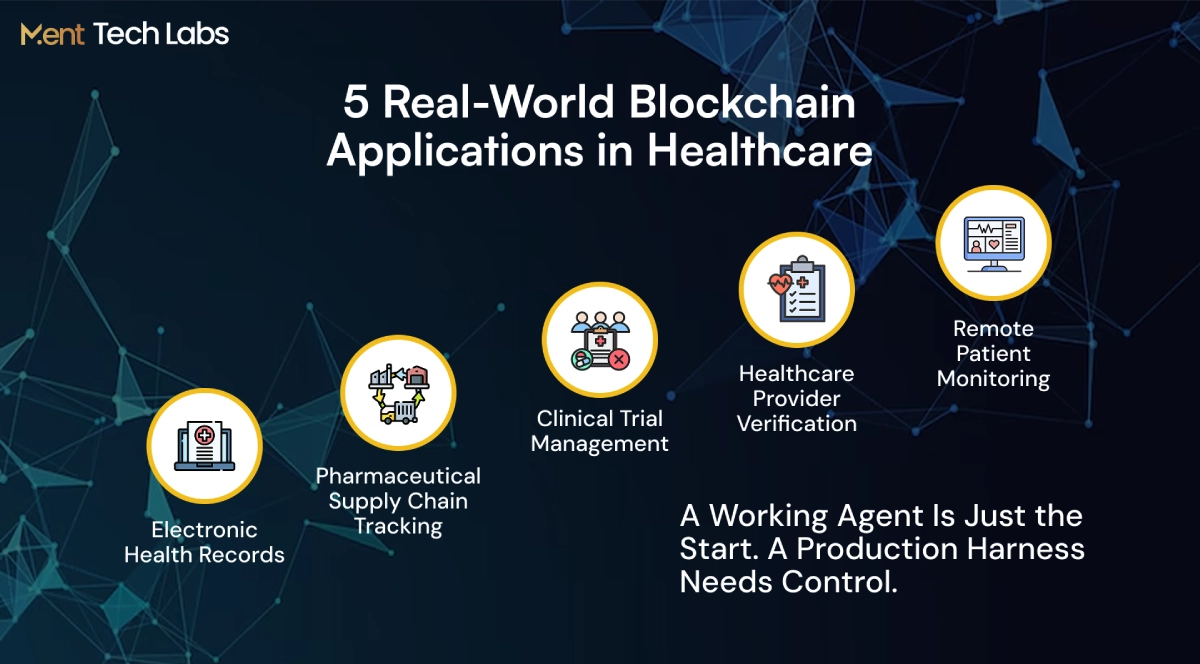
1. Electronic Health Records (EHR) Management
Estonia has used Guardtime’s blockchain technology to track changes to health records. Estonia’s use of Guardtime’s blockchain technology helps healthcare providers detect updates and check the history of records.
2. Pharmaceutical Supply Chain Tracking
The MediLedger project tested blockchain to track prescription drugs through the supply chain. The MediLedger project helps pharmaceutical companies verify medicines. The MediLedger project also helps identify products.
3. Clinical Trial Management
Researchers have tested blockchain to record consent during clinical trials. This helps make sure that when consent was given or withdrawn, it can be checked easily. It also helps keep research records up to date.
4. Healthcare Provider Verification
The Synaptic Health Alliance uses blockchain to help insurers share and verify provider details. The Synaptic Health Alliance reduces the need to check the information separately across organizations.
5. Remote Patient Monitoring
Researchers are testing blockchain with health devices to manage patient data access. Patients can control who receives their health information while doctors monitor patients’ conditions remotely.
5 Key Benefits of Blockchain in Healthcare
Blockchain can help healthcare organizations cut down on paperwork, confirm information quickly, and keep important records safe. Below are five benefits of using blockchain in healthcare.
1. Less Manual Work
Blockchain can automate checks and approvals and Blockchain saves healthcare staff from repeatedly verifying the same information.
2. Faster Data Verification
Hospitals and insurance companies can verify shared records more quickly, without having to check information across different systems.
3. Easier Audits
Every time something happens in the system there is a record. This makes it simple for doctors and nurses to look back, at what happened. It also helps them check for mistakes and find out what went wrong.
4. Reduced Data Tampering
Blockchain makes unauthorized changes easier to detect helping healthcare organizations maintain records. Blockchain helps healthcare organizations keep records trustworthy.
5. Better Team Coordination
With Blockchain Development Services, hospitals, labs, and insurance companies can share information more easily and work together without delays.
How Blockchain Improves Healthcare Data Security
Patient records hold information that must be protected. Healthcare blockchain technology helps hospitals manage access, track changes and keep data secure.
1. Secure Data Sharing
Hospitals and doctors can share information using blockchain‑based systems and hospitals and doctors can keep access limited to authorized people.
2. Data Tampering Prevention
Blockchain makes it hard to alter logged data without leaving a mark. Blockchain helps hospitals find changes that are not authorized.
3. Patient Access Control
Patients can have control, over who is allowed to see their medical records. They can set permissions to give access or take it away as they choose.
4. Transparent Audit Trails
Healthcare teams can look at the time when transactions were recorded. Healthcare teams can also go over activity if anything seems suspicious.
5. Protected Patient Information
Medical records can remain in databases. Blockchain stores the details that prove that Medical records have not been altered.
6. Data Integrity Verification
Hospitals can compare records with blockchain verification records to check whether information has been altered.
7. Secure Identity Verification
Blockchain helps verify identities before granting access to patient records. Smart Contract Development Services can automate these access checks.
Conclusion
Blockchain in Healthcare is helping hospitals handle patient records without relying on lengthy paperwork or disconnected systems. Doctors can verify information more easily, while patients have better ways to manage access to their medical records. It can also help track medicines and identify changes to important data. As more hospitals move toward digital systems, these uses are becoming increasingly relevant
At Ment Labs, we help healthcare businesses create platforms that fit their needs. Our Healthcare Software Development services include all steps, from planning to building. Whether you are creating a platform or improving an existing one, we can help. Contact us to discuss your project and get started.