Robinhood Chain just went live after sitting in testnet for a while, and that’s the real reason a token on Robinhood Chain is getting so much attention right now in 2026. A stock trading app now runs its own EVM-compatible blockchain, and that alone gives developers a shot at building on infrastructure tied to a name people already recognize.
Tokenized assets have been picking up steam too, and a lot of founders and DeFi teams are on the lookout for a solid Layer 2 to build on without the usual Ethereum gas headaches. Robinhood Chain checks that box, plus it comes with the added visibility of the Robinhood name attached.
But here’s the part worth saying upfront: launching a token on this chain is a technical step, nothing more. It doesn’t mean Robinhood is backing your project. A team can build and deploy its own ERC-20 token here, but that token still isn’t something Robinhood has issued, endorsed, or added to its app.
What Is Robinhood Chain and How Is It Different From Robinhood?
It’s the brokerage app used for Robinhood stock trading, buying and selling stocks, options, and crypto in one place. Robinhood Chain is different; it’s Robinhood’s own Ethereum Layer 2, built on Arbitrum and EVM-compatible, with gas paid in ETH, not HOOD stock. That matters since the Robinhood stock price often gets confused with the company’s crypto moves. HOOD shares track the brokerage business, while a token on Robinhood Chain is a separate on-chain asset with no link to the stock.
The chain is permissionless too, so developers can deploy smart contracts without needing Robinhood’s approval, unlike the closed brokerage app. It connects with Robinhood Wallet and other standard EVM wallets, giving users more than one way in. This openness is why builders see it as a real development platform, not just an app extension.
What Types of Tokens Can Be Built on Robinhood Chain?
Since Robinhood Chain is EVM-compatible, developers don’t need to build new standards within it. As they would within the rest of Web3, developers can simply employ the well-established Ethereum standards, specifically ERC-20 and ERC-721. That widespread acceptance by developers is one of the major factors for the rapid influx.
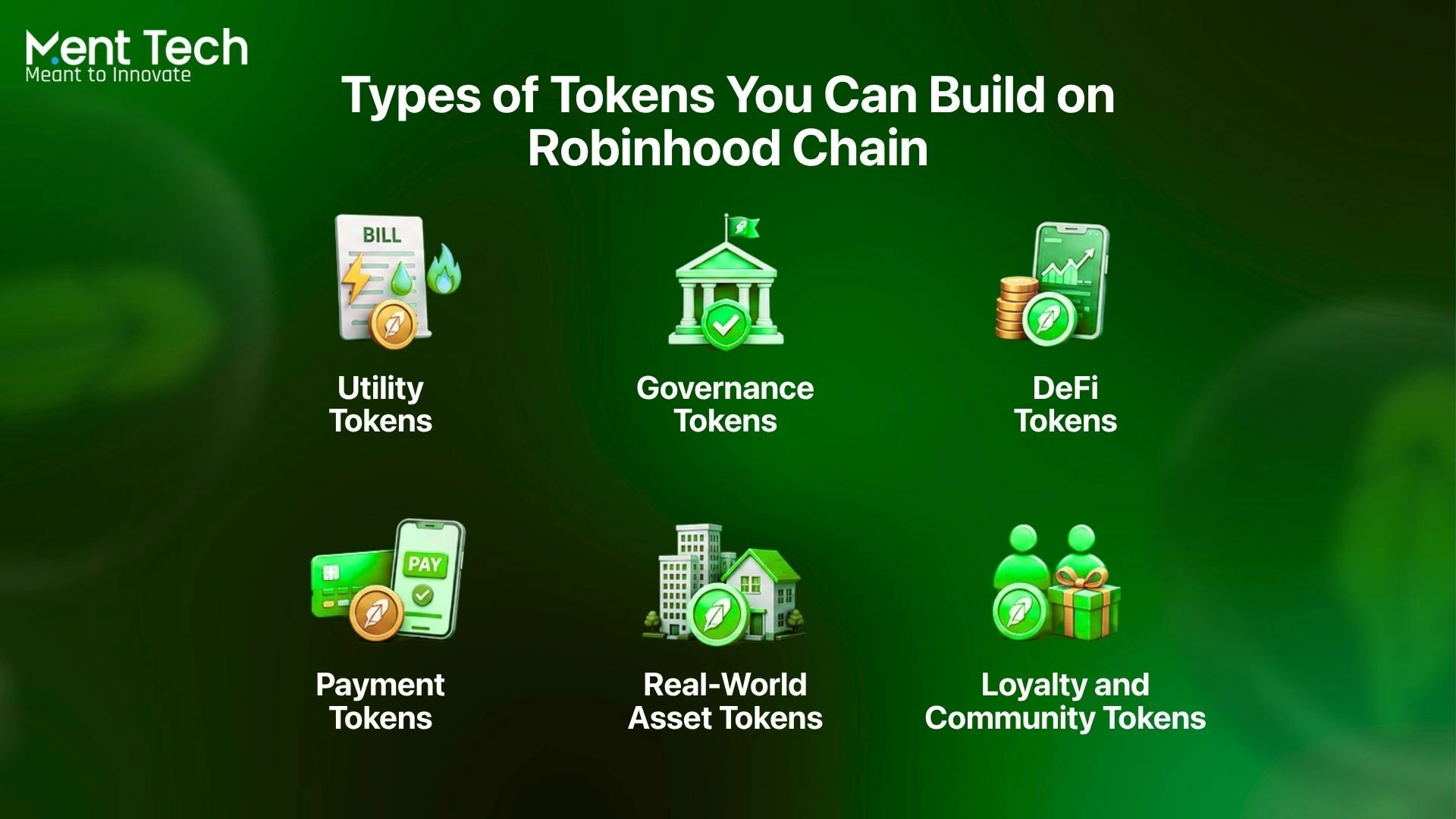
- Utility Tokens
These give people a reason to stick around, access to something, rewards, discounts, or a way to pay within a platform. A lot of teams bring in a utility token development company just to make sure the token actually does something useful instead of sitting there for show.
- Governance Tokens
Basically a say in how things run. Holders vote on decisions, weigh in on treasury spending, and help steer upgrades. Good fit for projects that actually want their community involved, not just watching from the sidelines.
- DeFi Tokens
These sit behind lending, staking, liquidity pools, and collateral setups. Because there’s real money logic involved, most teams loop in a DeFi development company early on to keep the technical and security side tight.
- Payment Tokens
Nothing fancy here, just transfers, settlements, credits, and everyday digital payments. Built for speed, not for voting rights or investment pitches.
- Real-World Asset Tokens
Think tokenized funds, commodities, property interests, or revenue rights. The catch is these touch regulated territory, so legal and compliance work needs to happen before anything gets deployed, not after.
- Loyalty and Community Tokens
Memberships, rewards, creator communities, and gaming perks. This is the engagement layer. It’s about keeping people around, not building a financial product.
Also Read: Real-World Asset Tokenization in 2026
How to Deploy an ERC-20 Token on Robinhood Chain
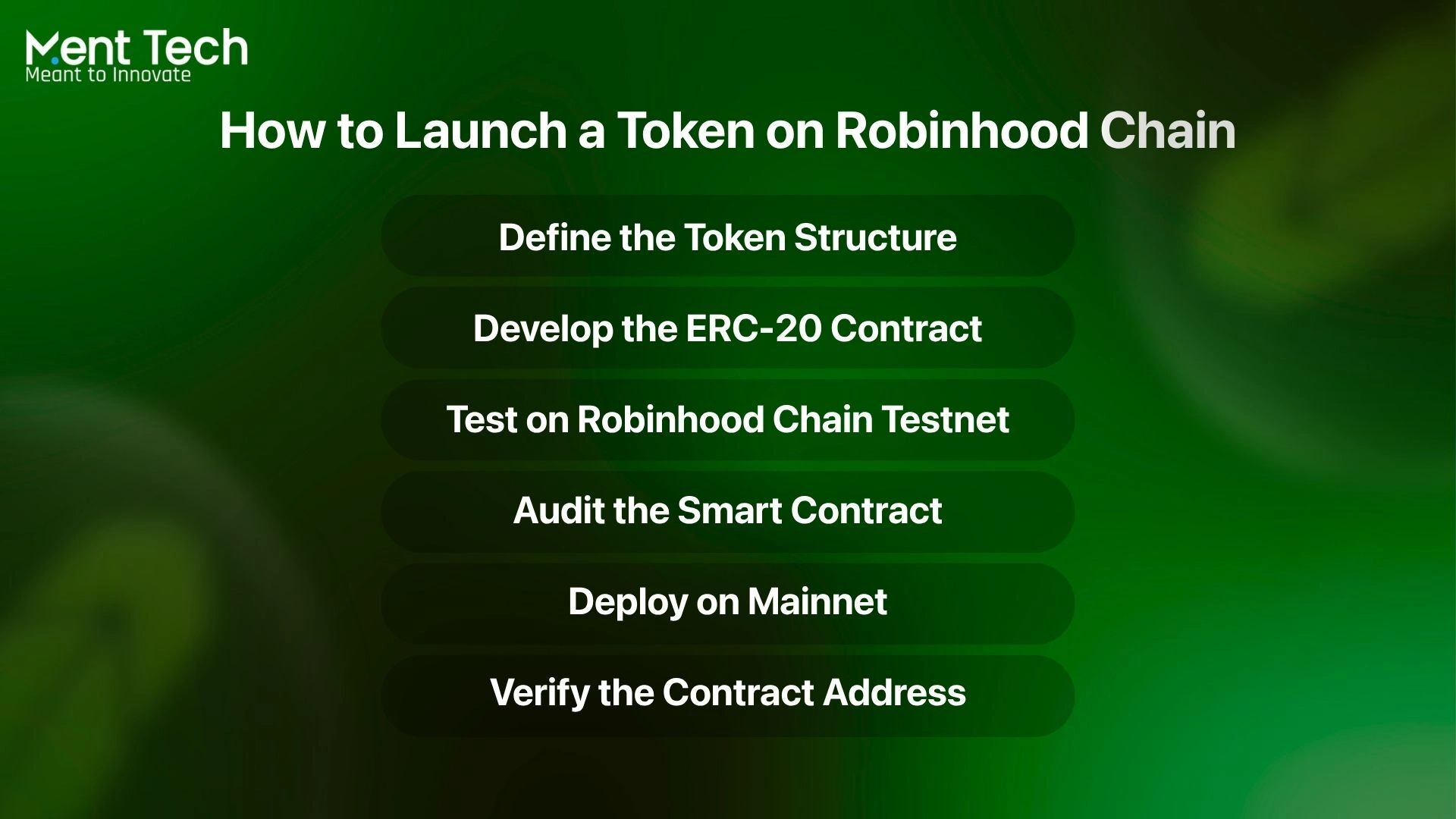
Deploying an ERC-20 token on Robinhood Chain isn’t a single click. It’s a step-by-step process that goes from planning to a live, verified contract on mainnet. Here’s how it actually works.
Step 1: Define the Token Structure
Before any code gets written, the token’s core rules need to be decided. This is the foundation everything else builds on, and getting it wrong here is expensive to fix later.
- Token name and symbol.
- Total supply.
- Minting and burning rules.
- Ownership permissions.
Step 2: Develop the Smart Contract
This is where the token actually takes shape in code. Most teams don’t handle this alone; they bring in a smart contract development company to make sure the contract is built on proven standards rather than something untested.
- Solidity development.
- OpenZeppelin standards for reliability.
- Access controls.
- Built-in security features.
Step 3: Test on Robinhood Chain Testnet
Before anything touches real funds, the token gets run through a safe testing environment. This step catches functional issues early, before they become expensive mainnet problems.
- Token transfers.
- Minting and burning functions.
- Wallet compatibility checks.
- Permission and role testing.
Step 4: Audit the Smart Contract
Testing alone doesn’t catch everything, which is why a proper audit matters. This step focuses specifically on security, not just whether the functions work.
- Automated testing tools.
- Access control review.
- Security analysis.
- Fixing any vulnerabilities found.
Step 5: Deploy and Verify the Token
The final technical step, where the token actually goes live on the network for anyone to interact with.
- Deployment to Robinhood Chain mainnet.
- Paying ETH gas fees.
- Verifying the contract publicly.
- Publishing the official contract address.
Also Read: 10 Best Smart Contract Development Services for Secure Web3 Projects
How Much Does It Cost to Launch a Token on Robinhood Chain?
There is no fixed cost because the budget depends on what the token needs to do. A simple loyalty token with basic transfer features will cost far less than a real-world asset token requiring legal structuring, security audits, and liquidity infrastructure. Gas fees are usually only a small part of the total expense. Most of the budget goes toward strategy, development, security, integrations, and post-launch support from an experienced blockchain development company.
| Cost Area | What It Covers |
| Token Planning | Utility definition, supply structure, allocation, and vesting schedules |
| Smart Contract Development | ERC-20 contract build, minting and burning logic, ownership controls |
| Security Audit | Automated testing, manual review, and vulnerability fixes |
| Legal Review | Token classification, regulatory checks, and compliance documentation |
| Integrations | Wallet support, bridge connections, DEX listings, dashboard setup |
| Liquidity Setup | Initial trading pairs and liquidity pool funding |
| Post-Launch Support | Ongoing monitoring, maintenance, and future upgrades |
Main Cost Factors
- Token strategy and tokenomics design.
- ERC-20 smart contract development.
- Security audit and remediation.
- Legal review and compliance work.
- Wallet and bridge integration.
- Liquidity setup and trading pairs.
- Token dashboard for tracking and management.
- Documentation for users and partners.
- Post-launch monitoring and support.
Key Points to Consider Before Launching a Token on Robinhood Chain
Before founders, CTOs, or product teams commit to building here, a few decisions really shape whether the launch actually works long-term. These aren’t things to figure out after deployment; they need to be settled early.
- Clear token utility. If the token doesn’t solve a real problem or serve a real function, no amount of marketing fixes that later.
- Token supply, allocation, and vesting. How many tokens exist, who gets them, and how they unlock over time directly affects trust and long-term value.
- Legal classification and target jurisdictions. Getting this wrong can mean regulatory trouble down the line, which is exactly why many teams bring in blockchain consulting services early rather than treating legal review as an afterthought.
- Smart contract security. Minting permissions and treasury control especially need to be locked down, since these are common points of failure or exploitation.
- Wallet and bridge support. If users can’t easily access or move the token, adoption stalls no matter how solid the tech is underneath.
- Liquidity and contract verification. Without real liquidity and a publicly verified contract, even a well-built token struggles to gain any trust in the market.
How Does Robinhood Chain Generate Revenue?
A common question that comes up here is how does Robinhood make money once it’s running its own blockchain, and it’s worth separating this clearly from the brokerage side. Robinhood’s stock trading business earns through order flow, subscriptions, and interest. Robinhood Chain’s revenue model works differently since it’s built around network activity, not stock trades.
Main Revenue Channels
- Sequencer transaction fees, charged for processing and ordering transactions on the network.
- Smart contract execution activity, generated every time a contract runs a function.
- Token transfer fees, collected whenever assets move between wallets.
- DeFi application activity, from lending, staking, and trading happening on-chain.
- Tokenized asset transactions, as real-world and digital assets move across the network.
- Wallet and bridge usage, as users move funds in and out of the ecosystem.
- Future on-chain financial products, as Robinhood continues expanding what’s built on the chain.
What This Revenue Depends On
- Transaction volume moving through the network.
- User adoption across wallets and dApps.
- Developer activity building on the chain.
- DeFi usage across lending, staking, and trading.
- Growth of the wider ecosystem overall.
Common Mistakes to Avoid When Launching a Token on Robinhood Chain
Even with solid infrastructure backing it, plenty of launches still stumble over the same avoidable mistakes. Here’s what actually trips projects up the most.
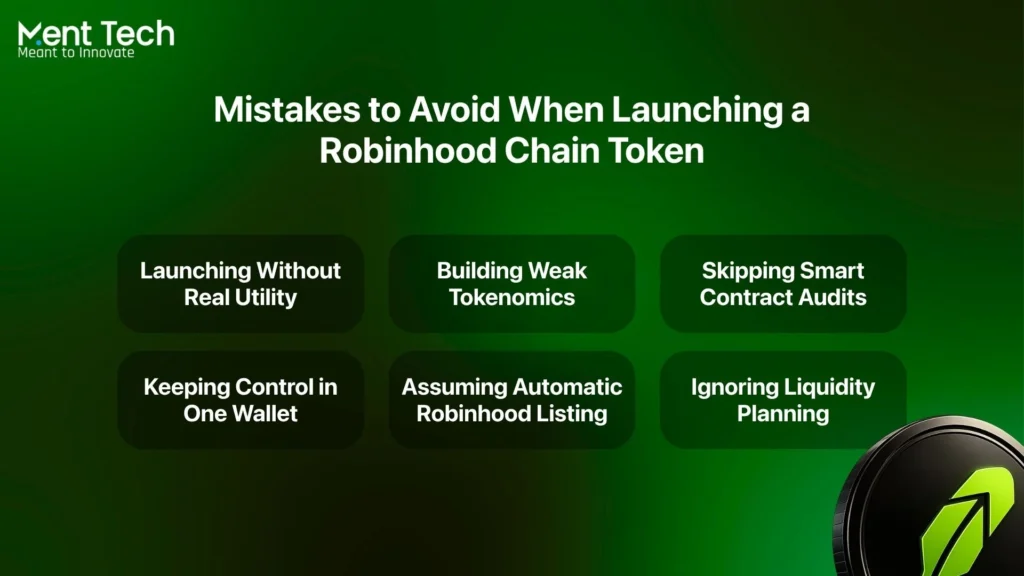
1. Launching Without Real Utility
If the token isn’t tied to something real a product, payments, rewards, or governance, people just aren’t going to stick around for it. Utility isn’t a nice-to-have; it’s the whole point.
2. Using Weak Tokenomics
Supply, allocation, incentives, and vesting none of these work in isolation. Get the balance wrong, and the token might look fine on paper but struggle the moment real users show up.
3. Using Unaudited Smart Contracts
Skipping an audit on a contract that controls funds, minting, or treasury access is asking for trouble. This is exactly why a lot of teams bring in a Web3 development company before pushing anything live.
4. Keeping Control in One Wallet
One wallet holding all the power is one bad day away from disaster. Multisig wallets and role-based permissions exist for this exact reason; use them.
5. Assuming Automatic Robinhood Listing
This one trips up a lot of first-timers. Deploying a token on the chain doesn’t mean it magically shows up inside Robinhood’s app; that’s a completely separate process, and assuming otherwise leads to some awkward conversations later.
6. Launching Without Liquidity Planning
No liquidity plan means no real market for the token once it’s live. Trading pairs, treasury management, and initial liquidity all of it needs to be sorted before launch day, not scrambled together after.
Conclusion
It’s easy to see why a token on Robinhood Chain has become such a talked-about topic in 2026. A recognizable brand backing an EVM-compatible Layer 2 gives developers real infrastructure to build on, and that mix of familiarity and openness is hard to ignore.
But a deployed contract is just the starting line. A launch that actually lasts needs real token utility, solid tokenomics, a proper audit, legal groundwork, wallet integration, enough liquidity, and ongoing monitoring once it’s live.
This is where the right partner matters. Ment Tech Labs helps Web3 and fintech companies plan, develop, audit, and launch tokens across EVM-compatible networks. From tokenomics and ERC-20 smart contracts to wallet integrations, DeFi features, liquidity infrastructure, and post-launch support, the team can help build a Robinhood Chain token around a clear product use case.